A realistic, session-by-session look at how skin and hair growth change over a laser hair reduction course, from a Gurugram-based clinical team.
Search any laser hair removal before-and-after gallery and you'll usually see a dramatic, near-instant transformation. In reality, laser hair reduction works gradually, in cycles tied to your hair's natural growth phases, and results depend heavily on hair colour, skin tone, hormonal factors, and the treatment area. Understanding the real timeline helps you set expectations and get the most out of every session of laser hair reduction in Gurgaon.
Laser hair reduction uses concentrated light energy that is absorbed by melanin in the hair follicle. This heat damages the follicle enough to slow or stop future growth, without harming the surrounding skin when performed correctly. Because hair grows in three distinct phases — anagen (active growth), catagen (transition), and telogen (resting) — and lasers only affect follicles in the active growth phase, multiple spaced-out sessions are medically necessary, not optional add-ons.
In the days before treatment, our clinicians typically ask patients to shave (not wax or pluck) the treatment area 24–48 hours in advance, avoid sun exposure and tanning, and stop using retinoids or exfoliating acids on the skin for a short window. This preparation protects the skin barrier and improves the laser's accuracy in targeting hair follicles rather than surface pigment.
Tip: Avoid waxing or plucking for at least 4 weeks before your first session — the laser needs an intact hair shaft below the skin to target the follicle effectively.
Anyone considering treatment should also understand how laser hair removal works for their specific skin and hair type before committing to a package, since this directly affects how many sessions you'll realistically need.
A typical session begins with skin cleansing and a patch test if it's your first visit, followed by application of a cooling gel or use of an in-built cooling tip to protect the skin. The device is passed systematically across the treatment area, delivering short pulses of light energy. Most patients describe the sensation as a mild snapping or warm pinprick rather than significant pain. Session length varies by area — underarms or upper lip may take under 10 minutes, while legs or back can take 30–60 minutes. If you're unsure what a session actually involves, our detailed guide on what to expect during laser hair removal walks through the process step by step.
Right after a session, mild redness and slight swelling around each follicle — similar to goosebumps — are completely normal and usually settle within a few hours to a day. Some patients notice what looks like continued hair growth in the first 1–2 weeks; this is actually the treated hairs shedding out of the follicle, not new regrowth. Sun exposure should be strictly avoided for at least two weeks post-session, and a broad-spectrum sunscreen is essential on any exposed treated area.
Warning: Seek prompt medical review if you notice blistering, persistent burning pain, or significant pigment changes after a session — these are not typical reactions and should be assessed by a clinician, not managed at home.
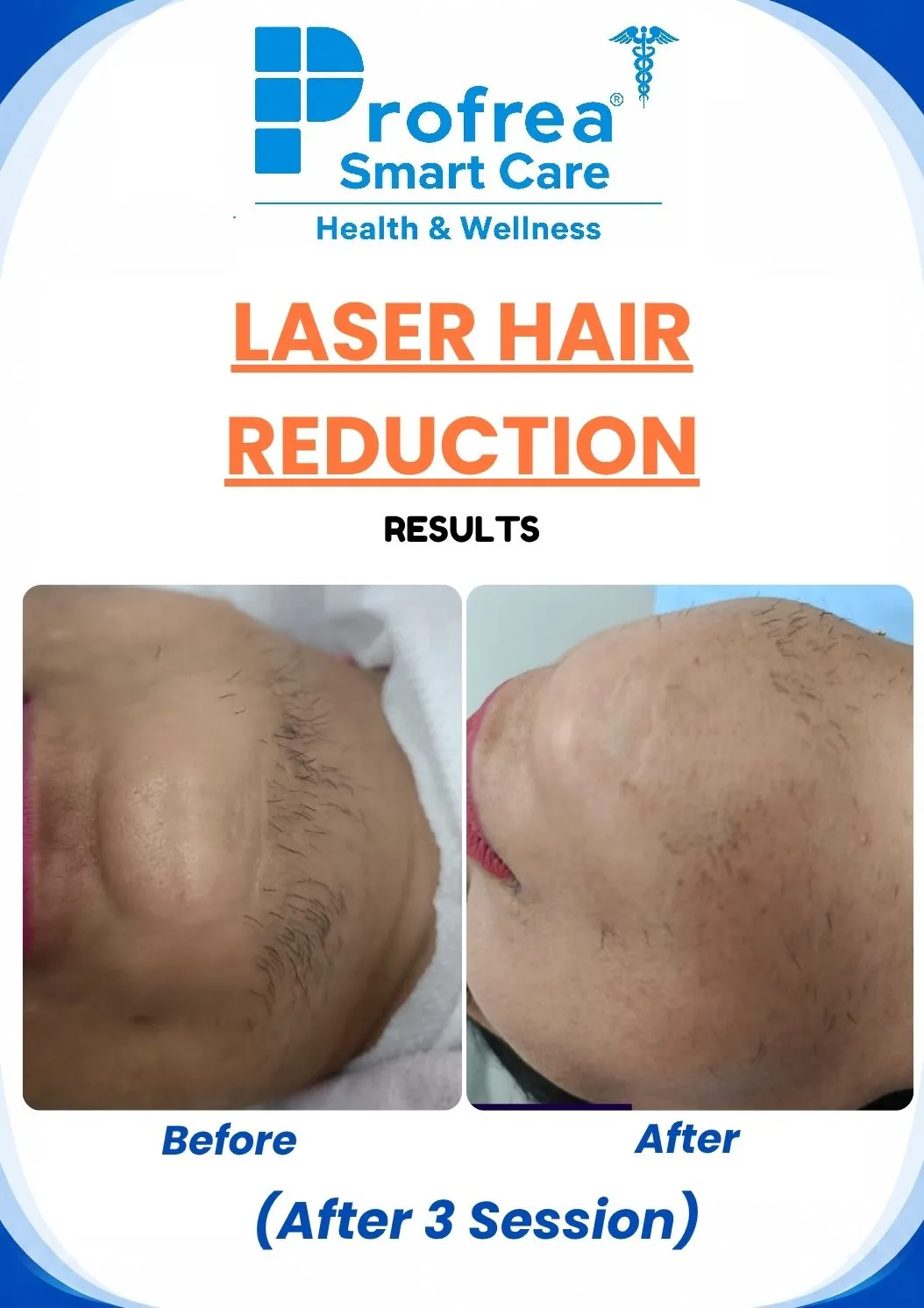
Because only actively growing follicles respond to each pulse, visible thinning builds gradually across a full course rather than in one dramatic before-and-after leap. Here's the pattern most patients can genuinely expect, based on typical hair growth cycles:
| Stage | Typical Timeline | What You'll Likely See |
|---|---|---|
| After Session 1–2 | Weeks 1–6 | Shedding of treated hairs, slightly slower regrowth |
| After Session 3–4 | Months 2–4 | Noticeably finer, sparser hair regrowth |
| After Session 5–6 | Months 5–8 | Significant, longer-lasting reduction in most areas |
| Maintenance | Every 6–12 months | Occasional touch-up sessions for stray regrowth |
For a full breakdown of how many sessions your specific area may need and what that means for budgeting, see our guide on the cost of laser hair removal in Gurgaon.
Because lasers target melanin, the contrast between hair colour and skin tone strongly influences outcomes. Dark, coarse hair on lighter skin typically responds fastest and most predictably. Fine, light (blonde, grey, or red) hair responds far less consistently to most laser wavelengths, since there's less melanin for the device to target. Patients with darker skin tones can still be treated safely and effectively, but this requires a clinician experienced in selecting the right wavelength and settings to avoid pigment changes — which is why a proper in-person skin and hair assessment before starting a package matters more than any generic before-and-after photo you find online.
The skin between sessions needs gentle, consistent care to get the best visible results. Keeping skin well hydrated, avoiding harsh exfoliation right after a session, and staying diligent with sun protection all help prevent post-treatment pigmentation. If you're also dealing with pre-existing discolouration alongside unwanted hair, it's worth discussing a combined approach — many of our patients pair their laser hair reduction course with a dedicated pigmentation treatment plan in Gurgaon to address both concerns together rather than in isolation.
Some patients also choose to schedule a Hydrafacial treatment or a photofacial and IPL treatment a few weeks apart from their laser hair reduction sessions as part of a broader skin maintenance routine — though these should always be spaced out and sequenced under clinical guidance rather than combined casually.
Most redness and mild sensitivity resolve on their own within a day. However, you should get clinical review if you notice hair regrowth that seems unusually rapid, dark, or coarse (occasionally a sign of an underlying hormonal issue rather than a treatment failure), if pigment changes don't fade after several weeks, or if you experience any signs of infection such as pus, spreading redness, or fever at a treated site. Consulting a qualified plastic surgery specialist rather than a walk-in salon reduces these risks significantly, since energy settings need to be tailored precisely to your skin type at every visit.
Laser hair reduction at Profrea is offered under our Plastic Surgery specialty, led by Dr. Shikha Bansal (MBBS, MS General Surgery, MCh Plastic Surgery), who brings over 9 years of experience and is known for an artistic, detail-oriented approach focused on natural-looking results and personalised, compassionate care. Treatments are delivered across our network of 7 clinics in Gurugram, with the option of an initial video consultation before your first in-clinic visit, so your skin type, hair characteristics, and expected timeline are properly assessed before you commit to a package.
If you're also exploring hair-related concerns beyond removal — such as thinning hair — our team offers PRP hair treatment in Gurgaon under the same Plastic Surgery specialty, so both concerns can be managed by one coordinated clinical team.