A clinically grounded guide to how laser hair removal works, who it suits, and what real results look like — from the specialists at Profrea.
By Profrea·Published July 2026
Laser hair removal is a non-invasive cosmetic procedure that uses concentrated beams of light — laser energy — to reduce unwanted hair growth across virtually any area of the body. The laser targets melanin, the pigment inside the hair shaft. When the hair absorbs this light energy, it converts to heat, which selectively damages the hair follicle and inhibits future regrowth, while leaving the surrounding skin largely unaffected.
Common treatment areas include the face, upper lip, chin, underarms, arms, legs, chest, back, and bikini line. Because hair grows in distinct cycles — anagen (active growth), catagen (transition), and telogen (resting) — the laser is most effective during the anagen phase. This is precisely why multiple sessions are needed to catch each follicle at the right stage.
According to the American Academy of Dermatology, most patients require between 6 and 8 treatment sessions for significant, long-lasting hair reduction, with maintenance sessions occasionally needed thereafter.
The science behind laser hair removal is called selective photothermolysis. A specific wavelength of light is chosen to match the absorption spectrum of melanin in the hair follicle. The energy is delivered in precise pulses, heating the follicle to a temperature that disrupts its ability to produce new hair — without burning the skin above it.
Different laser types are used depending on skin tone and hair colour:
Diode lasers — effective for a broad range of skin tones, including medium-to-dark complexions.
Nd:YAG lasers — longer wavelength, safer for darker skin types (Fitzpatrick IV–VI), commonly used across South Asian skin tones.
Alexandrite lasers — fast and effective for lighter skin tones with dark hair.
IPL (Intense Pulsed Light) — technically not a laser but uses broad-spectrum light; less precise, often used for lighter hair-removal needs.
Choosing the right technology for your skin type is not cosmetic preference — it is a clinical decision. At Profrea, experienced dermatologists and certified laser specialists assess each patient's Fitzpatrick skin type, hair texture, and treatment goals before selecting the appropriate device and settings. This personalised approach is central to achieving safe, effective results.
Most people come to laser hair removal after years of shaving, waxing, or threading. Here is how these methods compare on the factors that matter most:
| Method | Duration of Effect | Skin Irritation Risk | Long-term Cost |
|---|---|---|---|
| Shaving | 1–3 days | Razor bumps, ingrowns | High (recurring) |
| Waxing | 3–6 weeks | Redness, folliculitis | Moderate–High |
| Threading | 2–4 weeks | Low–Moderate | Moderate (recurring) |
| Laser Hair Removal | Months to years | Minimal (transient) | Low after initial course |
The cumulative time and money spent on waxing appointments or razors over a decade often exceeds the cost of a complete laser hair removal course — while delivering far superior, longer-lasting results.
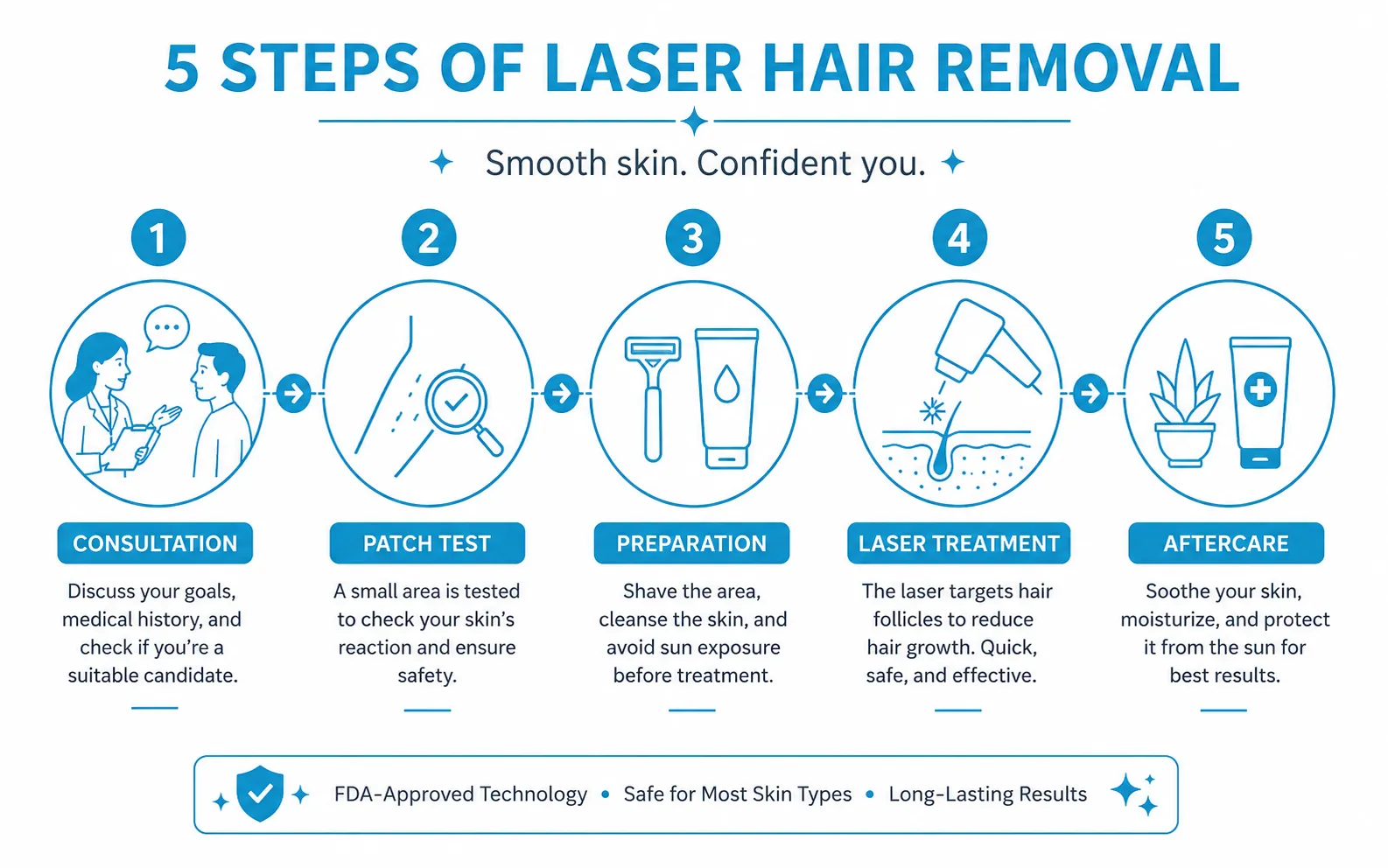
Understanding the step-by-step process helps set realistic expectations and reduces first-session anxiety.
A qualified dermatologist or laser specialist reviews your medical history, current medications, skin type, and hair characteristics. This is also when treatment goals are discussed and a personalised plan is created. At Profrea's clinics across Gurugram, this consultation includes a thorough skin-type classification to guide laser selection.
A small test area is treated 24–48 hours before the full session to assess your skin's reaction and confirm the correct laser settings. This step is non-negotiable for patient safety and is standard practice at Profrea.
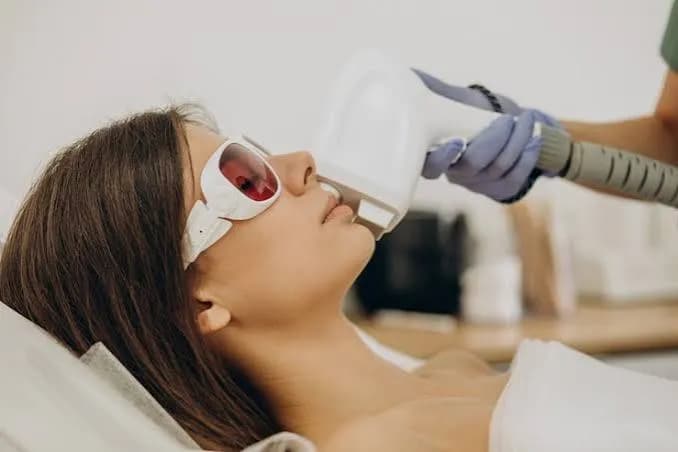
The treatment area is cleansed and shaved (if not done at home). A cooling gel or integrated cooling system is applied to protect the skin surface and improve comfort. Protective eyewear is provided for both patient and clinician.
The clinician passes the laser handpiece over the treatment area in systematic sections. Most patients describe the sensation as a brief snap or warm pinch — similar to a rubber band flick. Session duration ranges from a few minutes (upper lip) to 45–60 minutes (full legs or back).
A soothing lotion or aloe vera gel is applied. You will be advised to avoid sun exposure, hot showers, and strenuous exercise for 24–48 hours. SPF 30+ sunscreen is essential on treated areas exposed to sunlight.

Laser hair removal works best when there is a clear contrast between hair colour and skin tone — historically, fair skin with dark hair responded most predictably. However, advances in Nd:YAG and diode laser technology have made the procedure safe and effective for a much wider range of skin types, including the darker complexions common across South Asian populations.
Ideal candidates:
Adults with unwanted hair on the face, body, or bikini area
Those experiencing frequent ingrown hairs or folliculitis from shaving/waxing
Individuals with polycystic ovary syndrome (PCOS) who experience excess facial or body hair
People seeking a long-term, low-maintenance alternative to regular salon visits
Those who should exercise caution or consult a specialist first:
Pregnant women (laser treatment is generally deferred until after delivery)
Individuals on photosensitising medications (e.g., certain antibiotics, retinoids)
Those with active skin infections, open wounds, or certain skin conditions in the treatment area
People with very light, grey, or red hair (low melanin content reduces laser efficacy)
A consultation with one of Profrea's experienced dermatology specialists will clarify whether laser hair removal is appropriate for your specific situation and which laser technology suits your skin type.
There is no universal answer — the number of sessions depends on the treatment area, hair density, hair colour, skin type, and individual hormonal factors. As a general clinical guideline:
Face and upper lip: 6–8 sessions, spaced 4–6 weeks apart
Underarms and bikini: 6–8 sessions, spaced 4–6 weeks apart
Legs and arms: 6–10 sessions, spaced 6–8 weeks apart
Back and chest: 6–10 sessions, spaced 6–8 weeks apart
After completing the initial course, most patients experience an 80–90% reduction in hair density. Occasional maintenance sessions (once or twice a year) may be recommended to address any regrowth, particularly in hormonally sensitive areas such as the face or bikini line.
Profrea's treatment protocol includes continuous progress monitoring after each session. Laser settings are adjusted based on how your skin and hair respond, ensuring the most effective outcome at every stage. You can learn more about what to expect by speaking with Dr. Shweta Sharma or another Profrea specialist at any of the 7 clinic locations across Gurugram.
Laser hair removal is widely considered safe when performed by trained professionals using appropriate equipment. Temporary side effects are common and typically mild:
Redness and swelling around the follicle — resolves within a few hours
Mild skin sensitivity — similar to a light sunburn, lasting 24–48 hours
Temporary pigment changes — more common in darker skin tones if incorrect settings are used; underscores the importance of a qualified clinician
Rare but possible complications include blistering, scarring, or paradoxical hair stimulation (where fine hair becomes coarser). These risks are significantly reduced when treatment is performed in a clinical setting with proper skin-type assessment, patch testing, and calibrated laser parameters — all of which are standard at Profrea.
According to a review published by the National Institutes of Health (NIH), adverse events from laser hair removal are predominantly minor and transient, with serious complications being rare in medically supervised settings.
Shave the area 12–24 hours before your appointment (do not wax or pluck — the root must be intact)
Avoid sun exposure and tanning for at least 4 weeks prior
Discontinue retinoids or photosensitising products as advised by your clinician
Arrive with clean, product-free skin in the treatment area
Apply a gentle, fragrance-free moisturiser or aloe vera gel to soothe the skin
Use SPF 30+ sunscreen on treated areas exposed to sunlight
Avoid hot baths, saunas, and intense exercise for 24–48 hours
Do not wax, thread, or pluck between sessions — shaving is permitted
Attend all scheduled follow-up sessions for optimal hair reduction
India's diverse population spans Fitzpatrick skin types III through VI — a range that historically posed challenges for older laser technologies. Early diode and alexandrite lasers carried a higher risk of post-inflammatory hyperpigmentation (PIH) in darker skin tones because the laser energy was absorbed by skin melanin as well as follicular melanin.
Modern Nd:YAG lasers operating at 1064 nm bypass this issue by penetrating deeper into the dermis, targeting the follicle without significantly heating the epidermis. When combined with proper cooling systems and conservative fluence settings, laser hair removal is now a clinically validated option for South Asian skin types.
If you are based in Gurugram and have concerns about how your skin tone will respond to treatment, a personalised consultation with Dr. Nupur Gurugoswami or another Profrea dermatologist can address these questions directly, with a patch test conducted before any full treatment begins.
Laser hair removal is best described as providing long-term hair reduction rather than guaranteed permanent removal. Most patients achieve an 80–90% reduction in hair density after a full course of sessions. Some regrowth may occur over time, particularly in hormonally sensitive areas, and occasional maintenance sessions can address this.
Most patients describe the sensation as a brief, warm snap — similar to a rubber band flicking against the skin. Modern laser systems incorporate integrated cooling mechanisms that significantly reduce discomfort. Pain tolerance varies by individual and treatment area; bony or sensitive areas (e.g., upper lip, bikini line) tend to be more sensitive than larger flat areas like the legs.
Session duration depends on the size of the treatment area. Small areas like the upper lip or chin take 5–10 minutes. Medium areas such as underarms or bikini line take 15–30 minutes. Larger areas like full legs or the back can take 45–60 minutes.
Yes. Laser hair removal is frequently recommended for women with PCOS who experience excess facial or body hair (hirsutism). However, because PCOS involves ongoing hormonal stimulation of hair follicles, more sessions may be required and maintenance treatments are more likely to be needed. A combined approach — laser treatment alongside hormonal management — typically yields the best outcomes. Profrea's multi-specialty network means you can access both gynaecology specialists and laser clinicians under one umbrella.
There is minimal downtime. Most patients return to their normal routine immediately after a session. Mild redness or swelling may be present for a few hours. Strenuous exercise, hot showers, and direct sun exposure should be avoided for 24–48 hours post-treatment.
Costs vary based on the treatment area, number of sessions, and the clinic. Profrea offers personalised treatment packages following a detailed consultation. Booking an initial assessment is the best way to receive an accurate, tailored cost estimate for your specific needs.
Profrea's laser specialists across Gurugram provide comprehensive consultations, patch testing, and customised treatment plans tailored to your skin type, hair texture, and goals. With modern treatment rooms, state-of-the-art laser equipment, and strict hygiene protocols, every session is designed to be safe, comfortable, and effective.
To explore your options, you can book a video consultation or visit one of Profrea's 7 clinic locations. Speak with Dr. Ladli Chatterjee or browse Profrea's health screening and wellness packages to understand how laser treatment fits into your broader skin health plan.