A clinically grounded guide to separating effective treatments from the noise — for anyone navigating pimple scars, active breakouts, or uneven skin tone in Gurugram.
By the Profrea Editorial Team · Published July 2026
Acne is one of the most prevalent skin conditions worldwide. According to the National Institute of Arthritis and Musculoskeletal and Skin Diseases (NIAMS), acne affects up to 50 million people annually in the United States alone, and its prevalence in urban India — particularly among young adults in cities like Gurgaon — is similarly significant. Beyond the physical marks, acne scars are consistently linked to reduced self-confidence, social anxiety, and in some cases clinical depression.
The good news: dermatological and aesthetic medicine has advanced considerably. Today, a well-designed treatment plan can meaningfully reduce the appearance of most scar types — provided it is tailored to the individual's skin, scar morphology, and lifestyle. This guide explains the clinical landscape, so you can walk into any consultation in Gurgaon already informed.
A question aesthetic specialists in Gurgaon hear constantly: "Can I treat my scars while I still have active acne?" The short answer is: not optimally. Active acne and acne scars are two distinct clinical problems requiring different interventions — and sequencing matters.
Active acne treatment focuses on reducing sebum overproduction, clearing blocked follicles, and controlling the bacterial and inflammatory cascade that causes new lesions. Topical retinoids, benzoyl peroxide, azelaic acid, and in moderate-to-severe cases, oral antibiotics or isotretinoin, are the mainstays. Aesthetic procedures like chemical peels and certain light therapies can complement medical management.
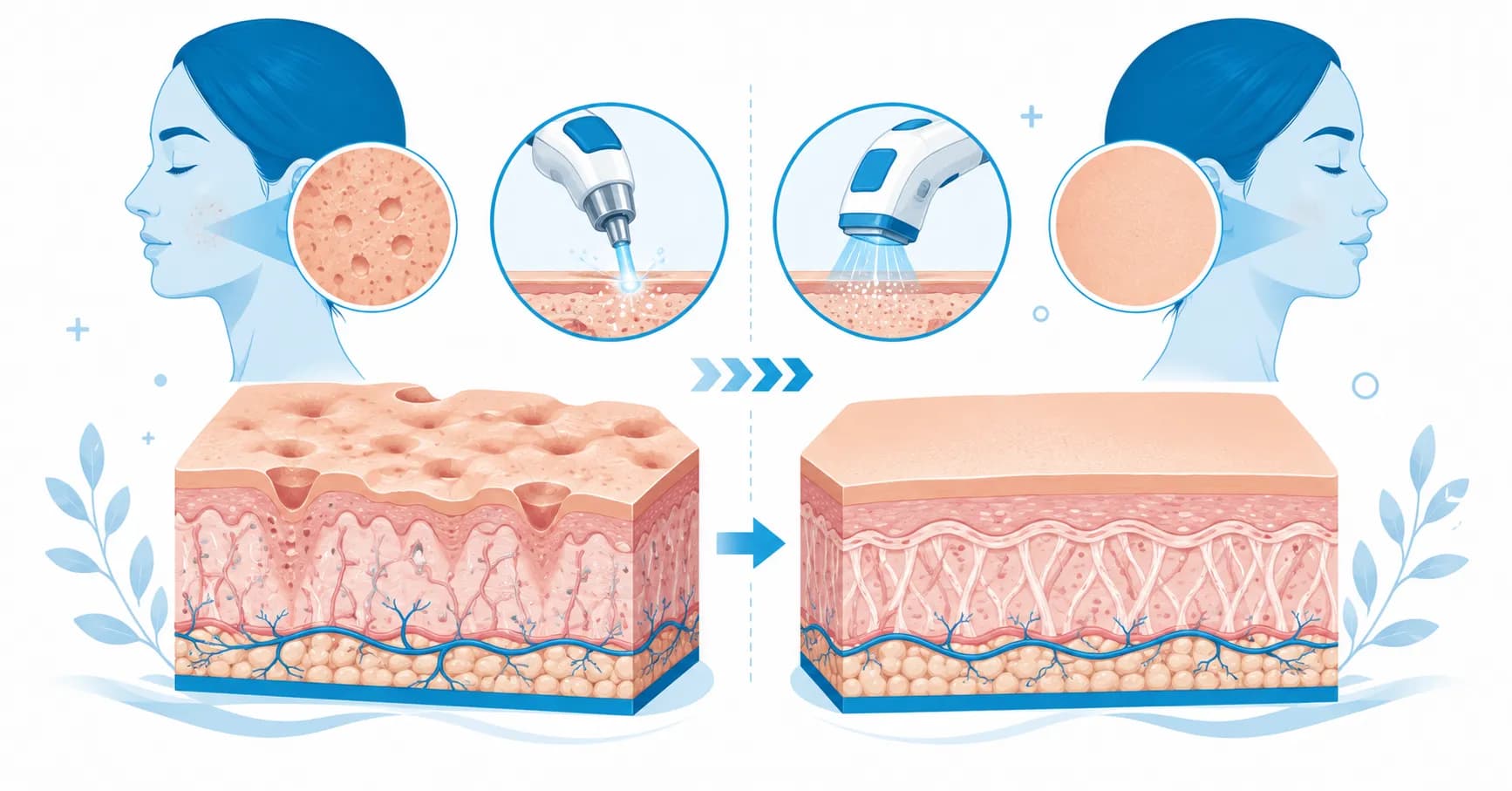
Acne scar reduction, on the other hand, targets the structural damage left behind once the skin has healed. Scars form because the body's repair process either overproduces collagen (raised, hypertrophic, or keloid scars) or underproduces it (atrophic scars — the classic ice-pick, boxcar, and rolling types). Each morphology responds differently to treatment. Attempting aggressive scar procedures on skin that is still actively breaking out risks worsening inflammation and creating new marks.
A good aesthetic clinic in Gurgaon will always assess both concerns together and build a phased plan. At Profrea, consultations with specialists such as Dr. Shweta Sharma and Dr. Anita Roy begin with a thorough skin assessment before any procedure is recommended.
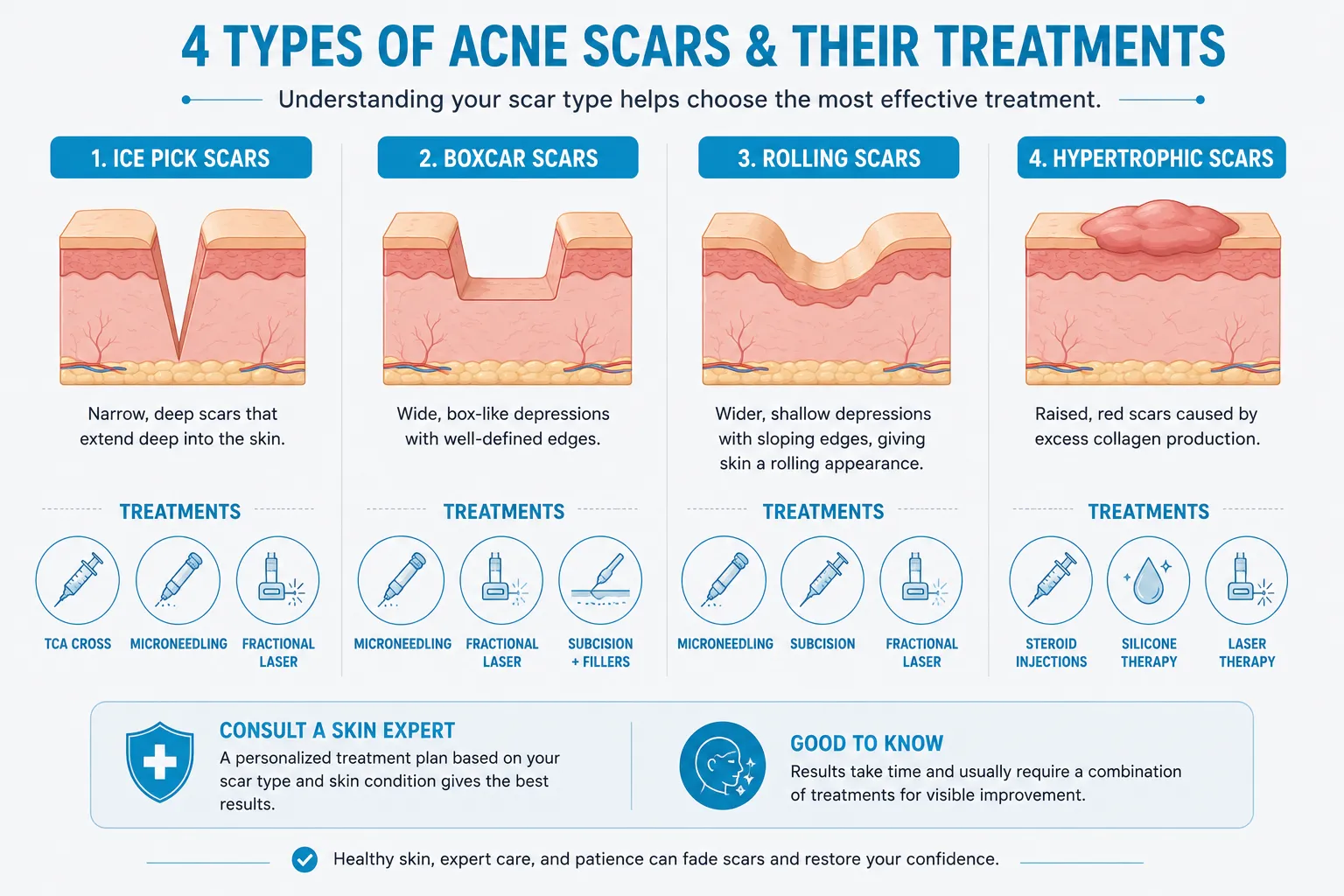
Correctly identifying your scar type is the single most important step before choosing any treatment. Here is a plain-language breakdown:
Ice-pick scars: Deep, narrow, pitted scars that extend into the dermis. They look like small puncture marks. These are the hardest to treat and often require punch excision or TCA cross (trichloroacetic acid chemical reconstruction) before resurfacing.
Boxcar scars: Wider, U-shaped depressions with defined edges. They respond well to fractional laser resurfacing and microneedling with radiofrequency.
Rolling scars: Broad, wave-like undulations caused by fibrous bands tethering the skin. Subcision (releasing those bands) combined with filler or biostimulators often gives the best results.
Hypertrophic and keloid scars: Raised, firm scars more common on the chest, back, and jawline. Intralesional corticosteroid injections, silicone sheets, and laser therapy are first-line options.
Post-inflammatory hyperpigmentation (PIH): Technically not a scar — it is flat discolouration left after inflammation resolves. Topical brightening agents, chemical peels, and photofacial treatments are highly effective here.
Most patients present with a mix of types, which is why a single-modality approach rarely delivers optimal results.
Fractional CO2 and erbium lasers create thousands of microscopic treatment zones in the skin, triggering a controlled wound-healing response that stimulates new collagen. A systematic review published on PubMed found fractional laser to be one of the most effective modalities for atrophic acne scars, with significant improvement seen after 3–5 sessions spaced 4–6 weeks apart. Downtime ranges from 3–7 days for ablative variants; non-ablative fractional lasers have minimal downtime but require more sessions.
Photofacial therapy uses broad-spectrum light to target pigment and vascular irregularities in the skin. It is particularly effective for post-inflammatory hyperpigmentation, redness from acne, and superficial textural irregularities. It is not the primary treatment for deep atrophic scars, but it is an excellent adjunct — especially for patients who want to address both pigmentation and mild scar texture in the same session. Most protocols involve 4–6 sessions, and the treatment is well-tolerated with minimal downtime. Profrea's aesthetic portfolio includes photofacial as part of its scar and skin-rejuvenation pathway.
Microneedling creates controlled micro-injuries that stimulate collagen induction. When combined with radiofrequency energy (RF microneedling), the heat delivered at precise depths amplifies collagen remodelling significantly. This combination is particularly effective for rolling and boxcar scars and is safe across all Fitzpatrick skin types — an important consideration for Indian skin, which is more prone to post-inflammatory pigmentation from aggressive treatments. Typically 3–6 sessions are recommended.
Superficial to medium-depth peels (glycolic acid, salicylic acid, TCA) accelerate cell turnover, improve skin texture, and address PIH effectively. They are often used as a preparatory step before laser or microneedling, or as a standalone maintenance treatment. Salicylic acid peels have the added benefit of being comedolytic — they help clear blocked pores, making them useful for patients with concurrent active acne.
For rolling scars with fibrous tethering, subcision (a minor in-clinic procedure using a fine needle to release the bands) is often the most direct intervention. Hyaluronic acid fillers or biostimulators like poly-L-lactic acid can then be used to restore volume and support the lifted skin. Results are often visible immediately and improve further over weeks as collagen is stimulated.
This is one of the most common questions patients ask — and one of the hardest to answer without a proper assessment. That said, here are realistic clinical benchmarks:
Fractional laser: 3–5 sessions, 4–6 weeks apart. Mild scars may see 60–70% improvement; severe scars typically 40–50% per course.
RF microneedling: 3–6 sessions, 4 weeks apart.
Photofacial (IPL): 4–6 sessions, 3–4 weeks apart, for pigmentation and redness.
Chemical peels: 4–8 sessions, 2–3 weeks apart, depending on depth and indication.
Subcision: 1–3 sessions, often combined with other modalities.
Combination protocols — for example, subcision followed by RF microneedling and a maintenance photofacial course — consistently outperform single-modality approaches in clinical literature. A reputable aesthetic clinic will design a sequenced plan rather than selling individual sessions in isolation.
Gurgaon has seen a significant rise in aesthetic clinics over the past decade — ranging from highly qualified medical setups to unregulated beauty parlours offering "laser treatments". Here is what separates a safe, effective clinic from the rest:
Qualified medical professionals: Procedures like fractional laser, RF microneedling, and subcision must be performed or directly supervised by a qualified dermatologist or plastic surgeon — not a beautician. At Profrea, plastic surgery is led by Dr. Shashi Vermani and the team includes specialists with formal postgraduate surgical and aesthetic training.
Skin-type specific protocols: Indian skin (Fitzpatrick types IV–VI) requires adjusted laser settings and careful post-procedure care to avoid PIH. Ask your clinic specifically how they manage this.
Transparent assessment before any procedure: A trustworthy clinic will not recommend a treatment in the first five minutes. Expect a thorough skin analysis, a discussion of your medical history, and a written treatment plan.
Multiple clinic locations for follow-up convenience: Acne scar treatment requires multiple sessions. Profrea's network of 7 clinic locations across Gurugram — including Sector 45, South City-I, and Sector 52 — means follow-up appointments fit around your schedule rather than the other way around.
Video consultation availability: For initial queries or post-procedure check-ins, Profrea also offers video consultations, reducing unnecessary travel between sessions.
In-clinic procedures do the heavy lifting, but what you do at home between sessions determines how well your skin heals and how long results last. Aesthetic specialists at Profrea typically advise:
Broad-spectrum SPF 50+ sunscreen, every day: UV exposure is the single biggest saboteur of scar treatment results. It worsens PIH and slows collagen remodelling. Non-negotiable.
Gentle, non-comedogenic moisturiser: Barrier repair is critical after any resurfacing procedure. Ceramide-based formulations are well-tolerated.
Retinoids (as prescribed): Topical tretinoin or adapalene accelerates cell turnover and supports collagen synthesis between sessions. Use only as directed — overuse causes irritation that can worsen pigmentation on Indian skin.
Avoid active exfoliants immediately post-procedure: No scrubs, AHAs, or BHAs for at least 5–7 days after laser or microneedling.
Nutrition and hydration: Adequate protein intake supports collagen synthesis. Some specialists also recommend vitamin C supplementation for its role in collagen formation, though evidence for oral supplementation is less robust than for topical application.
For patients with nutritional concerns affecting skin health, Profrea's dietetics team — including Dt. Swagata Pahari — can provide personalised dietary guidance as part of a holistic skin health plan.
It would be incomplete to discuss acne scar treatment without acknowledging its psychological weight. Research consistently shows that visible acne and scarring are associated with higher rates of anxiety, depression, and social withdrawal — particularly among young adults. Addressing the skin concern is important, but so is addressing the emotional impact.
Profrea's multi-specialty model means that patients who are experiencing significant distress related to their skin can also access psychological support through specialists like Dr. Sarika Thakral, a Consultant Clinical Psychologist with 15+ years of experience, including work with adolescents and young adults navigating body image concerns. This integrated approach — treating both the skin and the person — is a meaningful differentiator.
There is no single "most effective" treatment — it depends entirely on scar type. For atrophic scars (ice-pick, boxcar, rolling), fractional laser resurfacing and RF microneedling have the strongest evidence base. For post-inflammatory hyperpigmentation, photofacial (IPL) and chemical peels are highly effective. Most patients benefit from a combination protocol designed by a qualified aesthetic specialist after a thorough skin assessment.
Most fractional laser protocols require 3–5 sessions spaced 4–6 weeks apart. The exact number depends on scar severity, skin type, and the specific laser technology used. Mild scarring may show significant improvement after 3 sessions; deeper or more widespread scarring may require 5 or more. Your specialist should give you a realistic expectation at your initial consultation.
Yes — photofacial (IPL) is particularly well-suited to addressing post-inflammatory hyperpigmentation, redness, and superficial textural irregularities left by acne. It is less effective for deep atrophic scars but works well as part of a combination plan. It is also useful for patients with concurrent rosacea or vascular redness alongside acne-related pigmentation.
Acne treatment targets active breakouts — controlling sebum, bacteria, and inflammation to prevent new lesions. Acne scar reduction addresses the structural damage already present in healed skin. The two require different approaches and are ideally sequenced: active acne should be controlled first (or simultaneously with medical therapy) before aggressive scar procedures are initiated, to avoid worsening inflammation and creating new marks.
The best clinic for you is one where qualified medical professionals — not beauticians — perform or supervise all procedures; where your skin type is specifically accounted for in the treatment protocol; and where you receive a thorough assessment before any procedure is recommended. Profrea's multi-specialty clinic network across Gurugram offers aesthetic consultations with trained specialists, video consultation options, and follow-up care across 7 locations. You can also explore specialist profiles on the Profrea website to understand the team's credentials before booking.
Profrea's aesthetic specialists across Gurugram offer thorough skin assessments and evidence-based treatment plans — in clinic or via video consultation.