
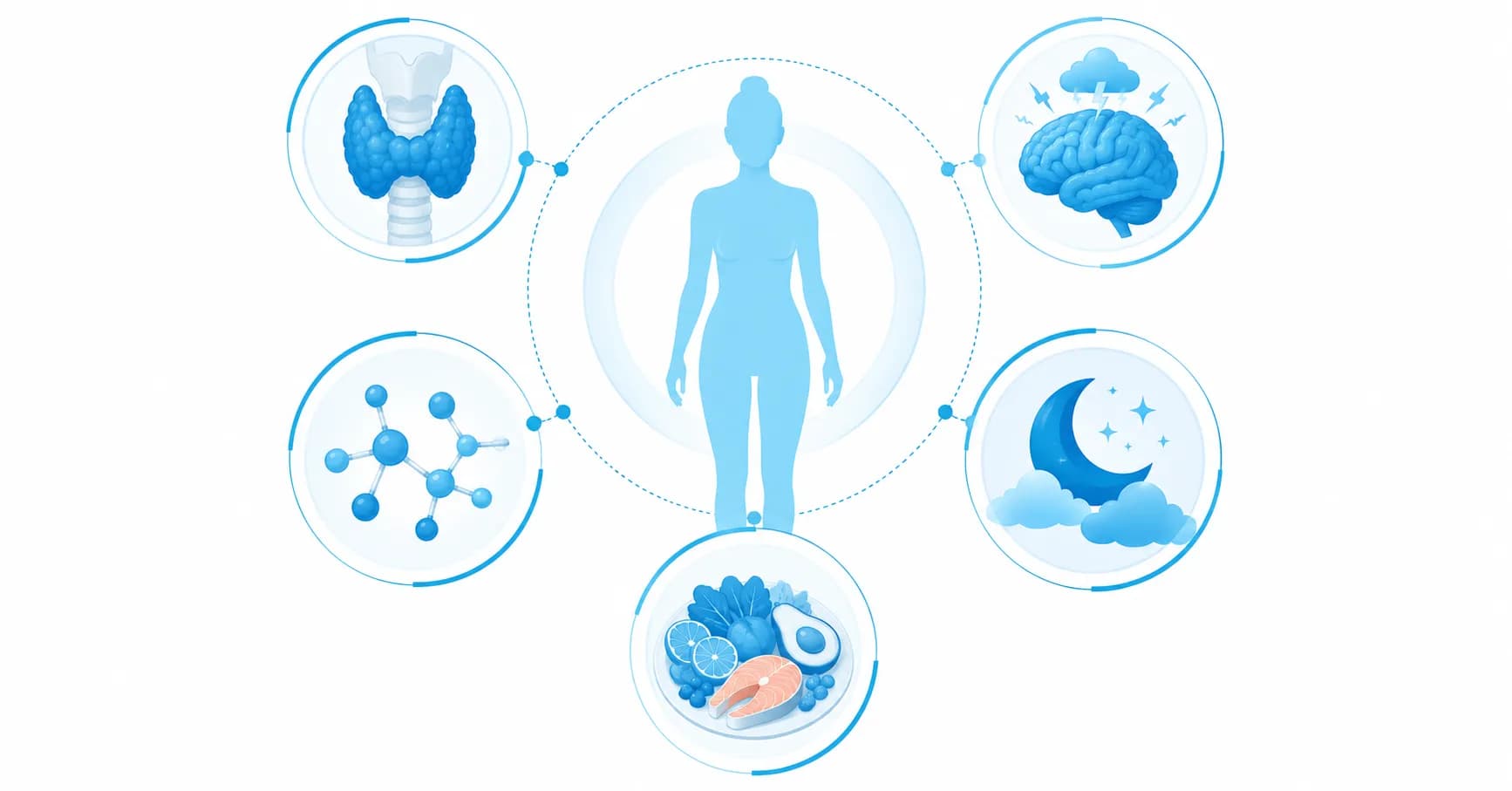
Understanding the real reasons behind unexplained weight gain and what you can do about it, safely and sustainably.
By Dr. Ladli Chatterjee · Published July 2026
You are eating roughly the same food, moving about the same amount and yet the scale keeps creeping up. If this sounds familiar, you are far from alone. Unexplained or gradual weight gain is one of the most common concerns that brings patients to a general physician or nutritionist. The frustrating truth is that weight gain rarely has a single cause. It is usually the result of several overlapping factors including hormonal, metabolic, behavioural, and psychological influences acting together over months or years.
This article walks through the most clinically relevant causes of weight gain, explains how conditions like thyroid disorders quietly sabotage your metabolism, and outlines evidence-based strategies for losing weight safely without crash diets or unsustainable restrictions. If you are based in Gurugram and looking for personalised guidance, Profrea's multi-specialty team including Dr. Ladli Chatterjee, General Physician and Diabetologist, can help you identify and address the root cause.
Weight gain happens when the body stores more energy than it uses, but what drives that imbalance is rarely as simple as eating too much. Here are the most frequently seen clinical causes.
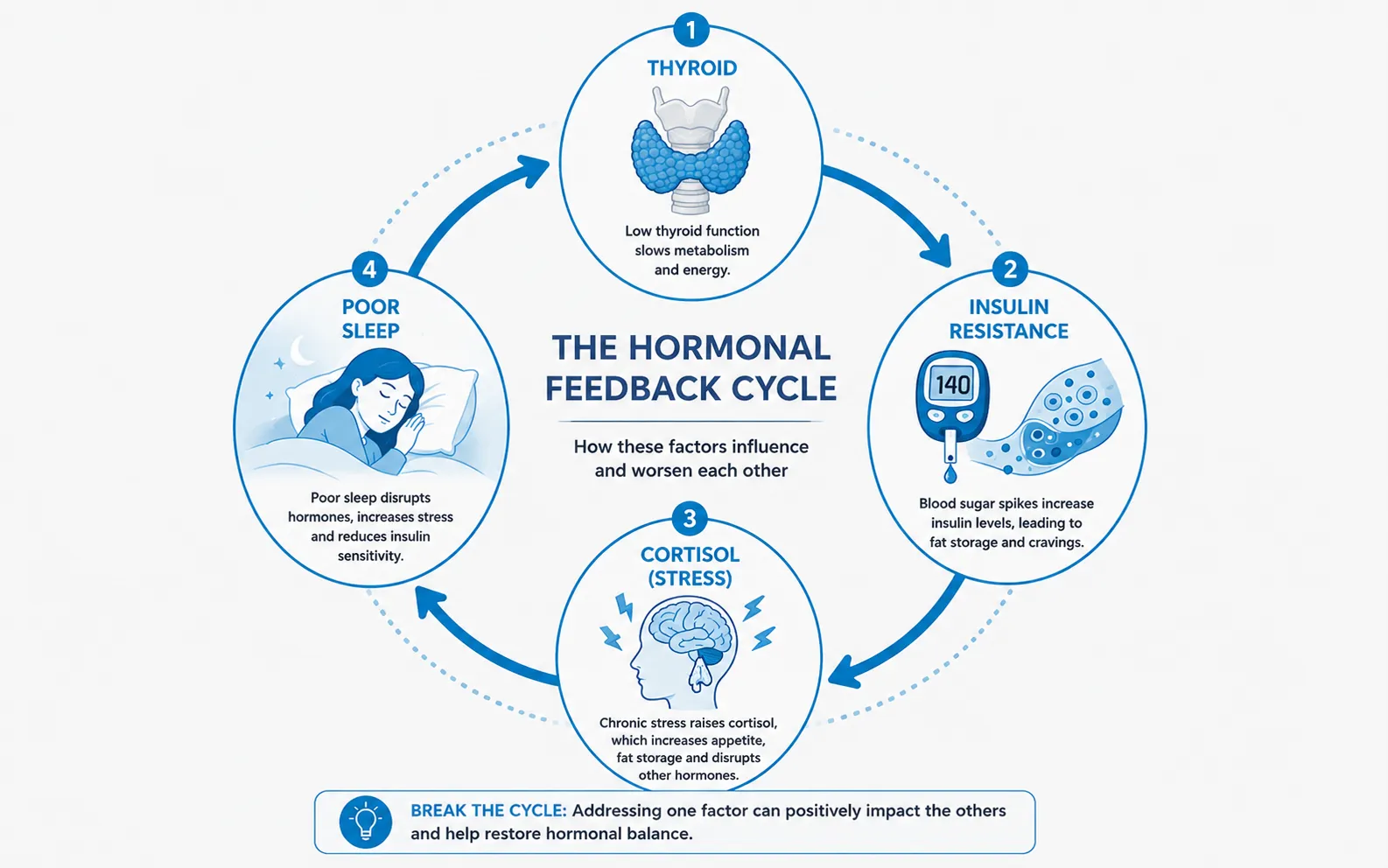
The thyroid gland regulates your basal metabolic rate, the speed at which your body burns calories at rest. When the thyroid is underactive (hypothyroidism), metabolism slows significantly. Patients often notice fatigue, cold intolerance, dry skin, and steady weight gain even without any change in diet. According to the National Institute of Diabetes and Digestive and Kidney Diseases, hypothyroidism affects millions of adults and is significantly more common in women. A simple TSH blood test can confirm or rule out this diagnosis, yet many people go years without being tested.
When cells become resistant to insulin, the body compensates by producing more of it. High circulating insulin promotes fat storage, particularly around the abdomen, and makes it very difficult to lose weight through diet alone. Insulin resistance often precedes Type 2 diabetes by years and is strongly linked to a sedentary lifestyle, refined carbohydrate intake, and poor sleep. Dr. Ladli Chatterjee, who holds a Fellowship in Diabetes from the Royal Liverpool Academy UK, routinely screens for insulin resistance in patients presenting with unexplained weight gain at Profrea's clinics in Gurugram.
PCOS is one of the most common hormonal disorders in women of reproductive age. It involves elevated androgens, irregular periods, and crucially insulin resistance. Women with PCOS often find that weight accumulates quickly and is very resistant to standard diet advice. Profrea's Dr. Soma Kumari, Obstetrician, Gynaecologist and Infertility Specialist, sees many patients in Gurugram for whom PCOS-related weight management is a central concern.
Cortisol, the body's primary stress hormone, promotes fat storage particularly visceral belly fat. It also increases cravings for calorie-dense foods and disrupts sleep, which in turn worsens metabolic health. In a high-pressure urban environment like Gurugram, chronic work-related stress is a genuinely underappreciated driver of weight gain. Addressing the psychological dimension of weight is not optional, it is essential.
Sleep deprivation raises ghrelin (the hunger hormone) and lowers leptin (the satiety hormone), making you hungrier and less satisfied after meals. The CDC recommends adults get 7 or more hours of sleep per night for optimal health, yet many working adults in Indian cities consistently fall short of this. Even one week of poor sleep can measurably shift metabolic markers.
Several commonly prescribed medications can cause weight gain as a side effect. These include certain antidepressants, antipsychotics, corticosteroids, beta-blockers, and some diabetes medications. If you have noticed weight gain shortly after starting a new medication, speak with your prescribing doctor as alternatives may be available.
Muscle tissue burns more calories at rest than fat tissue. As we age, particularly after 35, we naturally lose muscle mass unless we actively work to preserve it. A desk-bound lifestyle accelerates this process. The result is a lower resting metabolic rate, meaning the same calorie intake that once maintained your weight now causes gradual gain.
Ultra-processed foods are engineered to override satiety signals, making portion control genuinely difficult. Emotional eating, using food to manage boredom, anxiety, or loneliness, is a recognised psychological pattern that a clinical psychologist can help address. At Profrea, Dr. Sarika Thakral, Consultant Clinical Psychologist with 15 or more years of experience, works with patients on the behavioural and emotional dimensions of health including eating patterns.
Yes, and it is one of the most commonly missed diagnoses in patients who present with unexplained weight gain. Hypothyroidism slows virtually every metabolic process in the body. Patients may gain 3 to 10 kg over several months with no significant change in diet or activity. The weight tends to be distributed evenly rather than centrally and is often accompanied by fatigue, constipation, hair thinning, and a feeling of being cold all the time.
Importantly, treating hypothyroidism with thyroid hormone replacement does not automatically cause the weight to fall off, but it does restore the metabolic environment in which diet and exercise can actually work. This is why a combined approach of medical management plus nutritional guidance is far more effective than either alone.
If you suspect your thyroid may be contributing to your weight gain, a consultation with a general physician or diabetologist who can order and interpret a full thyroid panel is the right first step. Dr. Ladli Chatterjee at Profrea, who holds an MD in General Medicine and a Fellowship in Diabetes from the Royal Liverpool Academy UK, routinely evaluates thyroid function as part of a comprehensive metabolic workup.
Crash diets produce rapid initial weight loss but almost universally lead to weight regain within 12 to 18 months. They also risk nutrient deficiencies, muscle loss, and metabolic adaptation where the body lowers its resting metabolic rate in response to severe restriction. Here is what the evidence actually supports.
A deficit of 300 to 500 kcal per day achieved through a combination of dietary adjustment and increased activity produces steady, sustainable weight loss of approximately 0.5 kg per week without triggering the metabolic adaptations that crash diets cause. This is the range most clinical guidelines recommend.
Protein is the most satiating macronutrient and is essential for preserving muscle mass during weight loss. Dietary fibre slows gastric emptying, stabilises blood sugar, and feeds beneficial gut bacteria. Practical targets are 1.2 to 1.6 g of protein per kg of body weight per day and at least 25 to 30 g of fibre from whole grains, legumes, vegetables, and fruit.
Aerobic exercise burns calories during the session while resistance training raises your resting metabolic rate for hours afterwards and builds the muscle mass that keeps your metabolism elevated long-term. A combination of both, 150 minutes of moderate aerobic activity plus 2 resistance sessions per week, is the standard recommendation from major health bodies.
No diet will work optimally if cortisol is chronically elevated and sleep is poor. Practical steps include a consistent sleep schedule, limiting screen exposure before bed, and where stress is significant, professional psychological support. Profrea's Dr. Sarika Thakral, a certified NLP Practitioner and Master Practitioner of EFT and TFT, can support patients working through stress-related eating and lifestyle barriers.
Generic meal plans from the internet cannot account for your medical history, food preferences, cultural eating patterns, or underlying conditions. A qualified nutritionist or dietitian creates a plan that is specific to you and adjusts it as your body responds. Profrea's nutrition team in Gurugram including Dt. Swagata Pahari and Dt. Deepak provides personalised dietary counselling across Profrea's 7 clinic locations.
The honest answer is often both, working together. If your weight gain is recent, rapid, or accompanied by symptoms like fatigue, hair loss, irregular periods, or increased thirst, start with a doctor. These symptoms suggest an underlying medical condition such as thyroid disorder, PCOS, or insulin resistance that must be identified and treated before dietary changes will have their full effect.
Once any medical cause has been addressed or ruled out, a nutritionist can build a sustainable eating plan around your specific needs, preferences, and health goals. For many patients, a psychologist rounds out the team by addressing the behavioural and emotional patterns that undermine long-term success.
This integrated multi-specialty model is exactly what Profrea offers across its clinics in Gurugram, bringing together general physicians, diabetologists, gynaecologists, nutritionists, and psychologists under one network with both in-clinic and video consultation options available.
Medical weight loss is a structured, clinician-supervised approach to weight management that goes beyond generic diet advice. It typically involves a comprehensive baseline assessment including blood tests covering thyroid panel, fasting insulin, HbA1c, lipid profile, vitamin D, and B12, followed by identification and treatment of underlying causes such as thyroid dysfunction or insulin resistance. A personalised nutrition plan is then developed by a registered dietitian, calibrated to your metabolic rate and medical conditions. Behavioural support addresses emotional eating and stress through psychological counselling where needed, and regular monitoring appointments track progress and adapt the plan as your body changes.
Profrea's Profrea Health Screen packages offer a practical starting point, providing comprehensive blood panels that can surface the hidden metabolic causes of weight gain before you begin any weight loss programme.
Sudden weight gain over days to a few weeks is often due to fluid retention, a new medication, or a hormonal shift such as hypothyroidism or PCOS. Gradual gain over months is more commonly driven by a combination of reduced activity, dietary changes, poor sleep, and stress. A blood panel can quickly identify or rule out medical causes.
Yes. An underactive thyroid slows your metabolism and can cause steady, unexplained weight gain often accompanied by fatigue, cold sensitivity, and hair thinning. A TSH blood test is the standard first-line investigation. Treatment with thyroid hormone replacement restores normal metabolism, making diet and exercise far more effective.
Focus on a modest calorie deficit of 300 to 500 kcal per day, high protein and fibre intake, regular resistance training, 7 or more hours of sleep, and stress management. These changes are slower than crash dieting but produce lasting results without the metabolic rebound. Working with a nutritionist ensures the plan is tailored to your specific needs.
If your weight gain is unexplained, rapid, or accompanied by other symptoms, see a doctor first to rule out medical causes. Once any underlying condition is managed, a nutritionist can build a personalised, sustainable eating plan. For complex cases, a team approach including doctor, nutritionist, and psychologist delivers the best outcomes.
Medical weight loss is a clinician-supervised programme that starts with identifying the root causes of weight gain through blood tests and a full health assessment. It then combines personalised nutrition, behavioural support, and regular monitoring rather than relying on a generic diet plan. It is particularly valuable when hormonal or metabolic conditions are involved.
Not always. Hormonal disorders including thyroid dysfunction, PCOS, and adrenal issues, as well as insulin resistance, certain medications, poor sleep, and chronic stress can all drive weight gain independently of calorie intake. This is why a medical evaluation is important before assuming the cause is purely dietary.
Profrea's multi-specialty team in Gurugram including physicians, diabetologists, nutritionists, and psychologists can help you find the real cause and build a plan that actually works.