

When fever strikes, the right nutrition can make the difference between a slow, draining recovery and bouncing back in days. Here is what Profrea's doctors and dietitians actually recommend.
By the Profrea Clinical Team · Published July 2026
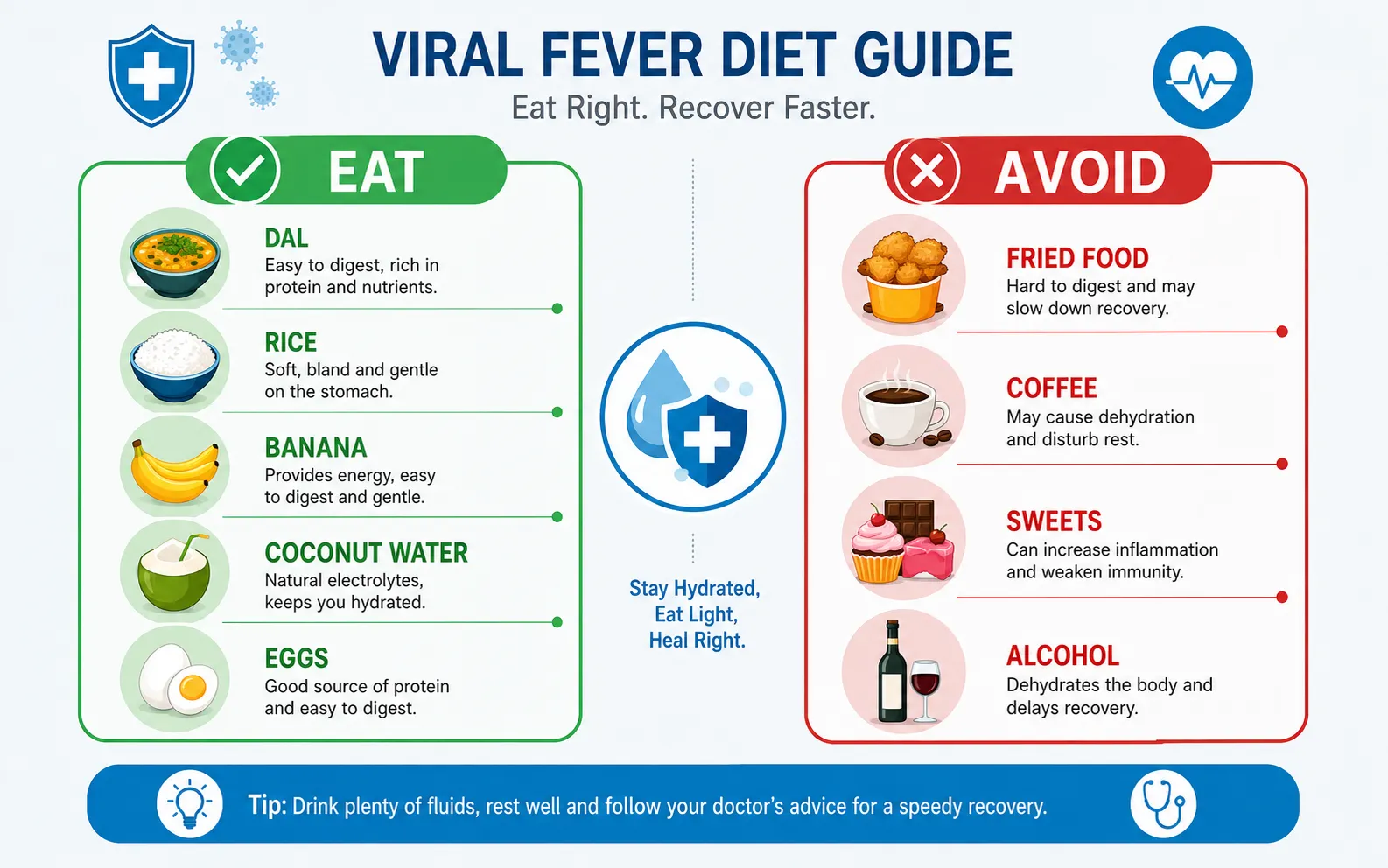
Viral fever is your immune system working overtime. Body temperature rises, metabolic rate increases, and the body burns through nutrients faster than usual. The World Health Organization notes that nutritional status directly influences immune response and recovery speed from infectious illness. In practical terms, this means that what you eat — and what you avoid — during a fever is not a minor detail; it is a core part of your treatment.
At Profrea's multi-specialty clinics across Gurugram, our General Medicine physicians work alongside our Nutrition & Dietetics team to give patients a complete recovery plan — not just a prescription. This post distils that clinical thinking into clear, actionable guidance.
A common misconception is that you should eat as little as possible when sick. In reality, your body needs a steady supply of easily digestible calories, micronutrients, and — above all — fluids to fight the infection and repair tissue. Starving yourself slows recovery; eating the wrong foods diverts energy away from healing. The goal is to find the middle path: light, nourishing, easy-to-digest meals that support your immune system without taxing your gut.
Yes, you can — and should — eat rice during viral fever. Plain cooked white rice or rice kanji (a thin, watery rice porridge) is one of the most recommended foods by Indian physicians for a reason. It is low in fibre, easy on an inflamed gut, provides quick-release carbohydrates for energy, and is gentle enough even when appetite is poor. Add a pinch of salt for electrolytes and a small amount of ghee if tolerated.
Thin moong dal soup is a powerhouse during fever. Moong (green gram) is rich in zinc and folate — both critical for immune cell production — and is among the easiest legumes to digest. Avoid heavy tadka (tempering with spices and oil); a lightly salted, well-cooked moong dal broth is ideal. Masoor dal is a good second choice.
Clear vegetable or chicken broth serves a dual purpose: it provides sodium and potassium (electrolytes lost through sweating) and keeps you hydrated. Warm soups also soothe a sore throat, a common companion to viral fever. Ingredients like ginger, garlic, and turmeric carry natural anti-inflammatory properties that complement medical treatment.
Oranges, sweet lime (mosambi), guava, and kiwi are excellent choices. The NIH Office of Dietary Supplements confirms that vitamin C supports the production and function of white blood cells, the frontline soldiers of your immune system. Eat the fruit whole rather than juicing it, so you retain the fibre and slow the sugar release. Bananas are also excellent — they are gentle on the stomach, provide potassium, and are easy to eat when appetite is low.
A small bowl of fresh, plain curd at room temperature (not cold from the refrigerator) provides probiotics that support gut immunity, along with protein and calcium. Avoid flavoured or sweetened yoghurts. If your fever is accompanied by diarrhoea, check with your doctor before including curd, as individual tolerance varies.
Soft-boiled or scrambled eggs are one of the best protein sources during illness. They are easy to prepare, easy to digest, and packed with amino acids your body needs to synthesise antibodies. Avoid fried preparations — the added fat can be hard on a fever-stressed digestive system.
Fresh coconut water is a natural oral rehydration solution. It contains potassium, magnesium, and natural sugars in proportions that are well-absorbed even by a queasy stomach. It is particularly valuable in Gurugram's hot summers, when fever-driven sweating can cause rapid dehydration.
Every degree of temperature rise above normal increases insensible fluid loss. A fever of 39°C can mean your body is losing an extra 200–400 ml of fluid per hour through sweating and rapid breathing — fluid that must be replaced to prevent dehydration, which worsens headache, fatigue, and confusion.
What to drink:
Water — aim for at least 2.5–3 litres per day during fever (more if you are sweating heavily)
ORS (Oral Rehydration Solution) — especially if fever is accompanied by vomiting or diarrhoea
Warm herbal teas — ginger-tulsi tea, chamomile, or plain green tea (without milk) are soothing and mildly anti-inflammatory
Nimbu pani (lemon water) with a pinch of salt and sugar — a simple homemade electrolyte drink
Coconut water — as discussed above
Warm milk with turmeric (haldi doodh) — provides protein and the anti-inflammatory compound curcumin; best taken at night
Sip fluids consistently throughout the day rather than drinking large amounts at once, which can worsen nausea. Set a reminder on your phone if needed — thirst sensation is often blunted during fever.
Equally important is knowing what to leave off your plate. The following foods either stress the digestive system, suppress immune function, or worsen dehydration:
Fried and oily foods — samosas, pakoras, and deep-fried snacks are hard to digest and can trigger nausea
Spicy foods — chilli-heavy dishes irritate an already inflamed throat and gut lining
Refined sugar and sweets — high sugar intake temporarily suppresses neutrophil activity (the white blood cells that engulf pathogens)
Caffeinated beverages — coffee and strong tea act as mild diuretics, worsening fluid loss
Alcohol — alcohol is immunosuppressive and significantly dehydrating; avoid entirely during illness
Raw salads and uncooked vegetables — the fibre load and potential microbial contamination make these difficult to handle during fever
Processed and packaged foods — high in sodium, preservatives, and low in actual nutrition
Cold foods and ice cream — can worsen throat inflammation and cause digestive discomfort
This is a general template. Adjust portions based on appetite and tolerance, and always follow your doctor's specific advice.
| Time | What to Eat / Drink |
|---|---|
| Early morning (7 am) | 1 glass warm water with lemon and a pinch of salt |
| Breakfast (8–9 am) | 1 soft-boiled egg + 1 slice plain toast + 1 glass coconut water |
| Mid-morning (11 am) | 1 banana or a small bowl of orange segments |
| Lunch (1 pm) | Rice kanji or plain rice + thin moong dal soup + small bowl of curd |
| Afternoon (3–4 pm) | Warm ginger-tulsi herbal tea + a few plain crackers (if hungry) |
| Dinner (7 pm) | Clear vegetable or chicken broth + plain khichdi (rice + moong dal cooked together) |
| Bedtime (9–10 pm) | 1 glass warm turmeric milk (haldi doodh) |
Sip water or ORS between every meal. Total fluid intake should be tracked — use a marked water bottle if needed.
Beyond general food choices, certain micronutrients play outsized roles in immune recovery:
Vitamin C — citrus fruits, guava, amla; supports white blood cell function
Zinc — moong dal, eggs, pumpkin seeds; essential for immune cell signalling
Vitamin D — eggs, fortified milk; deficiency is linked to prolonged viral illness (particularly relevant in urban India where sun exposure is limited)
Potassium — bananas, coconut water, dal; replaces electrolytes lost through sweating
Protein — eggs, dal, curd; provides amino acids for antibody synthesis and tissue repair
If your fever lasts more than three days or you are unable to eat adequately, a registered dietitian can assess your nutritional status and recommend targeted supplementation. Profrea's Nutrition & Dietetics team works closely with our General Medicine specialists like Dr. Ladli Chatterjee to create integrated recovery plans.
Children are at higher risk of rapid dehydration. Continue breastfeeding infants through fever. For older children, offer small, frequent sips of ORS, coconut water, or diluted fruit juice. Plain khichdi, mashed banana, and soft idli are good food choices. Consult a paediatrician at Profrea if your child refuses fluids for more than 4–6 hours or shows signs of lethargy.
Fever causes blood sugar to fluctuate unpredictably — it can spike due to the stress response or drop if food intake falls. People with diabetes must monitor blood glucose more frequently during illness and should not skip meals. Plain rice, dal, and curd remain safe choices, but portion sizes and carbohydrate distribution need careful management. Dr. Ladli Chatterjee, General Physician and Diabetologist at Profrea (MBBS, MD, Fellowship in Diabetes from Royal Liverpool Academy, UK), advises diabetic patients to contact their doctor within 24 hours of developing fever rather than waiting to see if it resolves on its own.
Fever during pregnancy requires prompt medical attention. Nutritional needs are higher, and certain foods or supplements may be contraindicated. Dr. Soma Kumari, Obstetrician and Gynaecologist at Profrea, recommends that pregnant women with fever above 38°C seek medical review the same day rather than self-managing.
Diet supports recovery, but it does not replace medical care. Seek prompt consultation if:
Fever exceeds 39.5°C or lasts more than 3 days
You are unable to keep any fluids down
You notice a rash, difficulty breathing, or severe headache
You have an underlying condition such as diabetes, heart disease, or are immunocompromised
A child under 3 months has any fever at all
Profrea offers both in-clinic and video consultations across 7 locations in Gurugram, so you can get a doctor's assessment quickly without leaving home when you are unwell. You can also explore Profrea's health screening packages to check your baseline nutritional and immunity markers once you recover — a useful step if you find yourself falling ill frequently.
Foods that are easy to digest and rich in immune-supporting nutrients work best: rice kanji, moong dal soup, soft-boiled eggs, bananas, citrus fruits, curd, and warm broths. Staying well-hydrated with water, ORS, and coconut water is equally important.
Yes. Plain cooked white rice or rice kanji is one of the most recommended foods during fever. It is low in fibre, easy on the gut, and provides quick energy. Khichdi (rice cooked with moong dal) is an even better option as it adds protein and zinc.
Water is the most important. ORS, coconut water, warm herbal teas (ginger-tulsi, chamomile), nimbu pani with a pinch of salt, and warm turmeric milk are all excellent choices. Avoid caffeinated drinks and alcohol.
No. Your body needs calories and nutrients to fight the infection. Eat smaller, more frequent meals if your appetite is poor, but do not skip eating entirely. Focus on easily digestible, nutrient-dense foods rather than large heavy meals.
Avoid fried and oily foods, spicy dishes, refined sugar, caffeinated beverages, alcohol, raw salads, cold foods, and processed packaged snacks. These either stress the digestive system, suppress immune function, or worsen dehydration.
Most uncomplicated viral fevers resolve within 3–7 days with adequate rest, hydration, and appropriate nutrition. If fever persists beyond 3 days or worsens, consult a doctor promptly.
Profrea's General Medicine and Nutrition & Dietetics teams are available for in-clinic and video consultations across Gurugram — so you can get personalised guidance without stepping out when you're sick.