

Everything you need to know about why viral infections cause muscle aches, shivering, and exhaustion — and how to recover faster.
By the Profrea Medical Editorial Team · Reviewed by Dr. Ladli Chatterjee, General Physician & Diabetologist, Profrea Gurugram
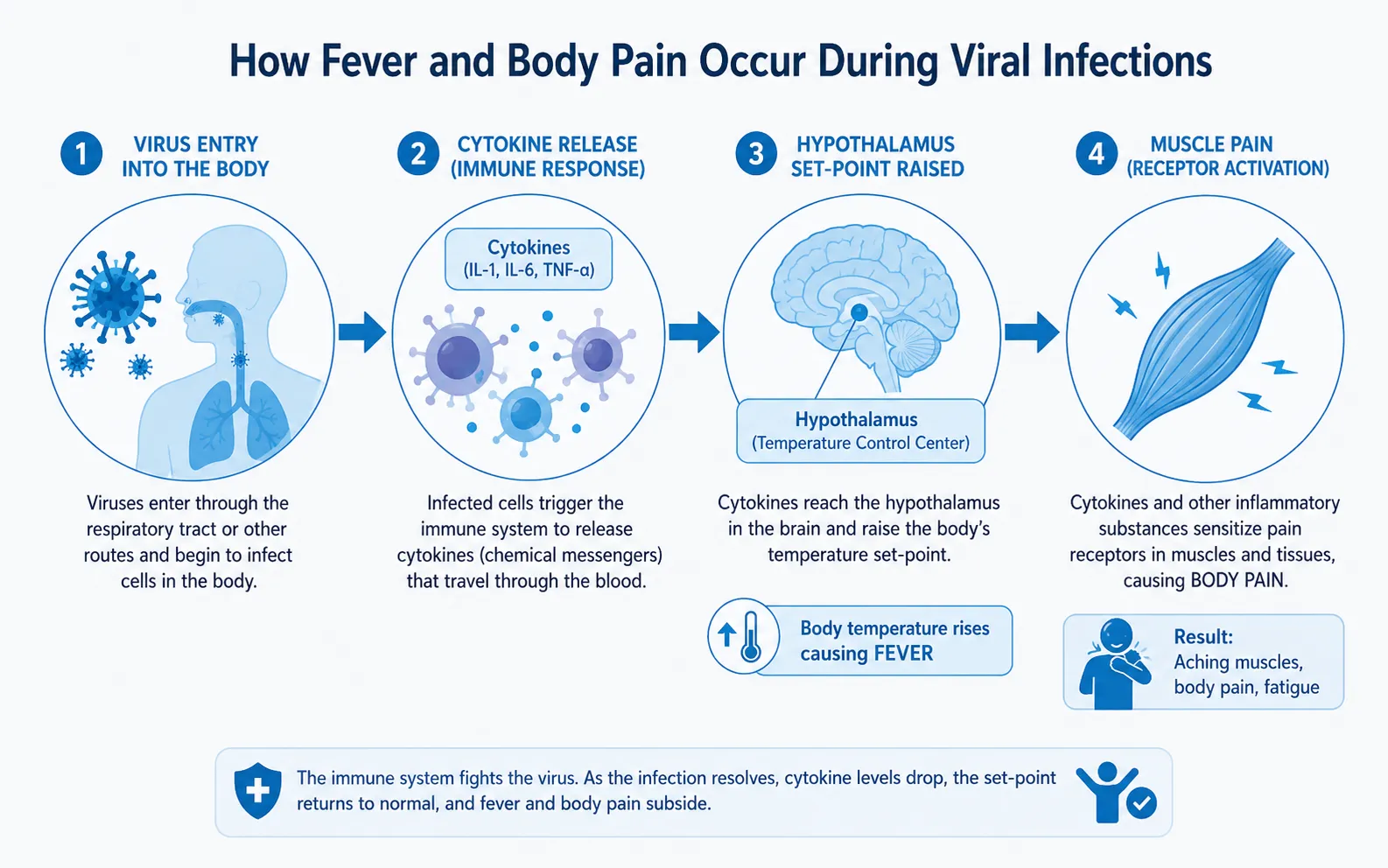
You wake up feeling like you have been hit by a truck. Every joint aches, your teeth are chattering despite three blankets, and even lifting your arm feels like an effort. If this sounds familiar, you are almost certainly dealing with viral fever with body pain and chills — one of the most common and most distressing symptom clusters seen in general medicine practice.
This post explains exactly what is happening inside your body, what the symptoms mean, when you should be concerned, and the most effective evidence-based steps to recover quickly. It is written with clinical input from Profrea's General Medicine team, including Dr. Ladli Chatterjee (MBBS, MD General Medicine, Fellowship in Diabetes — Royal Liverpool Academy, UK).
Viral fever is not a disease in itself; it is your immune system's response to a viral infection. When a virus enters your body, your immune cells release signalling proteins called cytokines (including interleukins and tumour necrosis factor). These cytokines travel to the hypothalamus — the brain's thermostat — and deliberately raise your core body temperature to create an environment hostile to the virus.
The same cytokines act on pain receptors in your muscles and joints, which is why body ache and fever almost always arrive together. The chills you feel are your body generating heat rapidly through muscle shivering to reach the new, higher temperature set-point. The profound weakness is partly from the energy cost of running a fever and partly from the direct effect of cytokines on skeletal muscle metabolism.
Common viruses responsible for this symptom cluster include influenza (flu), adenovirus, dengue, chikungunya, COVID-19, and various enteroviruses — all of which circulate widely in urban India, including Gurugram, particularly during seasonal transitions.
This is one of the most-searched questions around this topic, and the answer is more specific than most people realise. There are three overlapping mechanisms:
Cytokine-driven myalgia: Inflammatory cytokines sensitise pain receptors (nociceptors) in muscle tissue, making even normal movement feel painful.
Immune cell infiltration: White blood cells migrate into muscle tissue to fight the virus, causing localised inflammation and soreness — similar to the feeling after intense exercise.
Dehydration and electrolyte imbalance: Fever increases fluid loss through sweating. Low sodium and potassium levels worsen muscle cramping and generalised aching.
In dengue and chikungunya specifically, the virus itself replicates in muscle and joint tissue, which is why the pain in these infections is notoriously severe — dengue is sometimes called "breakbone fever" for this reason. The World Health Organization notes that severe joint and muscle pain is a hallmark feature of dengue, distinguishing it from milder viral illnesses.
Viral fever typically presents as a recognisable pattern. Understanding it helps you distinguish a routine viral illness from something that needs urgent attention.
| Symptom | What It Means | Typical Duration |
|---|---|---|
| Fever (38–40°C) | Immune activation, cytokine release | 3–7 days |
| Chills and shivering | Body generating heat to reach new set-point | Hours to 2 days |
| Muscle and joint pain | Cytokine-driven myalgia, immune infiltration | 3–10 days |
| Weakness and fatigue | Energy diverted to immune response | Up to 2 weeks |
| Headache | Fever-related vasodilation, dehydration | 3–5 days |
| Loss of appetite | Cytokines suppress hunger signals | 3–7 days |
Body pain typically peaks in the first two to three days and then gradually eases as the viral load drops. Weakness and fatigue often linger the longest — sometimes for one to two weeks after the fever itself has resolved.
In most cases, viral fever with chills is self-limiting and resolves within a week. However, certain warning signs indicate that the illness may be more serious — bacterial superinfection, dengue with plasma leakage, or another condition mimicking viral fever. Seek medical attention promptly if you notice:
Fever above 40°C (104°F) that does not respond to paracetamol
Fever lasting more than 5–7 days without improvement
Severe headache with stiff neck or sensitivity to light (possible meningitis)
Skin rash, especially with dengue-like symptoms
Difficulty breathing or chest pain
Confusion, altered consciousness, or seizures
Bleeding from gums, nose, or in urine/stool
Severe abdominal pain or persistent vomiting
Rigors — violent, uncontrollable shaking chills — can sometimes indicate a bacterial bloodstream infection (bacteraemia) or malaria rather than a straightforward viral illness. If you or a family member experiences rigors, a same-day medical review is strongly advised. Profrea's General Medicine team, including Dr. Ladli Chatterjee, offers both in-clinic and video consultations across Gurugram for rapid assessment.
This is a nuanced question, and the answer depends on the likely cause of your fever.
Paracetamol (acetaminophen) is the first-line choice for most viral fevers. It reduces fever and relieves muscle pain with a good safety profile when taken at the correct dose (500–1000 mg every 6–8 hours in adults, not exceeding 4 g per day).
NSAIDs (ibuprofen, naproxen) are effective for pain and inflammation but carry important caveats. They should be avoided if dengue is suspected, because they inhibit platelet function and can worsen dengue-related bleeding. They should also be used cautiously in people with kidney disease, peptic ulcers, or those who are significantly dehydrated.
Aspirin should not be used for fever in children or adolescents due to the risk of Reye's syndrome, and is generally not recommended as a first-line antipyretic in adults either.
The key takeaway: paracetamol is safe for most adults with viral fever and body pain. If your symptoms are severe, if you are unsure of the cause, or if you have underlying health conditions, consult a doctor before self-medicating. A quick video consultation with a Profrea General Physician can help you make the right choice without leaving home.
There is no antiviral drug for most common viral fevers. Recovery depends on supporting your immune system and preventing complications. Here is what the evidence supports:
Fever increases insensible fluid loss significantly. Aim for at least 2.5–3 litres of fluids per day — water, oral rehydration solution (ORS), coconut water, clear soups, and herbal teas all count. Adequate hydration reduces muscle cramping, prevents kidney stress, and helps the body flush viral debris. The US Centers for Disease Control and Prevention (CDC) recommends rest and fluid intake as the cornerstone of influenza recovery.
Your body needs energy for immune work. Avoid strenuous activity, but gentle movement (short walks around the room) can help prevent the deep muscle stiffness that worsens body ache during prolonged bed rest.
Even if your appetite is poor, try to eat small, frequent, easily digestible meals — khichdi, dal, curd rice, bananas, and boiled vegetables are ideal. Adequate protein (eggs, lentils, paneer) supports immune cell production and muscle repair. Vitamin C-rich foods (citrus, amla, guava) may support immune function, though high-dose supplementation has limited evidence in otherwise healthy adults.
If fever is above 39°C and causing significant distress, gently sponging the forehead, armpits, and neck with lukewarm (not cold) water can help lower temperature. Avoid ice-cold water — it causes vasoconstriction and can paradoxically raise core temperature.
Take paracetamol as directed for fever and pain relief. Do not double up on paracetamol-containing products (many cold-and-flu combination tablets already contain it). Avoid antibiotics unless a bacterial infection has been confirmed by a doctor — antibiotics have no effect on viruses and can cause side effects and antibiotic resistance.
Keep a simple log: temperature twice daily, fluid intake, and any new symptoms. This information is invaluable if you need to consult a doctor. Profrea's General Medicine specialists can review your symptom log during a video consultation and advise on whether blood tests (CBC, dengue NS1, malaria smear) are needed.
For most common viral infections (influenza, adenovirus, rhinovirus), muscle and joint pain peaks in the first 48–72 hours and resolves within 5–7 days as the immune response winds down. However, the timeline varies by virus:
Influenza: Body ache typically resolves in 5–7 days; fatigue may persist for 1–2 weeks.
Dengue: Joint and muscle pain can last 7–10 days; post-dengue fatigue is common for several weeks.
Chikungunya: Joint pain can persist for weeks to months in some patients — this is one of the distinguishing features of chikungunya.
COVID-19: Muscle aches usually resolve within 1–2 weeks, but post-COVID fatigue and myalgia can persist longer in some individuals.
If body pain is not improving after 7 days, or if new joint swelling appears, a medical review is warranted to rule out secondary bacterial infection, reactive arthritis, or a non-viral cause.
Most viral fevers can be managed at home with the steps above. But certain situations call for a prompt medical consultation:
Fever persisting beyond 5 days without clear improvement
Any of the red-flag symptoms listed earlier in this article
Fever in infants under 3 months, elderly patients, or those with diabetes, heart disease, or immunosuppression
Pregnancy — viral fever in pregnancy requires careful monitoring
Uncertainty about the diagnosis — especially during dengue or chikungunya season
Profrea operates 7 clinic locations across Gurugram and offers video consultations for patients who are too unwell to travel. You can connect with Dr. Ladli Chatterjee or other General Medicine physicians from the comfort of your home, get a clinical assessment, and receive a prescription if needed — all without stepping out. For those who prefer in-person care, Profrea's clinics in Sector 45, South City-I, and Sector 52 offer same-day appointments for acute illness.
Profrea also offers comprehensive health screening packages that include blood panels useful for evaluating recurrent or prolonged fevers — including CBC, ESR, CRP, and vector-borne disease panels.
While no measure eliminates the risk entirely, these steps significantly reduce your likelihood of contracting common viral illnesses:
Annual influenza vaccination: Recommended for all adults, especially those over 60, pregnant women, and people with chronic conditions. Profrea's clinics can advise on vaccination schedules.
Hand hygiene: Washing hands with soap for at least 20 seconds remains the single most effective way to prevent respiratory and enteric viral infections.
Mosquito control: Use repellents, wear full-sleeved clothing at dawn and dusk, and eliminate standing water around your home to reduce dengue and chikungunya risk — particularly important during Gurugram's monsoon season.
Adequate sleep and nutrition: Chronic sleep deprivation and nutritional deficiencies impair immune function. Profrea's nutrition and dietetics team can help you build an immune-supportive diet plan.
Avoid close contact with sick individuals during peak viral season and wear a mask in crowded indoor spaces if you are immunocompromised.
Viral fever triggers the release of immune signalling proteins called cytokines, which sensitise pain receptors in muscles and joints. Simultaneously, immune cells infiltrate muscle tissue to fight the virus, causing localised inflammation. Dehydration from fever further worsens muscle cramping. The result is the characteristic all-over body ache that accompanies most viral illnesses.
The most effective approach combines aggressive hydration (2.5–3 litres of fluids daily), adequate rest, small nutritious meals, and paracetamol for fever and pain relief. There is no shortcut — the immune system needs time to clear the virus. Avoid antibiotics unless prescribed by a doctor, as they are ineffective against viral infections.
Paracetamol is safe and effective for most adults. NSAIDs like ibuprofen can help but should be avoided if dengue is suspected or if you have kidney disease, peptic ulcers, or significant dehydration. Always consult a doctor if you are unsure which medication is appropriate for your situation.
Usually no — chills are a normal part of the fever response. However, violent rigors (uncontrollable shaking chills) can indicate malaria or a bacterial bloodstream infection. Seek urgent medical care if chills are accompanied by a very high fever, confusion, skin rash, bleeding, or difficulty breathing.
For most common viral infections, body pain peaks in the first 2–3 days and resolves within 5–7 days. Dengue-related pain may last 7–10 days, and chikungunya joint pain can persist for weeks to months. Fatigue often lingers for 1–2 weeks after the fever resolves. If pain is not improving after 7 days, consult a doctor.
Profrea's General Medicine doctors are available for in-clinic and video consultations across Gurugram — so you can get the right diagnosis and treatment plan without delay.