

A prolonged fever that won't break is your body's loudest warning sign — but is it a routine viral infection or something more serious like typhoid? Here's how to tell the difference.
By the Profrea Medical Team · Published June 2026
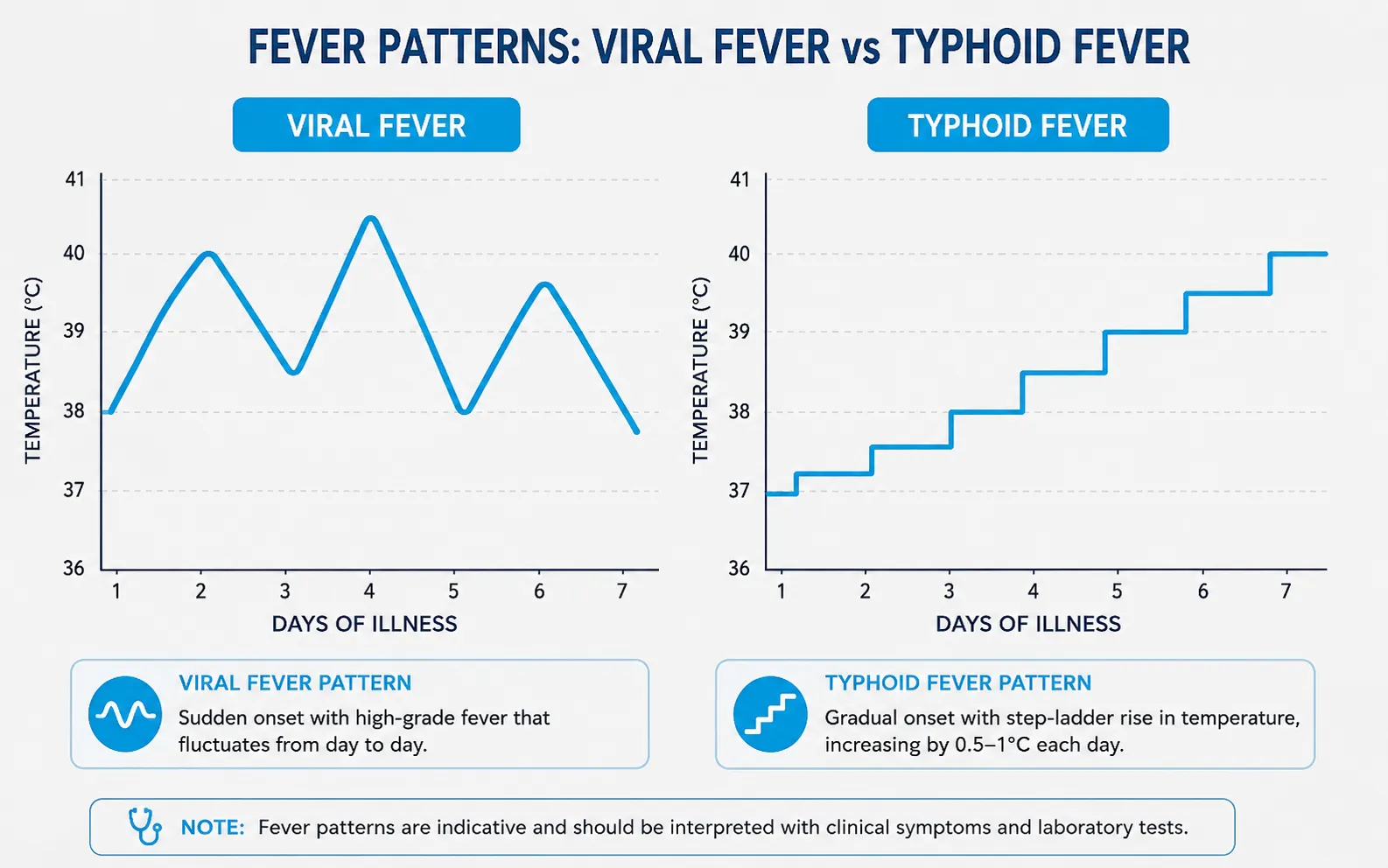
Every monsoon season, clinics across Gurgaon see a surge in patients walking in with the same complaint: fever that has lasted more than three days, body aches, and a general sense of feeling unwell. The first instinct — for patients and sometimes even for well-meaning family members — is to assume it's a viral fever and wait it out. Sometimes that's the right call. But when the culprit is typhoid fever (Salmonella typhi infection), waiting too long without the right diagnosis can lead to serious complications.
This guide breaks down the clinical differences between viral fever and typhoid, explains which tests actually confirm a typhoid diagnosis, and tells you exactly when you should stop self-managing and see a doctor.
A viral fever is not a single disease — it is a symptom cluster caused by any one of hundreds of viruses, including influenza, adenovirus, rhinovirus, and others. The fever is essentially your immune system raising the body's core temperature to create an inhospitable environment for the invading virus.
Typical features of viral fever:
Sudden onset, often within hours
Temperature usually between 99°F and 103°F (37.2°C–39.4°C)
Runny nose, sore throat, or cough frequently present
Body aches and fatigue
Red or watery eyes in some cases
Rash may appear (especially with dengue or chikungunya)
Most cases resolve within 3–7 days with rest and supportive care
Viral fevers are self-limiting in most healthy adults. Treatment is supportive — antipyretics, hydration, and rest. Antibiotics are not effective against viruses and should not be taken unless a secondary bacterial infection is confirmed.
Typhoid fever is a systemic bacterial infection caused by Salmonella enterica serotype Typhi. It spreads through contaminated food and water — a significant concern in densely populated urban areas like Gurgaon, particularly during and after the monsoon when water supply can be compromised.
According to the World Health Organization, typhoid fever affects an estimated 9–11 million people globally each year, with South Asia carrying a disproportionately high burden. India accounts for a significant share of global cases.
Typical features of typhoid fever:
Gradual onset over several days (unlike the sudden onset of most viral fevers)
Fever that rises in a step-ladder pattern — increasing each day, often reaching 103°F–104°F (39.4°C–40°C) or higher
Sustained high fever that can last 3–4 weeks if untreated
Relative bradycardia (pulse rate lower than expected for the degree of fever)
Headache, often frontal and severe
Abdominal pain, bloating, and constipation (more common than diarrhea in early stages)
Coated tongue and loss of appetite
Rose spots — faint pink spots on the trunk (seen in a minority of patients)
Splenomegaly (enlarged spleen) in some cases
Profound fatigue and malaise
Without appropriate antibiotic treatment, typhoid can progress to life-threatening complications including intestinal perforation, internal bleeding, and encephalopathy. This is why early, accurate diagnosis matters enormously.
The table below summarises the most clinically useful distinguishing features:
| Feature | Viral Fever | Typhoid Fever |
|---|---|---|
| Onset | Sudden (hours) | Gradual (days) |
| Fever pattern | Fluctuating, often with chills | Step-ladder rise, sustained high |
| Duration | 3–7 days | 3–4 weeks if untreated |
| Respiratory symptoms | Common (cough, cold, sore throat) | Rare |
| GI symptoms | Mild nausea possible | Abdominal pain, constipation or diarrhea, bloating |
| Headache | Mild to moderate | Severe, frontal |
| Rash | Possible (dengue, chikungunya) | Rose spots (rare, faint) |
| Contagious route | Droplets / direct contact | Contaminated food & water (feco-oral) |
| Treatment | Supportive (rest, fluids, antipyretics) | Specific antibiotics (azithromycin, ceftriaxone) |
| Complication risk | Low in healthy adults | High if untreated (perforation, sepsis) |
This is where many patients get confused — and where self-diagnosis can go badly wrong. Fever alone cannot tell you whether you have typhoid. Here are the tests your doctor may order:
The Widal test detects antibodies against Salmonella typhi antigens (O and H) in the blood. It is widely available and affordable, making it one of the most commonly ordered tests for suspected typhoid in Gurgaon and across India. However, it has important limitations: it can produce false positives in people who have been vaccinated or who have had a previous typhoid infection, and it may be negative in the first week of illness before antibody levels rise. A single Widal result should always be interpreted alongside the clinical picture by a qualified physician — not in isolation.
Blood culture is the most definitive test for typhoid. A sample of blood is incubated to detect the actual Salmonella typhi bacteria. It is most sensitive in the first 7–10 days of illness (when bacterial load in the blood is highest) and has a specificity of close to 100%. The main drawback is time — results take 48–72 hours. In a busy city like Gurgaon, where patients often present after several days of fever, blood culture remains the diagnostic benchmark.
Rapid card-based tests (such as Typhidot) detect IgM and IgG antibodies against a specific outer membrane protein of Salmonella typhi. They deliver results within hours and are more specific than the Widal test, though sensitivity varies. They are useful for early diagnosis when blood culture results are awaited.
A CBC is not diagnostic for typhoid but provides supporting information. Typhoid classically shows a low white blood cell count (leukopenia) — the opposite of what you'd expect with most bacterial infections. Viral fevers may also show leukopenia, so this test helps narrow the differential but cannot confirm typhoid alone. Liver enzymes (SGOT, SGPT) may also be mildly elevated in typhoid.
The US Centers for Disease Control and Prevention (CDC) recommends blood culture as the primary diagnostic method for typhoid, with serology used as a supplementary tool in resource-limited settings.
Without appropriate antibiotic treatment, typhoid fever typically follows a four-week course divided into clinical stages:
Week 1: Gradual fever rise, headache, malaise — often mistaken for viral fever
Week 2: Sustained high fever, abdominal symptoms, possible rose spots
Week 3: Risk of serious complications — intestinal bleeding or perforation
Week 4: Gradual defervescence (fever subsides) in survivors
With the right antibiotics started promptly, most patients feel significantly better within 3–5 days and recover fully within 2 weeks. This is why the window between symptom onset and diagnosis is so critical — every day of delay increases complication risk.
Yes — but not in the way most people think. Typhoid does not spread through coughing, sneezing, or casual contact. It spreads via the feco-oral route: contaminated water, food handled by an infected person who hasn't washed their hands, or raw produce irrigated with contaminated water. This is why typhoid clusters often appear in households or communities sharing the same water source.
Importantly, some people become chronic carriers — they recover from the illness but continue to shed Salmonella typhi in their stool for more than a year, often without knowing it. This is one reason typhoid persists in communities even after outbreaks appear to have resolved.
The typhoid-affected gut is inflamed and vulnerable. Dietary choices during recovery can meaningfully affect healing speed and complication risk.
Foods to favour:
Boiled or steamed rice, khichdi, and soft rotis
Boiled vegetables (carrots, potatoes, bottle gourd)
Curd (probiotic support for gut recovery)
Bananas, boiled apples, and other easily digestible fruits
Oral rehydration solution (ORS) and coconut water to maintain electrolyte balance
Soups and broths
Foods to strictly avoid:
Raw vegetables and salads (risk of reinfection and hard to digest)
Spicy, fried, or oily food (irritates the inflamed intestinal lining)
High-fibre foods like whole grains and legumes (increase intestinal workload)
Street food and outside food during the treatment period
Carbonated drinks and alcohol
Dairy products other than curd (can be hard to digest)
Your treating physician or a registered dietitian can tailor dietary guidance to your specific recovery stage. Profrea's network includes experienced dietitians in Gurgaon who work alongside general medicine doctors to support recovery from infections like typhoid.
Not every fever needs an emergency visit. But certain warning signs should prompt you to seek medical evaluation promptly — ideally within 24 hours:
Fever lasting more than 3 days without an obvious cause
Temperature above 103°F (39.4°C) that doesn't respond to paracetamol
Severe abdominal pain or tenderness
Confusion, altered consciousness, or extreme weakness
Fever in a child under 5 or an adult over 60
Recent travel to an area with known typhoid activity
Fever in someone who is pregnant or immunocompromised
At Profrea's clinics across Gurgaon, Dr. Ladli Chatterjee — an MD in General Medicine with a Fellowship in Diabetes from the Royal Liverpool Academy, UK — and the broader general medicine team evaluate prolonged fever cases with a structured diagnostic approach. Rather than ordering every test available, the clinical assessment guides which investigations are actually needed, saving patients time and unnecessary expense.
You can also consult with Dr. Saurabh Ranjan or other general physicians available across Profrea's 7 clinic locations in Gurgaon, or opt for a video consultation if you prefer to be assessed from home before deciding whether to come in.
Gurgaon's rapid urbanisation means water quality and food safety standards can vary significantly across neighbourhoods. These practical measures meaningfully reduce your typhoid risk:
Drink only treated or boiled water — especially during and after the monsoon
Wash hands thoroughly with soap before eating and after using the toilet
Avoid street food prepared in unhygienic conditions, particularly cut fruits and chaat
Typhoid vaccination — the Vi polysaccharide vaccine (injectable) or Ty21a (oral) offers protection for 3–5 years and is recommended for residents of high-risk areas and travellers
Ensure domestic help and food handlers are screened if there is a household outbreak
If you're considering typhoid vaccination for yourself or your family, Profrea's general medicine team can advise on the most appropriate vaccine and schedule. You can also explore Profrea's health screening packages that include preventive assessments relevant to infectious disease risk.
The most useful clinical clues are the duration and pattern of fever. A viral fever typically resolves within 3–7 days and often comes with respiratory symptoms like a runny nose or cough. Typhoid fever rises gradually over several days in a step-ladder pattern, reaches high temperatures (103°F–104°F), and persists for weeks without treatment. Abdominal symptoms — particularly constipation, bloating, and frontal headache — are more characteristic of typhoid. However, the only reliable way to distinguish them is through appropriate blood tests ordered by a doctor.
Blood culture is the gold standard — it directly detects the bacteria and has near-100% specificity. The Widal test and rapid antigen tests (Typhidot) are commonly used supporting tests. A complete blood count showing low white cell count (leukopenia) and mildly elevated liver enzymes can provide additional supporting evidence. Your doctor will decide which combination of tests is appropriate based on how long you've had symptoms.
Untreated typhoid typically lasts 3–4 weeks and carries a significant risk of life-threatening complications in the third week, including intestinal perforation and sepsis. With appropriate antibiotics started early, most patients recover within 2 weeks and feel substantially better within 3–5 days of starting treatment.
Typhoid is contagious but spreads through contaminated food and water (feco-oral route), not through coughing or sneezing. You cannot catch typhoid by being in the same room as an infected person. However, food prepared by someone with typhoid who hasn't washed their hands properly is a common transmission route. Some recovered patients become chronic carriers and can spread the bacteria without symptoms.
Avoid raw vegetables, spicy and fried foods, high-fibre foods, street food, carbonated drinks, and alcohol. The typhoid-affected intestine is inflamed and at risk of perforation — a bland, easily digestible diet (boiled rice, soft cooked vegetables, curd, bananas, soups) reduces intestinal stress and supports healing. Follow your doctor's dietary guidance throughout the treatment period and for a few weeks after recovery.
Yes. Having typhoid once does not confer lifelong immunity. Re-infection is possible, particularly in areas with ongoing contamination risk. Vaccination and sustained hygiene practices remain important even after recovery.
Profrea's general medicine doctors in Gurgaon can evaluate your symptoms, order the right tests, and get you an accurate diagnosis — in clinic or via video consultation.