

A practical, clinician-reviewed guide to recognising viral fever early, managing it safely at home, and knowing exactly when to seek medical care in Gurugram.
By Dr. Ladli Chatterjee, General Physician & Diabetologist, Profrea · Updated June 2026
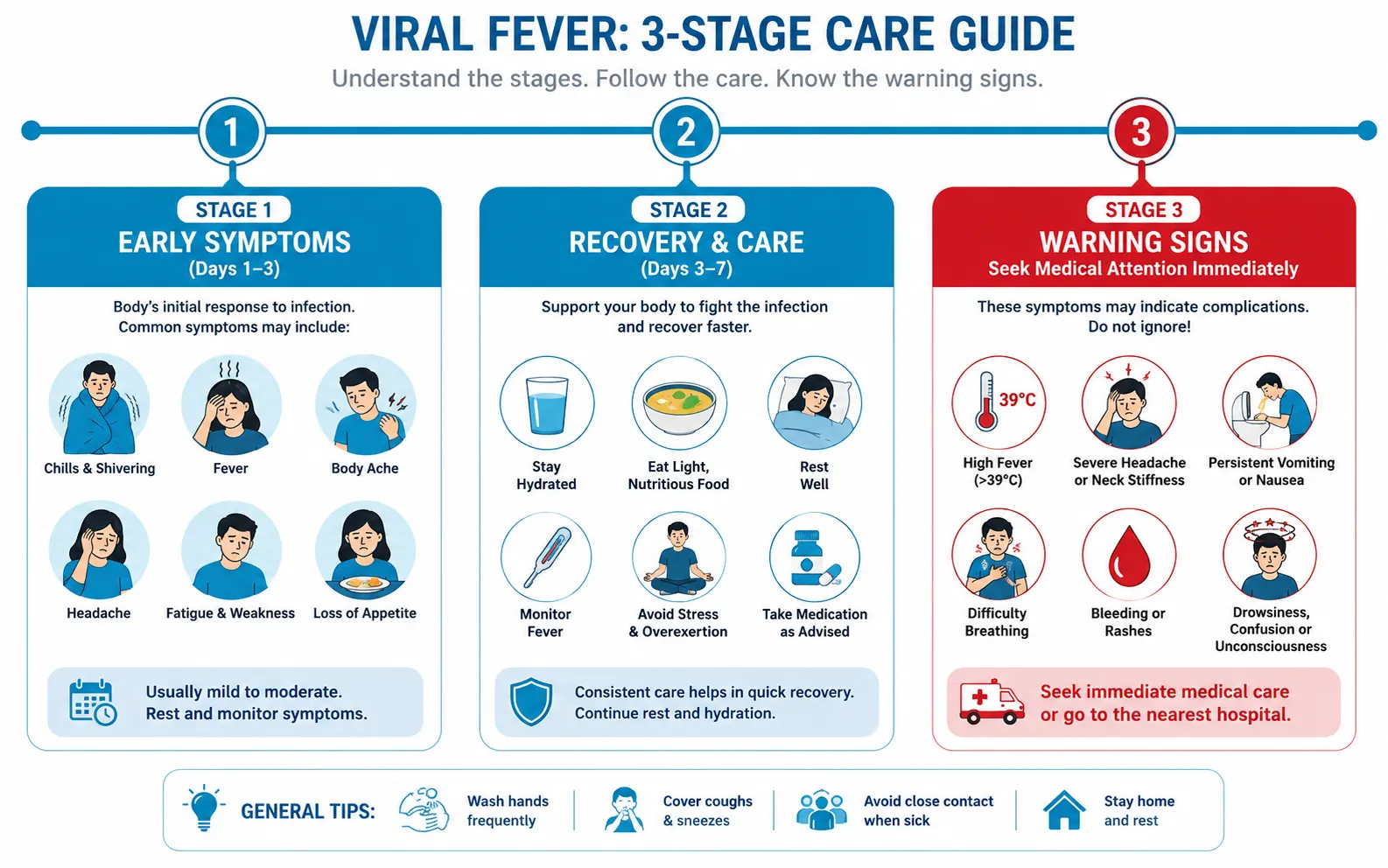
Every monsoon and seasonal transition, clinics across Gurugram see a predictable surge in patients presenting with high temperature, body ache, and fatigue. Most of these cases share a common culprit: a viral infection. Yet the phrase "viral fever" covers a wide spectrum — from a self-limiting three-day illness to something that demands urgent medical attention.
This guide, reviewed by Dr. Ladli Chatterjee, General Physician & Diabetologist at Profrea, walks you through the first signs to watch for, evidence-based home care, the medicines commonly used, and the red-flag symptoms that mean you should stop waiting and see a doctor today.
Fever is not a disease — it is the body's immune response to an invading pathogen. When a virus enters the bloodstream, the immune system releases chemical messengers called pyrogens that reset the hypothalamus (the brain's thermostat) to a higher temperature. This elevated temperature slows viral replication and accelerates immune cell activity.
A temperature above 38°C (100.4°F) is generally considered a fever. Viral fevers typically range between 38°C and 40°C and are caused by viruses such as influenza, adenovirus, rhinovirus, dengue, chikungunya, and — in recent years — SARS-CoV-2 variants. According to the World Health Organization, seasonal influenza alone causes up to 650,000 respiratory deaths globally each year, underscoring why even "routine" viral fevers deserve respect.
Viral fever rarely arrives without warning. Recognising the early signs helps you act quickly and avoid complications. The most common early symptoms in adults include:
Sudden onset of chills and shivering — often the very first symptom, occurring as the body temperature rises rapidly.
Generalised body ache and muscle pain (myalgia) — caused by inflammatory cytokines circulating in the bloodstream.
Headache — typically dull and throbbing, located at the forehead or behind the eyes.
Fatigue and weakness — disproportionate tiredness that makes even light activity difficult.
Loss of appetite and nausea — the gut is highly sensitive to systemic inflammation.
Sore throat or runny nose — common when the virus targets the upper respiratory tract.
Skin flushing and sweating — as the body attempts to dissipate heat.
In dengue or chikungunya — both endemic to Haryana — you may additionally notice a characteristic skin rash, severe joint pain, or pain behind the eyes. These presentations warrant an early blood test rather than watchful waiting.
The viruses responsible for fever shift with the season and the year. In Gurugram and the broader NCR region, the most frequently identified causes in 2025–2026 include:
Influenza A & B — peaks in winter and post-monsoon months.
Dengue virus — transmitted by the Aedes aegypti mosquito; cases spike July–November.
Chikungunya — co-circulates with dengue; hallmark is severe joint pain.
Adenovirus — causes fever with conjunctivitis and sore throat, common in children and young adults.
COVID-19 variants — ongoing low-level circulation; fever remains a key symptom.
Enteroviruses — spread via contaminated water; more prevalent during and after monsoon.
Unlike bacterial infections, viral fevers do not respond to antibiotics. This is a critical distinction — inappropriate antibiotic use contributes to antimicrobial resistance without offering any benefit to the patient.
Most uncomplicated viral fevers resolve within 3 to 7 days. The typical pattern is:
Days 1–2: Rapid temperature rise, chills, and peak symptoms.
Days 3–5: Fever may fluctuate; fatigue and body ache persist.
Days 5–7: Gradual defervescence (temperature normalises); energy slowly returns.
Dengue is an exception — the fever can last 5–7 days and is followed by a critical phase (days 4–6) when platelet counts drop and the risk of bleeding increases. Post-viral fatigue lasting 2–4 weeks after the fever resolves is also common, particularly after influenza or COVID-19.
If your fever persists beyond 7 days without a clear downward trend, a medical evaluation is essential. Our general medicine doctors at Profrea can order targeted blood panels to identify the underlying cause and rule out secondary bacterial infection.
For mild-to-moderate viral fever (below 39°C) in otherwise healthy adults, home management is appropriate for the first 48–72 hours. Here is what evidence supports:
Paracetamol (acetaminophen) at 500–1000 mg every 4–6 hours (maximum 4 g/day) is the first-line choice. It reduces fever and relieves headache and myalgia with a well-established safety profile. NSAIDs such as ibuprofen are effective but should be avoided if dengue is suspected, as they increase bleeding risk. Aspirin should never be given to children with viral fever due to the risk of Reye's syndrome.
Fever accelerates fluid loss through sweating and increased respiratory rate. Aim for at least 2.5–3 litres of fluid per day — water, oral rehydration solution (ORS), coconut water, and clear soups all count. Dehydration is the most common reason a manageable viral fever escalates into a hospital admission.
The immune system does its most effective work during sleep. Pushing through fatigue and continuing normal activity prolongs illness and increases the risk of complications. Plan for at least 8–10 hours of rest per day during the acute phase.
If temperature spikes above 39.5°C, a lukewarm (not cold) wet cloth applied to the forehead, armpits, and groin can help bring it down while the antipyretic takes effect. Avoid ice-cold water — it causes shivering, which paradoxically raises core temperature.
Appetite is usually poor during fever. Do not force large meals. Opt for easily digestible foods — khichdi, dal, curd, bananas, and boiled vegetables — that provide energy without taxing the digestive system. Avoid heavy, fried, or spicy food until the fever fully resolves.
Note: Antibiotics, antiviral supplements, and herbal remedies should only be taken on a doctor's advice. Self-medicating with antibiotics is not only ineffective against viruses but actively harmful to your gut microbiome and the broader public health.
Most viral fevers are self-limiting, but a subset can deteriorate rapidly. Seek immediate medical attention if you or someone you care for develops any of the following:
Temperature above 40°C (104°F) that does not come down with paracetamol within 1–2 hours.
Fever lasting more than 7 days without improvement.
Severe headache with neck stiffness — a potential sign of meningitis.
Skin rash that appears suddenly, especially if it is petechial (small red or purple spots that do not blanch).
Difficulty breathing or chest pain.
Confusion, altered consciousness, or seizures.
Bleeding from the nose, gums, or in urine/stool — a dengue warning sign.
Severe abdominal pain or persistent vomiting preventing fluid intake.
Fever in an infant under 3 months, a pregnant woman, an elderly person, or someone who is immunocompromised.
These presentations require blood investigations (CBC, dengue NS1 antigen, malaria smear, liver function tests) and possibly IV fluids or hospitalisation. Do not delay.
Clinically distinguishing viral from bacterial fever matters because the treatment is fundamentally different. Viral fevers tend to have a gradual onset, are accompanied by upper respiratory symptoms (runny nose, sore throat), and the patient often looks "sick but not toxic." Bacterial infections — such as typhoid, urinary tract infection, or pneumonia — often produce a higher, more sustained fever, localised symptoms (painful urination, productive cough, abdominal tenderness), and a patient who looks significantly more unwell.
A simple Complete Blood Count (CBC) is the first test a doctor orders. A high white cell count with neutrophil predominance suggests bacterial infection; a normal or low count with lymphocyte predominance points to a viral cause. C-reactive protein (CRP) and procalcitonin levels add further clarity. Profrea's general medicine team can arrange same-day blood tests across its Gurugram clinic network.
Children can develop febrile seizures at temperatures above 38.5°C. While usually self-limiting, they are frightening and require a medical review. Paracetamol syrup dosed by body weight (15 mg/kg) is the standard approach; never give aspirin. Profrea's paediatric specialists are available for in-clinic and video consultations across Gurugram.
Fever in pregnancy — particularly in the first trimester — is associated with neural tube defects and preterm labour. Paracetamol is the only antipyretic considered safe in pregnancy. Any fever above 38°C in a pregnant woman should prompt a same-day consultation. Dr. Soma Kumari, Obstetrician & Gynecologist at Profrea, advises all pregnant patients to report fever promptly rather than waiting to see if it resolves.
Illness-related stress hormones (cortisol, glucagon) cause blood glucose to rise sharply during a viral fever, even if the person is eating less. People with diabetes should monitor their glucose every 4–6 hours during a fever and contact their diabetologist if readings exceed 250 mg/dL or if ketones are detected. Dr. Ladli Chatterjee (MBBS, MD, Fellowship in Diabetes — Royal Liverpool Academy, UK) manages sick-day protocols for diabetic patients at Profrea's Sector 45 and South City-I clinics in Gurgaon.
While no measure eliminates the risk entirely, the following significantly reduce transmission and severity:
Annual influenza vaccination — recommended for all adults, especially those over 60, pregnant women, and people with chronic illness. The CDC recommends annual flu vaccination for everyone aged 6 months and older.
Hand hygiene — washing hands with soap for at least 20 seconds before meals and after contact with potentially contaminated surfaces.
Mosquito control — eliminating stagnant water around the home reduces dengue and chikungunya risk during Gurugram's monsoon season.
Safe drinking water — boiling or filtering tap water prevents enteroviral and hepatitis A infections.
Adequate sleep and nutrition — a well-rested immune system mounts a faster and more effective response to viral exposure.
Profrea's Profrea Health Screen packages include seasonal infection risk assessment and vaccination counselling as part of a comprehensive preventive check-up.
A useful rule of thumb: if you are asking yourself whether you need to see a doctor, the answer is probably yes. More specifically, book a same-day or next-day appointment if:
Your fever has not improved after 48–72 hours of home management.
You have a pre-existing condition (diabetes, heart disease, kidney disease, asthma, or a suppressed immune system).
You are unable to keep fluids down due to vomiting or diarrhoea.
You have recently returned from travel to a malaria-endemic region.
You notice any of the red-flag symptoms listed above.
Profrea operates 7 clinic locations across Gurugram, with both walk-in and scheduled appointments available. Video consultations are also available through the Profrea mobile app for patients who are too unwell to travel. Book a consultation with a Profrea general medicine doctor and get a clinical assessment, targeted blood tests if needed, and a clear treatment plan — all without the wait times of a hospital emergency department.
The earliest signs are usually sudden chills, generalised body ache, and fatigue — often appearing before the thermometer confirms a temperature above 38°C. A headache and loss of appetite typically follow within hours.
Most viral fevers in healthy adults resolve within 3 to 7 days. Dengue can last up to 7 days with a critical phase in the middle. If fever persists beyond 7 days, a medical evaluation is necessary.
Yes — mild to moderate viral fever (below 39°C) in otherwise healthy adults can be managed at home with paracetamol, adequate hydration, and rest. However, home treatment is not appropriate if red-flag symptoms are present or if the fever does not improve within 48–72 hours.
Paracetamol is the first-line medicine for fever and pain relief. Specific antiviral drugs (such as oseltamivir for influenza) are used in certain high-risk cases but must be prescribed by a doctor. Antibiotics are not effective against viral infections and should not be taken without a prescription.
Viral fever becomes dangerous when it is accompanied by a temperature above 40°C, neck stiffness, a petechial rash, bleeding, difficulty breathing, confusion, or seizures. These are medical emergencies. Fever in infants under 3 months, pregnant women, or immunocompromised individuals also warrants urgent assessment.
The fever itself is not contagious, but the underlying virus usually is. Respiratory viruses spread via droplets and contaminated surfaces; enteroviruses spread via the faecal-oral route. Staying home, wearing a mask, and practising hand hygiene during illness protects those around you.
Profrea's general medicine team is available across 7 Gurugram clinic locations and via video consultation — so you get the right advice fast, without unnecessary delays.