
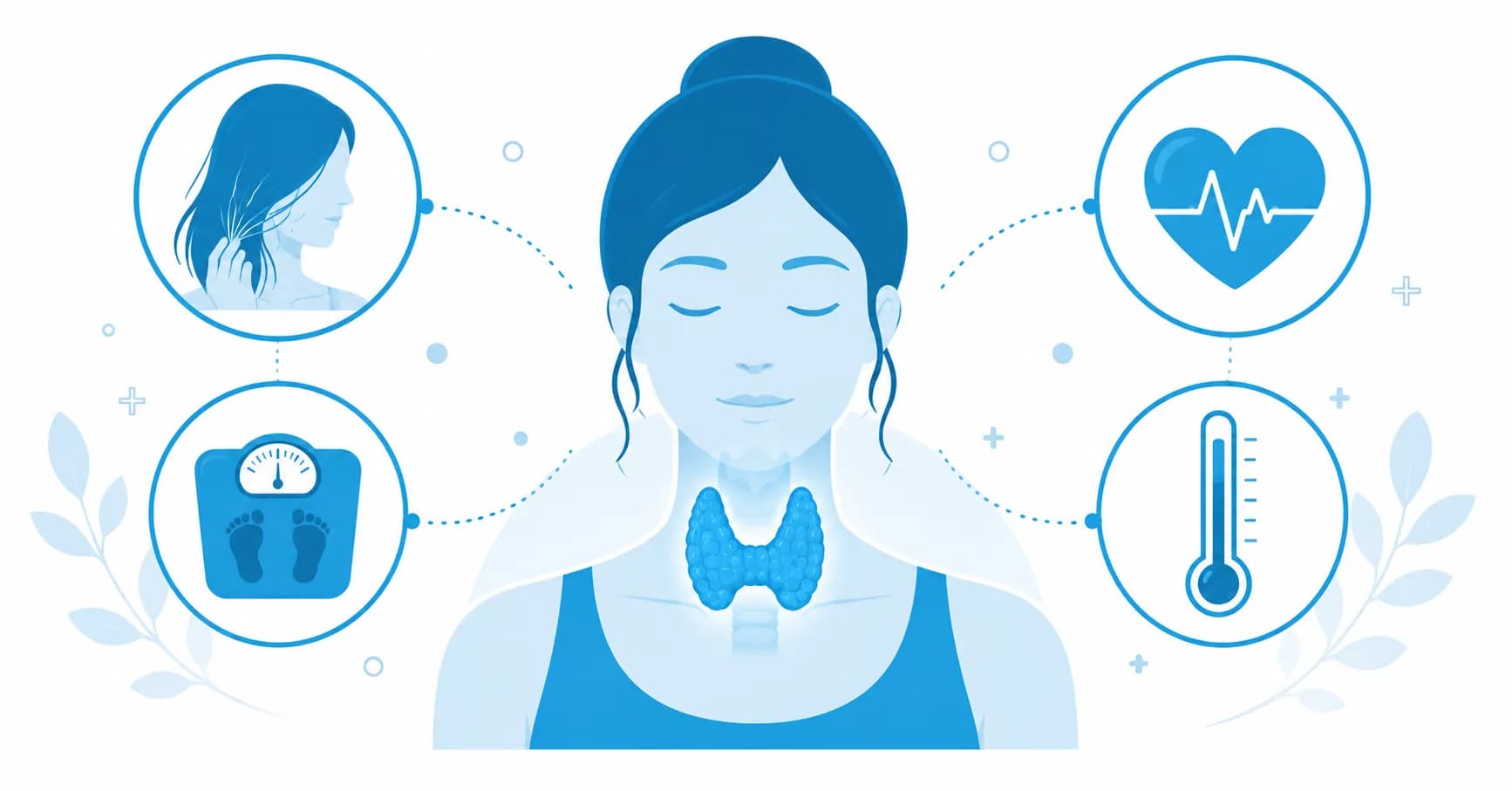
A practical guide for anyone in Gurugram who suspects a thyroid issue — what to watch for, which tests matter, and how a multispeciality clinic can help you manage it long-term.
By Dr. Ladli Chatterjee, General Physician & Diabetologist, Profrea · Published July 2026
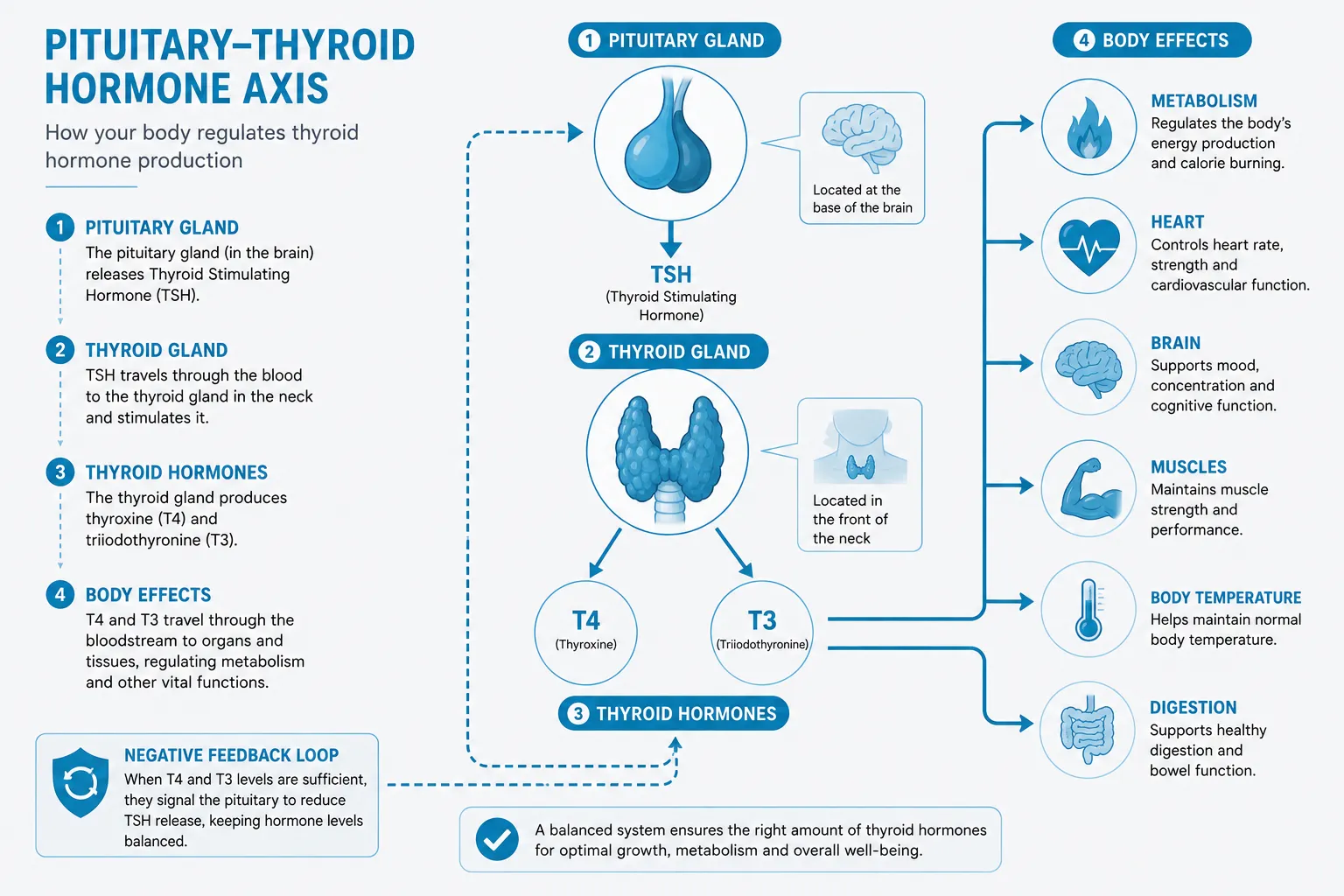
The thyroid is a small, butterfly-shaped gland at the base of your neck, but its influence on your body is enormous. It produces hormones — primarily thyroxine (T4) and triiodothyronine (T3) — that regulate metabolism, heart rate, body temperature, mood, and even hair growth. When this gland underperforms (hypothyroidism) or overperforms (hyperthyroidism), the ripple effects touch almost every organ system.
According to the World Health Organization, thyroid disorders are among the most common endocrine conditions globally, and they disproportionately affect women — particularly those between the ages of 25 and 50. In urban India, rising stress levels, iodine imbalances, and autoimmune triggers have made thyroid dysfunction increasingly prevalent. In Gurugram specifically, the combination of sedentary corporate lifestyles and high-stress environments makes this a condition worth understanding early.
The encouraging news: with the right diagnosis and a structured care plan, most people with thyroid disorders lead completely normal, healthy lives. The challenge is recognising the signs before they compound into more serious health issues.
Thyroid symptoms are notoriously easy to dismiss — fatigue, weight changes, and mood swings are common complaints that often get attributed to stress or lifestyle. That is precisely why so many cases go undiagnosed for months or years. Here is what to look for:
Unexplained weight gain despite no major change in diet or activity
Persistent fatigue that does not improve with rest
Hair thinning or hair loss, including loss of the outer third of the eyebrows
Feeling cold all the time, even in warm environments
Dry skin and brittle nails
Constipation and sluggish digestion
Brain fog, poor concentration, and low mood
Irregular or heavy menstrual periods
Puffy face, especially around the eyes in the morning
Slowed heart rate (bradycardia)
Unintentional weight loss despite a normal or increased appetite
Rapid or irregular heartbeat (palpitations)
Anxiety, nervousness, and irritability
Tremors in the hands and fingers
Excessive sweating and heat intolerance
Frequent bowel movements
Difficulty sleeping
Bulging eyes (in Graves' disease, the most common cause of hyperthyroidism)
Muscle weakness, particularly in the upper arms and thighs
If you recognise three or more of these symptoms in yourself, it is worth speaking to a General Physician and Diabetologist at Profrea rather than waiting for symptoms to worsen. Early intervention consistently leads to better outcomes.
A thyroid function test (TFT) is a simple blood draw that can reveal a great deal about how your gland is performing. Here are the key markers your doctor will typically assess:
TSH is produced by the pituitary gland and acts as the primary signal to the thyroid. It is almost always the first test ordered. A high TSH suggests the pituitary is working overtime to stimulate an underperforming thyroid (hypothyroidism); a low TSH suggests the thyroid is already producing too much hormone on its own (hyperthyroidism). The normal reference range is approximately 0.4–4.0 mIU/L, though interpretation depends on clinical context.
These measure the active, unbound forms of the thyroid hormones circulating in your blood. They help confirm whether an abnormal TSH reflects a true hormonal imbalance and guide treatment decisions.
Anti-TPO (anti-thyroid peroxidase) and anti-thyroglobulin antibodies are tested when an autoimmune cause — such as Hashimoto's thyroiditis or Graves' disease — is suspected. These are particularly relevant for women with a family history of thyroid disease.
While not a blood test, an ultrasound of the neck is often ordered alongside blood work to assess the size, texture, and structure of the gland — and to detect nodules that may require further evaluation. Profrea's network across Gurugram makes it straightforward to coordinate blood tests and imaging through a single care pathway.
A Profrea Health Screen can include thyroid function testing as part of a broader preventive check-up — a practical option for anyone who wants a baseline assessment without waiting for symptoms to appear.
Yes — and this is one of the most common reasons women in Gurgaon seek a thyroid evaluation. When thyroid hormone levels fall, the body's metabolic rate slows. Calories that would normally be burned are stored as fat, leading to gradual, frustrating weight gain that does not respond well to diet and exercise alone.
Hair loss in hypothyroidism is diffuse — meaning it occurs all over the scalp rather than in patches — and can also affect body hair. The mechanism involves disrupted hair follicle cycling: thyroid hormones are essential for maintaining the anagen (growth) phase of hair. When levels drop, more follicles shift prematurely into the telogen (resting/shedding) phase.
The reassuring part: both weight gain and hair loss caused by hypothyroidism are largely reversible once thyroid hormone levels are restored to the normal range with appropriate treatment. Most patients notice improvement in hair density within three to six months of starting therapy.
If you are experiencing these symptoms alongside fatigue or feeling cold, a specialist consultation at Profrea — particularly if you are also navigating hormonal changes related to pregnancy or menstrual health — can help identify whether thyroid dysfunction is a contributing factor.
Hyperthyroidism is less common than hypothyroidism but can be more acutely disruptive. The most frequent cause is Graves' disease, an autoimmune condition in which the immune system produces antibodies that continuously stimulate the thyroid to produce excess hormone. Other causes include toxic multinodular goitre and thyroiditis.
Treatment options for hyperthyroidism include:
Anti-thyroid medications (such as methimazole or propylthiouracil) that reduce hormone production
Beta-blockers to manage symptoms like palpitations and tremors while hormone levels normalise
Radioactive iodine therapy, which selectively destroys overactive thyroid tissue
Surgery (thyroidectomy), considered when medication is not tolerated or when a large goitre is causing compression symptoms
The right treatment depends on the underlying cause, severity, patient age, and whether pregnancy is planned. A structured, doctor-managed care plan — rather than a one-off prescription — is essential for safe long-term management. As noted in the NIH's clinical overview of hyperthyroidism, treatment choice must be individualised based on the patient's specific clinical picture.
This is one of the most frequently asked questions in thyroid care — and the honest answer is: it depends on the type and cause.
Hypothyroidism caused by Hashimoto's thyroiditis or post-surgical removal of the thyroid is typically a lifelong condition requiring daily hormone replacement (levothyroxine). However, "manageable" should not be read as "limiting" — with the correct dose, most people feel entirely well and live without restriction. Dose adjustments may be needed over time, particularly during pregnancy, weight changes, or ageing.
Hyperthyroidism caused by Graves' disease can go into remission in some patients after 12–18 months of anti-thyroid medication, particularly in mild cases. Others may require definitive treatment (radioactive iodine or surgery), after which they often develop hypothyroidism and then require lifelong replacement therapy.
Thyroiditis (inflammation of the thyroid, sometimes triggered by pregnancy or viral illness) is often temporary — thyroid function may normalise on its own within a few months.
The key takeaway: regular monitoring matters more than the label of "curable" or "manageable." Skipping follow-up blood tests or self-adjusting medication doses are the most common reasons thyroid conditions spiral out of control.
Thyroid disease rarely exists in isolation. Hypothyroidism frequently co-occurs with type 2 diabetes, polycystic ovary syndrome (PCOS), depression, and cardiovascular risk factors. Hyperthyroidism can accelerate bone loss and trigger atrial fibrillation. Managing these interconnections requires more than a single specialist — it requires a coordinated team.
Profrea's multispeciality network across Gurugram is structured precisely for this kind of integrated care. Dr. Ladli Chatterjee, General Physician and Diabetologist at Profrea, holds an MBBS and MD in General Medicine from Dr. D. Y. Patil University, along with a Fellowship in Diabetes from the Royal Liverpool Academy, UK (2018) and a Fellowship in Diabetes (FIDD). Her dual expertise in general medicine and metabolic conditions makes her particularly well-placed to manage thyroid disorders that intersect with blood sugar regulation — a combination that is more common than most patients realise.
Dr. Chatterjee is available at Profrea's Sector 45 (VKaRe Diabetic Clinic), South City-I, and Sector 52 locations in Gurgaon. Appointments can be booked in-clinic or via video consultation through the Profrea app — a practical option for working professionals who cannot easily take time off mid-week.
When thyroid dysfunction intersects with reproductive health — as it frequently does in women trying to conceive — Profrea's team includes Dr. Soma Kumari, Obstetrician, Gynecologist & Infertility Specialist, who holds a Fellowship in ART from RISSA IVF Center, Delhi. Thyroid hormone levels are routinely assessed as part of any fertility workup, and having both specialists within the same network simplifies the care journey significantly.
For patients whose thyroid condition is contributing to anxiety, low mood, or cognitive difficulties, Profrea's psychology team — led by Dr. Sarika Thakral, Consultant Clinical Psychologist with 15+ years of experience — offers structured psychological support as part of a holistic care plan.
While medication is the cornerstone of thyroid treatment, certain lifestyle factors can support or undermine thyroid function:
Iodine intake: Both deficiency and excess iodine can disrupt thyroid function. In India, iodised salt has largely addressed deficiency, but excessive supplementation with iodine-rich products can trigger or worsen autoimmune thyroid disease in susceptible individuals.
Selenium: This trace mineral is essential for converting T4 to the active T3 form. Brazil nuts, sunflower seeds, and eggs are good dietary sources.
Timing of medication: Levothyroxine is best absorbed on an empty stomach, at least 30–60 minutes before breakfast. Taking it with calcium supplements, iron, or coffee significantly reduces absorption.
Stress management: Chronic stress elevates cortisol, which can suppress TSH and interfere with T4-to-T3 conversion. This is particularly relevant for Gurugram's working population.
Goitrogenic foods: Raw cruciferous vegetables (broccoli, cauliflower, kale) contain compounds that can mildly interfere with thyroid hormone synthesis in very large quantities — but cooking largely neutralises this effect. Patients on thyroid medication do not need to avoid these foods entirely.
A Profrea dietitian can help you build a nutrition plan that supports thyroid health without unnecessary restrictions — particularly useful if you are managing thyroid disease alongside diabetes or weight concerns.
Pregnancy places significant demands on the thyroid. The gland must increase hormone production by approximately 50% to support both the mother and the developing foetus — which cannot produce its own thyroid hormones until around week 12. Uncontrolled hypothyroidism during pregnancy is associated with miscarriage, preterm birth, gestational hypertension, and impaired foetal neurodevelopment.
For this reason, TSH screening is recommended for all women planning a pregnancy, and for those already on levothyroxine, dose adjustments are almost always required in the first trimester. Women with known thyroid disease should ideally have their TSH checked before conception and within the first four to eight weeks of pregnancy.
Profrea's integrated approach — with general medicine, gynaecology, and infertility expertise under one network — means these adjustments can be managed seamlessly. Speak to Dr. Ladli Chatterjee or Dr. Soma Kumari if you are planning a pregnancy and have a known or suspected thyroid condition.
The earliest signs are often subtle: persistent fatigue that does not improve with sleep, unexplained weight changes, hair thinning, feeling unusually cold or warm, and irregular periods. Because these symptoms overlap with stress and other conditions, a TSH blood test is the most reliable way to confirm or rule out a thyroid issue.
A TSH (Thyroid-Stimulating Hormone) test is the standard first-line investigation. Depending on the result, your doctor may also order Free T4, Free T3, and thyroid antibody tests (Anti-TPO) to get a complete picture. These are all simple blood draws that can be done at any Profrea clinic location in Gurgaon.
Yes. A sluggish thyroid slows metabolism, leading to gradual weight gain, and disrupts the hair growth cycle, causing diffuse shedding. Both symptoms typically improve within three to six months of effective treatment with levothyroxine.
It depends on the type. Autoimmune hypothyroidism (Hashimoto's) usually requires lifelong medication, but patients live entirely normal lives on treatment. Some forms of hyperthyroidism can go into remission. Thyroiditis caused by pregnancy or viral illness often resolves on its own. Regular monitoring is the most important factor in any scenario.
Profrea's multispeciality clinics across Gurugram offer thyroid consultations with experienced general physicians and diabetologists. Dr. Ladli Chatterjee, who holds a Fellowship in Diabetes from the Royal Liverpool Academy, UK, is available at Sector 45, South City-I, and Sector 52 locations. You can book an in-clinic or video consultation through the Profrea app or website.
If you are on thyroid medication, a TSH test every six to twelve months (or more frequently if your dose has recently changed) is standard practice. If you are asymptomatic and not on medication but have a family history of thyroid disease, an annual check as part of a routine health screen is a sensible precaution. A Profrea health screening package can include thyroid function as part of a broader annual check-up.
Profrea's General Medicine team offers doctor-managed thyroid care plans, in-clinic and video consultations, and integrated support across specialties — all within Gurugram.