
A clinically grounded guide for women in Gurgaon navigating hormonal weight gain, insulin resistance, and the frustrating cycle of PCOS.
By Dr. Ladli Chatterjee, General Physician & Diabetologist, Profrea · Published July 2026
If you have been told to "just eat less and exercise more" while living with Polycystic Ovary Syndrome (PCOS), you are not alone — and you are not imagining how unfair it feels. PCOS is one of the most common hormonal conditions affecting women of reproductive age, and weight gain is among its most stubborn and demoralising symptoms. The biology behind PCOS-related weight gain is genuinely different from ordinary weight gain, and understanding that difference is the first step toward effective treatment.
According to the World Health Organization, PCOS affects an estimated 8–13% of women of reproductive age globally, with up to 70% of cases remaining undiagnosed. In India, prevalence estimates range from 9% to 22%, making it a significant public health concern — particularly in urban centres like Gurgaon where sedentary work patterns and dietary shifts compound the hormonal burden.
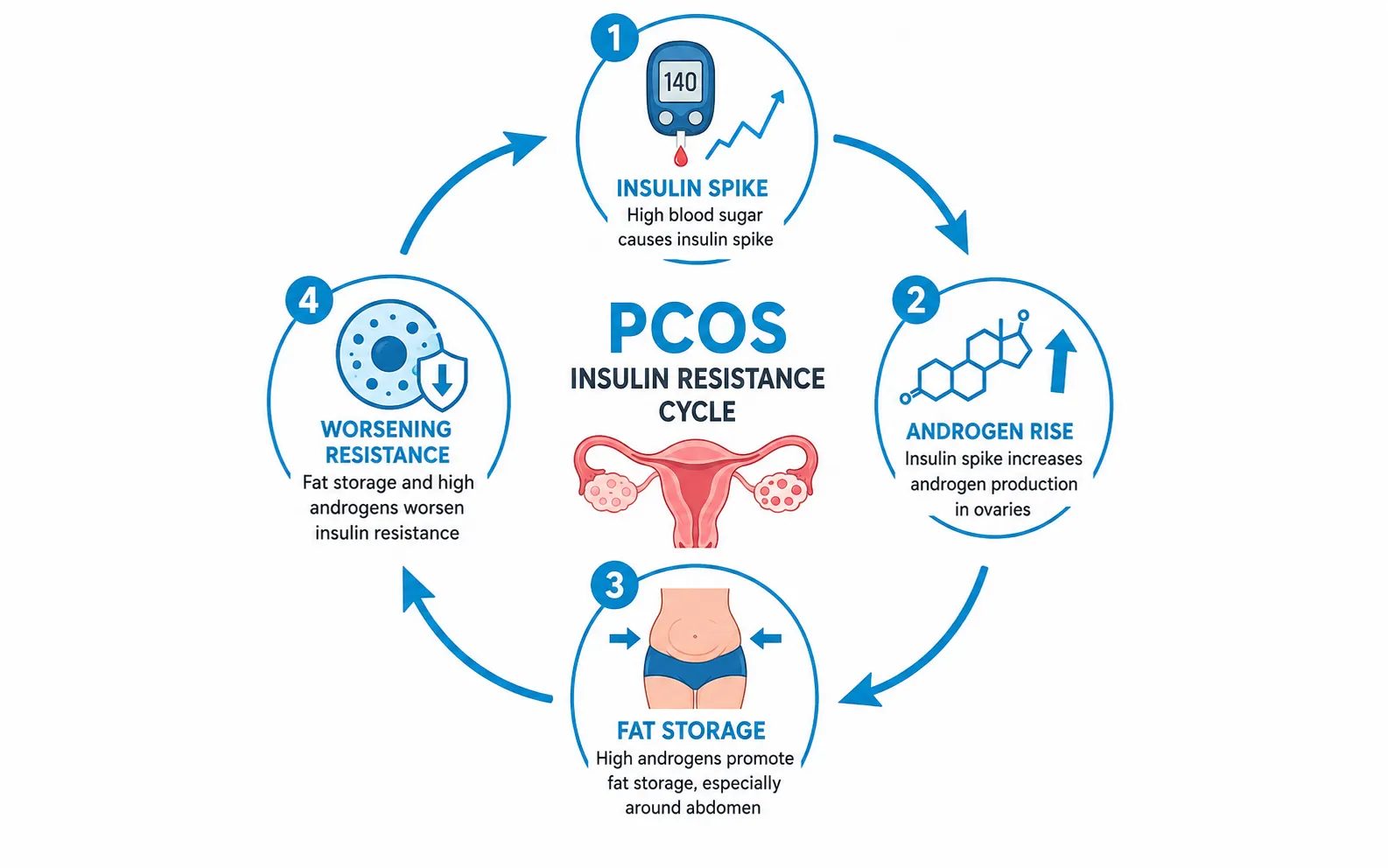
The core reason PCOS makes weight loss so difficult is insulin resistance. In women with PCOS, the body's cells do not respond efficiently to insulin — the hormone that helps glucose enter cells for energy. As a result, the pancreas produces more insulin to compensate. Elevated insulin levels directly stimulate the ovaries to produce excess androgens (male hormones such as testosterone), which in turn disrupts ovulation and promotes fat storage, particularly around the abdomen.
This creates a vicious cycle: insulin resistance drives weight gain, and weight gain worsens insulin resistance. Standard calorie-restriction advice often fails because it does not address the underlying hormonal dysregulation. Women with PCOS may need to work significantly harder than women without the condition to achieve the same modest weight reduction.
Additional hormonal factors compound the difficulty:
Elevated androgens promote visceral (abdominal) fat accumulation and reduce lean muscle mass.
Leptin resistance — common in PCOS — impairs the brain's ability to register satiety, making hunger harder to control.
Cortisol dysregulation linked to chronic stress (itself worsened by living with an unmanaged condition) further promotes fat storage.
Thyroid dysfunction, which frequently co-exists with PCOS, can slow metabolism independently.
A 2019 review published on PubMed Central (NIH) confirmed that insulin resistance is present in 65–70% of women with PCOS regardless of body weight, meaning even lean women with PCOS can struggle with metabolic dysfunction and weight management challenges.
Yes — and the evidence is encouraging. Even a modest reduction of 5–10% of body weight has been shown to meaningfully improve hormonal profiles, restore more regular menstrual cycles, reduce androgen levels, and improve fertility outcomes in women with PCOS. Weight loss also reduces the long-term risk of Type 2 diabetes and cardiovascular disease, both of which are elevated in women with untreated PCOS.
The key insight is that the weight loss must be approached medically — not just through willpower. When the hormonal environment is corrected first (or simultaneously), the body becomes far more responsive to lifestyle changes. This is why a doctor-managed plan, rather than a generic diet programme, makes a measurable difference.
There is no single universal answer — effective PCOS weight loss treatment is personalised. However, a well-structured medical plan typically combines several evidence-based components:
Metformin is the most widely used medication for PCOS-related insulin resistance. It reduces hepatic glucose production, improves cellular insulin sensitivity, and — in many patients — supports gradual weight reduction and menstrual regularity. Newer agents such as inositol supplements and, in selected cases, GLP-1 receptor agonists are increasingly being used under specialist supervision for women who do not respond adequately to metformin alone.
A thorough hormonal workup — including fasting insulin, testosterone, DHEAS, LH/FSH ratio, thyroid function, and AMH — is essential before any treatment plan is finalised. Women with significant androgen excess may benefit from anti-androgen therapy alongside metabolic treatment. Dr. Soma Kumari, Profrea's Obstetrician, Gynecologist & Infertility Specialist, works alongside the general medicine team to ensure the gynaecological dimension of PCOS is addressed comprehensively.
A low-glycaemic-index (low-GI) diet is the most consistently supported dietary approach for PCOS. It reduces post-meal insulin spikes, supports satiety, and helps break the insulin-fat storage cycle. This does not mean a crash diet — it means a sustainable, calorie-appropriate eating pattern rich in fibre, lean protein, and healthy fats, with refined carbohydrates and added sugars minimised. Profrea's nutrition and dietetics team can build a personalised meal plan that accounts for Indian food culture and practical daily constraints.
Both aerobic exercise and resistance training have independent benefits for insulin sensitivity in PCOS. Resistance training is particularly valuable because it builds lean muscle mass, which improves glucose uptake and raises resting metabolic rate. A physiotherapy or fitness professional can design a programme appropriate to the individual's fitness level and any co-existing musculoskeletal concerns — Profrea's physiotherapy team is available across its Gurgaon clinic network for exactly this purpose.
PCOS carries a significantly elevated risk of anxiety, depression, and disordered eating — all of which undermine weight management efforts. Addressing psychological wellbeing is not optional; it is part of the treatment. Dr. Sarika Thakral, Profrea's Consultant Clinical Psychologist with 15+ years of experience and certifications in NLP and EFT/TFT, provides counselling support that can be integrated into a holistic PCOS care plan.
Absolutely — and the difference between a medically supervised plan and a self-managed approach is significant. A doctor can order the right investigations to identify your specific hormonal pattern, rule out co-existing conditions (such as hypothyroidism or non-alcoholic fatty liver disease), prescribe medications where appropriate, and monitor your progress with objective data rather than guesswork.
Dr. Ladli Chatterjee, Profrea's General Physician and Diabetologist, holds an MD in General Medicine from Dr. D. Y. Patil University and a Fellowship in Diabetes from the Royal Liverpool Academy, UK. Her expertise in metabolic medicine — including insulin resistance, diabetes prevention, and hormonal weight management — makes her particularly well-placed to lead PCOS weight loss care plans. She consults at Profrea's Sector 45, South City-I, and Sector 52 clinics in Gurgaon.
Profrea's model is built around doctor-managed care plans — meaning your treatment is not a one-time consultation but an ongoing, monitored programme with scheduled follow-ups, lab reviews, and plan adjustments as your body responds. This continuity is what separates meaningful clinical outcomes from short-term fixes.
Profrea operates 7 clinic locations across Gurugram, with both in-clinic and video consultation options — making it accessible whether you prefer face-to-face care or the convenience of a digital appointment from home or office. The care pathway for PCOS weight management typically follows these steps:
Initial consultation with Dr. Ladli Chatterjee or a Profrea general medicine physician — full history, symptom review, and targeted investigations ordered.
Hormonal and metabolic workup — fasting insulin, glucose, lipid panel, thyroid, androgens, and relevant gynaecological markers.
Personalised care plan — combining medication (where indicated), nutrition guidance, exercise recommendations, and mental wellness support.
Gynaecology co-management — referral to Dr. Soma Kumari for menstrual, fertility, or ART-related concerns within the same network.
Regular follow-ups — monthly or bi-monthly reviews with lab monitoring to track progress and adjust the plan.
Psychological support — access to Dr. Sarika Thakral for stress, emotional eating, or mood-related concerns.
Profrea's membership and corporate portals also allow women to access ongoing care at preferential rates — a practical advantage for those who need sustained, long-term management rather than episodic consultations.
While a personalised nutrition plan from a qualified dietitian is always preferable, the following evidence-based principles are consistently supported for women with PCOS:
Prioritise low-GI carbohydrates: Choose whole grains (brown rice, oats, millets), legumes, and vegetables over white rice, maida, and sugary foods.
Increase protein at every meal: Protein slows glucose absorption, reduces insulin spikes, and supports satiety. Include dal, paneer, eggs, chicken, or fish at each meal.
Do not skip meals: Irregular eating patterns worsen insulin dysregulation. Three balanced meals with one or two small snacks is preferable to prolonged fasting followed by large meals.
Reduce ultra-processed foods and added sugar: These drive rapid insulin spikes and contribute to the hormonal cycle that promotes fat storage.
Include anti-inflammatory foods: Turmeric, omega-3-rich foods (flaxseed, walnuts, fatty fish), and plenty of colourful vegetables support hormonal balance and reduce systemic inflammation.
Stay well hydrated: Adequate water intake supports kidney function, reduces water retention, and can help manage appetite.
Profrea's nutrition and dietetics specialists — including Dt. Swagata Pahari and Dt. Deepak — can translate these principles into a practical, culturally appropriate meal plan tailored to your metabolic profile.
PCOS causes insulin resistance, which drives elevated insulin levels that promote fat storage — especially around the abdomen. Elevated androgens further reduce lean muscle mass and increase visceral fat. Leptin resistance impairs hunger signalling, and co-existing thyroid issues can slow metabolism. Together, these factors mean the standard advice of eating less and moving more is insufficient without addressing the underlying hormonal dysfunction.
The most effective approach combines insulin-sensitising medication (such as metformin), a low-GI diet, regular resistance and aerobic exercise, hormonal management, and psychological support. The specific combination depends on your individual hormonal profile, which is why a doctor-managed plan — rather than a generic programme — produces the best outcomes.
Yes. A physician with expertise in metabolic medicine and hormonal conditions can investigate the specific drivers of your weight gain, prescribe appropriate medications, co-ordinate with a gynaecologist and dietitian, and monitor your progress with regular lab reviews. This integrated, supervised approach is significantly more effective than self-managed dieting.
Yes — even a 5–10% reduction in body weight can restore more regular menstrual cycles, reduce androgen levels, improve fertility, lower blood sugar, and reduce the long-term risk of Type 2 diabetes and cardiovascular disease. Weight loss is one of the most powerful interventions available for PCOS, provided it is achieved through a medically appropriate, sustainable approach.
A low-glycaemic-index diet rich in protein, fibre, and anti-inflammatory foods — combined with insulin-sensitising medication where indicated, regular resistance and aerobic exercise, and ongoing medical monitoring — is the most evidence-supported approach. The plan should be personalised to your hormonal profile, food preferences, and lifestyle by a qualified physician and dietitian.
Profrea's doctor-managed care plans in Gurgaon combine metabolic medicine, gynaecology, nutrition, and psychological support — so you get a plan that addresses the real reasons weight loss has been so difficult.