By Profrea · Published July 2026
A deep dive into Nasya — the Panchakarma nasal therapy that Ayurveda calls the doorway to the mind, senses, and upper respiratory system.
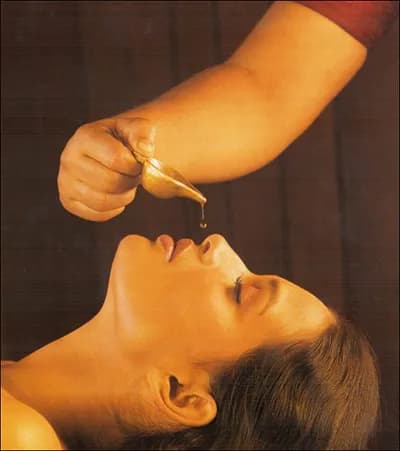
In Ayurveda, the nose is described as Shirasodvara — the gateway to the head. Nasya is the therapeutic practice of administering herbal oils, medicated ghee, powders, or plant extracts through the nostrils to cleanse, nourish, and balance the tissues of the head, neck, and respiratory tract. It is one of the five classical Panchakarma detoxification procedures and is considered essential for conditions rooted in the region above the clavicle.
The classical Ayurvedic text Ashtanga Hridayam states: "Nasam hi shiraso dvaram" — the nose is indeed the door to the head. By introducing medicated substances through this channel, Nasya is believed to reach the deeper tissues of the brain, sinuses, and sensory organs, helping to expel accumulated Kapha dosha and restore the natural flow of Prana Vayu (the vital life force governing the head and chest).
According to a review published on PubMed Central, Nasya therapy has been studied for its potential benefits in managing sinusitis, migraine, cervical spondylosis, and neurological conditions, with researchers noting its unique route of nasal drug delivery as pharmacologically significant. At Profrea's clinics in Gurugram, our Ayurvedic specialists approach Nasya as a personalised, doctor-guided therapy — not a one-size-fits-all ritual.
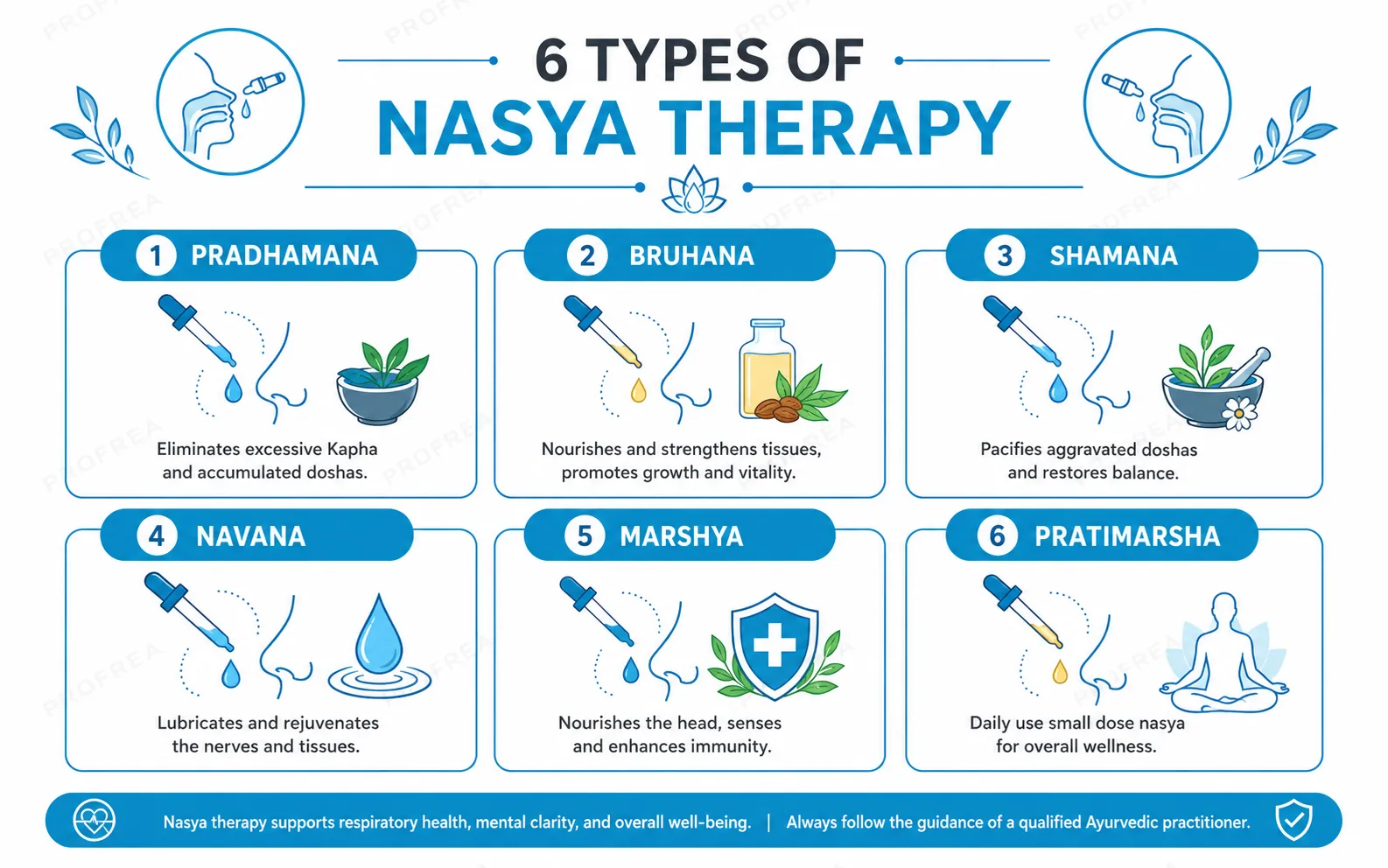
Ayurvedic texts describe multiple forms of Nasya, each suited to a different therapeutic goal and individual constitution (Prakriti). A qualified practitioner will assess your dosha imbalance before recommending a type.
Dry herbal powders — such as Vacha (Acorus calamus) or Brahmi — are blown into the nostrils using a tube. This is the most stimulating form and is primarily used to clear heavy Kapha accumulation, nasal congestion, sinusitis, and headaches caused by excess mucus.
Rich, nourishing substances such as medicated ghee, milk, or oils infused with herbs like Ashwagandha or Shatavari are instilled to strengthen and nourish the tissues. This type is indicated for Vata-dominant conditions including dryness, anxiety, insomnia, hair loss, and voice disorders.
Mild herbal oils or decoctions are used to pacify aggravated doshas without strongly purging them. It is suitable for Pitta-related conditions such as eye inflammation, premature greying, and skin disorders of the face.
A blend of herbal oils and decoctions is used — this is the most commonly administered form in clinical Panchakarma settings. Anu Taila and Shadbindu Taila are among the most frequently prescribed oils for this type.
Small quantities of plain ghee or oil are applied to the inner nostrils with the little finger. This is a gentle, self-administered form that can be practised daily as a preventive measure and is especially beneficial during dry winter months in Gurugram.
A sub-type of Marshya Nasya, this involves an even smaller dose of oil and is recommended as a daily Dinacharya (daily routine) practice for maintaining nasal hygiene, preventing pollution-related respiratory irritation, and supporting mental clarity — particularly relevant for urban dwellers in the NCR region.
Nasya's benefits span the physical, sensory, and cognitive dimensions of health. Below are the most clinically and traditionally documented benefits:
Sinus and Respiratory Relief: Nasya helps drain accumulated mucus from the sinuses, offering relief in chronic sinusitis, allergic rhinitis, and nasal polyps. The warm oil softens and loosens Kapha deposits, facilitating natural drainage.
Headache and Migraine Management: By clearing congestion and balancing Vata and Kapha in the head region, Nasya is traditionally used to reduce the frequency and intensity of tension headaches and migraines.
Improved Mental Clarity and Concentration: Herbs such as Brahmi and Vacha administered via Nasya are considered medhya (intellect-enhancing) in Ayurveda, supporting focus, memory, and cognitive function.
Cervical Spondylosis and Neck Stiffness: Nasya is a recognised adjunct therapy for cervical conditions, helping to reduce Vata-driven pain and stiffness in the neck and shoulders.
Sensory Organ Health: Regular Nasya is said to strengthen the eyes, ears, nose, and throat — the sensory organs governed by the head region — and may support conditions like dry eyes, tinnitus, and voice hoarseness.
Stress, Anxiety, and Sleep: Nourishing Nasya with calming oils such as Brahmi Ghrita can help calm an overactive nervous system, supporting better sleep and reduced anxiety.
Hair and Scalp Health: Ayurveda links the health of the scalp and hair roots to the vitality of the head region. Bruhana Nasya is used as a supportive therapy for premature greying and hair thinning.
Facial Paralysis (Bell's Palsy): Nasya is used as part of a comprehensive Panchakarma protocol for facial nerve conditions, alongside other therapies.
It is important to note that Nasya is a complementary therapy. Its benefits are best realised as part of a holistic Ayurvedic treatment plan designed by a qualified practitioner who has assessed your constitution and current health status.
Understanding what happens during a Nasya session can help patients feel prepared and at ease. A standard clinical Nasya procedure at a Panchakarma centre typically follows these stages:
The practitioner begins with a gentle facial and neck massage (Abhyanga) using warm medicated oil, followed by localised steam fomentation (Swedana) over the face and sinuses. This softens the tissues, opens the channels, and prepares the nasal passages to receive the medication effectively.
The patient lies comfortably on a treatment table with the head tilted slightly back. The prescribed medicated oil, ghee, or powder is instilled into each nostril — typically 2 to 8 drops per nostril depending on the type of Nasya. The patient is instructed to inhale gently. The practitioner may then massage the soles of the feet, palms, and ears to facilitate the upward movement of the medicine.
After the instillation, the patient rests quietly for a few minutes. Gargling with warm water or herbal decoction (Kavala) may be recommended to clear any residual medication from the throat. The practitioner provides specific dietary and lifestyle guidelines for the rest of the day — typically advising against cold food, cold water, excessive talking, and exposure to wind or dust.
A standard Nasya course in a Panchakarma setting runs for 7 to 14 consecutive days, though the exact duration depends on the condition being treated and the individual's response. Maintenance sessions may be recommended seasonally thereafter.
While Nasya is safe when administered by a trained Ayurvedic physician, it is not appropriate for everyone. Classical texts and modern clinical practice identify the following contraindications:
Immediately after eating a heavy meal (Nasya should be performed on an empty or light stomach)
During acute fever, cold, or active nasal infection
During menstruation or pregnancy (certain types are contraindicated)
Immediately after bathing, exercise, or alcohol consumption
In children under 7 years and elderly patients above 80 years (use with caution)
After recent nasal surgery or trauma
In patients with severe hypertension or active bleeding disorders
Always disclose your complete medical history, current medications, and any recent surgeries to your Ayurvedic doctor before beginning Nasya therapy. Self-administering Nasya without professional guidance — particularly with strong herbal preparations — carries a risk of irritation or adverse effects.
The choice of Nasya oil or preparation is highly individualised. Some of the most widely used formulations include:
Anu Taila: A classical polyherbal sesame-oil preparation considered the gold standard for daily and therapeutic Nasya. It is used for sinusitis, allergic rhinitis, headaches, and sensory organ health.
Shadbindu Taila: Particularly effective for Kapha-dominant conditions, nasal polyps, and chronic sinusitis.
Brahmi Ghrita: A medicated ghee used in Bruhana Nasya for cognitive support, anxiety, and neurological conditions.
Ksheerabala Taila: A milk-and-oil preparation used for Vata disorders including cervical spondylosis, facial palsy, and dry nasal passages.
Plain Sesame Oil or Cow Ghee: Used in Pratimarsha Nasya for daily preventive practice.
The World Health Organization's traditional medicine strategy recognises Ayurveda as a significant system of traditional medicine practised across South Asia, and the WHO's Traditional, Complementary and Integrative Medicine programme advocates for the integration of evidence-based traditional therapies within national health systems — a direction that underscores the growing global interest in therapies like Nasya.
Nasya is one of the five Panchakarma therapies — the others being Vamana (therapeutic emesis), Virechana (purgation), Basti (medicated enema), and Raktamokshana (bloodletting). Together, these therapies form Ayurveda's most comprehensive detoxification and rejuvenation system.
Within Panchakarma, Nasya is specifically assigned to the Urdhvajatru region — everything above the clavicle. This makes it the primary intervention for conditions of the head, brain, sinuses, eyes, ears, nose, and throat. When combined with other Panchakarma therapies under medical supervision, Nasya can contribute to a more thorough systemic detoxification.
At Profrea's multi-specialty clinics across Gurugram, patients interested in Ayurvedic therapies can consult with experienced practitioners who take a thorough, evidence-informed approach to traditional treatments. Our Ayurvedic specialists at Profrea assess each patient's Prakriti, current dosha imbalance, and health history before recommending any Panchakarma protocol, including Nasya.
Gurugram's urban environment — characterised by high pollution levels, long working hours, and significant screen time — creates a specific set of health challenges that Nasya is traditionally well-suited to address. Chronic sinusitis, allergic rhinitis triggered by air pollution, tension headaches, stress-related sleep disruption, and cervical pain from desk work are among the most common complaints seen in the city's working population.
Daily Pratimarsha Nasya with plain sesame oil or Anu Taila is a practical preventive measure that Ayurvedic physicians often recommend to urban residents — it takes less than two minutes, can be self-administered after initial training, and helps create a protective mucosal barrier against airborne pollutants and allergens.
For those seeking a more structured therapeutic course, Profrea's network of experienced doctors in Gurugram offers both in-clinic consultations and video consultations, making it convenient to get a proper Ayurvedic assessment without disrupting a busy schedule. Our specialist doctors at Profrea can guide you on whether Nasya is appropriate for your specific condition and which type would be most beneficial.
A standard therapeutic Nasya course runs for 7 to 14 consecutive days. For chronic conditions such as sinusitis or cervical spondylosis, the course may be repeated seasonally — typically at the junction of seasons when dosha imbalances are most likely to occur. Preventive daily Nasya (Pratimarsha) can be practised indefinitely as part of a morning routine.
Most patients find Nasya mildly uncomfortable at first — particularly the sensation of oil moving through the nasal passages — but not painful. Some experience a brief burning or tingling sensation, especially with Pradhamana (powder) Nasya. The preparatory facial massage and steam make the experience significantly more comfortable. Discomfort typically decreases after the first two or three sessions.
Classical Ayurvedic texts recommend Nasya in the morning, after the daily routine activities and before eating. The morning Kapha period (6–10 AM) is considered optimal for cleansing Nasya. Nourishing Nasya may be administered in the evening. It should not be performed immediately after a meal or late at night.
Pratimarsha Nasya — the gentle daily application of 1–2 drops of plain sesame oil or Anu Taila using the little finger — is safe for self-administration after being taught the correct technique by a practitioner. However, therapeutic Nasya involving medicated oils, ghee preparations, or herbal powders should only be performed under the supervision of a qualified Ayurvedic physician. Incorrect administration can cause irritation, aspiration, or adverse effects.
Nasya is generally considered safe alongside conventional medications, but your Ayurvedic doctor should be informed of all medications you are taking. Certain herbal preparations used in Nasya may have pharmacological activity, and a qualified practitioner will factor this into the treatment plan. Always consult both your Ayurvedic physician and your primary care doctor if you are managing a chronic condition.
Nasya is generally not recommended for children under 7 years of age. For older children, only gentle, nourishing forms of Nasya with mild oils are used, and always under the direct supervision of a qualified Ayurvedic paediatric specialist. Consult a practitioner before considering Nasya for a child.
Speak with an Ayurvedic specialist at Profrea's clinics in Gurugram — in-clinic and video consultations available — to get a personalised assessment of your dosha balance and whether Nasya therapy fits your health goals.