A clear, clinician-informed comparison of two of the most popular skin treatments available today — so you can make the right choice for your skin.
By the Profrea Editorial Team · Published July 2026
Walk into any aesthetic clinic in Gurgaon and you will almost certainly be asked: “Are you interested in a HydraFacial or a chemical peel?” Both treatments promise clearer, brighter, more youthful-looking skin — yet they work in fundamentally different ways, suit different skin types, and come with very different recovery expectations.
The confusion is understandable. Marketing language around both procedures can be vague, and what works beautifully for your colleague’s oily, acne-prone skin may not be the right fit for your sensitive or mature complexion. This guide breaks down the science, the benefits, the limitations, and the ideal candidates for each — so you can walk into your next skin consultation already informed.
At Profrea, our multi-specialty clinic network across Gurugram brings together plastic surgeons, dermatology-aligned practitioners, and aesthetic specialists who assess your skin individually before recommending any procedure. If you are exploring options, speaking with Dr. Shikha Bansal, our plastic surgeon in Gurugram, is a strong starting point for a personalised skin assessment.
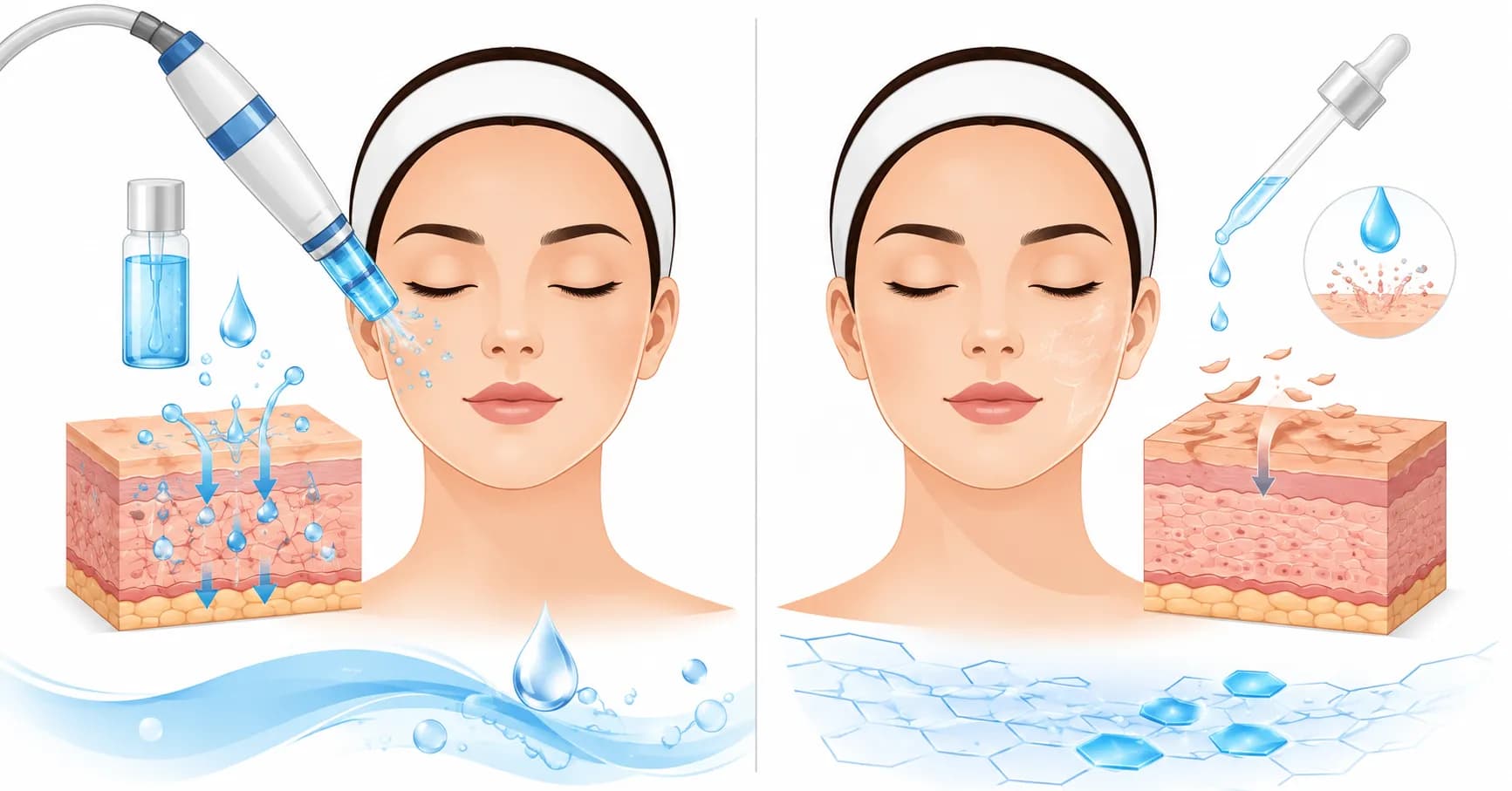
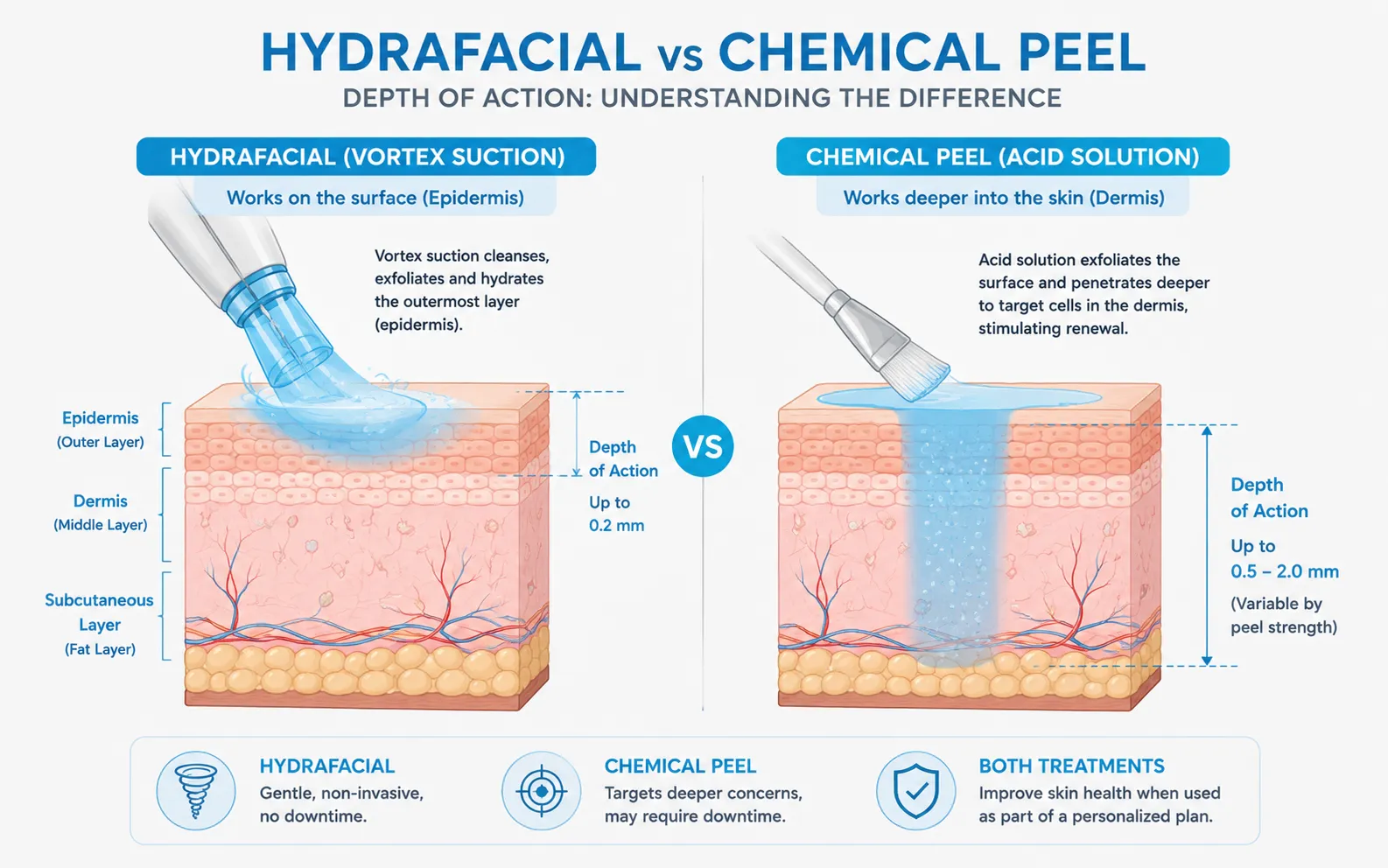
A HydraFacial is a multi-step, non-invasive facial treatment that combines cleansing, exfoliation, extraction, hydration, and antioxidant protection in a single session. It uses a patented vortex-suction technology to simultaneously remove impurities from pores while infusing the skin with nourishing serums — typically containing hyaluronic acid, peptides, and antioxidants.
Unlike many other facial treatments, a HydraFacial is designed to be comfortable throughout. There is no peeling, no significant redness, and virtually no downtime. Most patients describe the sensation as a gentle, cool suction moving across the face.
Deep pore cleansing without manual extraction trauma
Instant hydration boost — skin looks plumper and more radiant immediately after
Suitable for sensitive skin — no acids or abrasive agents that cause irritation
Addresses multiple concerns at once — fine lines, uneven tone, congested pores, and dullness
Zero downtime — you can return to work or social activities the same day
Safe for all skin tones — no risk of post-inflammatory hyperpigmentation
According to the American Academy of Dermatology, hydration-focused facials that combine exfoliation with active serum infusion are among the most well-tolerated aesthetic procedures for patients with reactive or rosacea-prone skin.
For general skin maintenance and glow, most practitioners recommend a HydraFacial once a month — aligning with the skin’s natural cell-turnover cycle of approximately 28 days. For specific concerns like active congestion or pre-event skin prep, a series of 3–6 sessions spaced 2–4 weeks apart is often suggested.
A chemical peel involves applying a carefully formulated acid solution — typically glycolic acid, salicylic acid, lactic acid, TCA (trichloroacetic acid), or phenol — to the skin surface. The acid causes controlled exfoliation of the outermost skin layers, triggering the body’s natural healing response and stimulating collagen production.
Chemical peels are categorised by depth:
Superficial peels (e.g., glycolic, lactic acid) — target the outermost epidermis; minimal downtime of 1–3 days
Medium-depth peels (e.g., TCA 20–35%) — penetrate into the upper dermis; peeling lasts 5–7 days
Deep peels (e.g., phenol) — reach the mid-dermis; significant downtime of 2–3 weeks; requires medical supervision
Effective for acne and acne scarring — salicylic acid peels are particularly well-studied for this
Reduces hyperpigmentation and melasma — medium-depth peels can significantly lighten stubborn dark patches
Smooths fine lines and wrinkles — especially medium and deep peels
Improves skin texture — by removing damaged outer layers and stimulating collagen
Treats sun damage and age spots
A 2019 review published on PubMed confirmed that superficial chemical peels using glycolic and salicylic acid are effective and safe first-line treatments for mild-to-moderate acne vulgaris, with a good tolerability profile when applied by trained practitioners.
Chemical peels are not universally suitable. Patients with darker skin tones (Fitzpatrick types IV–VI) face a higher risk of post-inflammatory hyperpigmentation with medium and deep peels. Those on isotretinoin, pregnant women, and individuals with active skin infections should avoid peels until cleared by a clinician. This is why a thorough skin assessment before any peel is non-negotiable.

How HydraFacial and chemical peels differ in mechanism and skin depth
| Factor | HydraFacial | Chemical Peel |
|---|---|---|
| Mechanism | Vortex suction + serum infusion | Acid-induced controlled exfoliation |
| Downtime | None — same-day return to activity | 1–14 days depending on peel depth |
| Skin types | All skin types and tones | Best for lighter tones; caution with darker tones |
| Primary concerns | Dullness, dehydration, congested pores, fine lines | Acne, scarring, pigmentation, sun damage, wrinkles |
| Sensation | Comfortable; mild suction | Tingling to stinging; varies by depth |
| Results visible | Immediately after session | After peeling subsides (5–14 days) |
| Frequency | Monthly maintenance | Every 4–12 weeks (superficial); 1–2x/year (deep) |
| Collagen stimulation | Mild (via peptide serums) | Moderate to significant (via wound-healing response) |
| Risk of side effects | Very low | Low to moderate; higher with deeper peels |
Yes — and this is one area where HydraFacial genuinely shines for a broad range of patients. The vortex-extraction step physically removes sebum, dead skin cells, and debris from pores without the manual squeezing that can cause micro-trauma and post-inflammatory marks. The salicylic-acid-infused cleansing step (used in most HydraFacial protocols) also helps dissolve blackheads and reduce surface bacteria.
For mild-to-moderate acne, a monthly HydraFacial can meaningfully reduce congestion and improve overall skin clarity. However, for patients dealing with active cystic acne, deep scarring, or persistent hormonal breakouts, a salicylic acid or mandelic acid chemical peel — or a combination approach — may deliver more targeted results. A clinician assessment is essential before choosing.
Patients managing skin conditions alongside systemic health concerns — for example, women with PCOS-related acne — may benefit from a joined-up approach. At Profrea, our gynaecology and infertility specialist Dr. Soma Kumari works alongside aesthetic practitioners to address hormonal contributors to skin health.
If your primary goal is immediate radiance and hydration — for a wedding, an event, or simply a regular skin reset — a HydraFacial is hard to beat. The combination of exfoliation and deep serum infusion leaves skin visibly luminous within hours, with no risk of looking red or flaky at an important occasion.
If your goal is longer-term skin renewal — reducing pigmentation, smoothing acne scars, or reversing sun damage — a well-chosen chemical peel will typically deliver more dramatic and lasting transformation, provided you can accommodate the recovery period.
Many experienced practitioners in Gurgaon now recommend a combination protocol: a series of superficial chemical peels to address pigmentation and texture, followed by monthly HydraFacials to maintain hydration, clarity, and glow between peel sessions. This layered approach is increasingly popular among patients seeking the best facial treatment for glowing skin without committing to extended downtime.
Gurgaon has no shortage of aesthetic clinics — but the quality of outcomes depends heavily on the practitioner’s training, the depth of your pre-treatment assessment, and the protocols used. Here is what to prioritise:
Clinician-led consultation — your skin type, Fitzpatrick score, active conditions, and medications should all be reviewed before any procedure
Customised protocols — a one-size-fits-all approach is a red flag; both HydraFacial serums and peel strengths should be tailored
Post-treatment care plan — especially for chemical peels, aftercare guidance is as important as the procedure itself
Multi-specialty support — skin health is often connected to hormonal, nutritional, and psychological wellbeing
At Profrea, our aesthetic services are embedded within a broader multi-specialty network. Patients who need nutritional support alongside skin treatment can consult our dietitian Dt. Swagata Pahari, while those dealing with stress-related skin flares can access Dr. Sarika Thakral, our consultant clinical psychologist with 15+ years of experience. This integrated approach sets Profrea apart from standalone aesthetic clinics in Gurgaon.
For patients who prefer to begin with a comprehensive health screen before aesthetic treatments, Profrea’s Profrea Health Screen packages offer a structured starting point, and our premium health screening option includes a broader panel of investigations.
Whether you are leaning towards a HydraFacial or a chemical peel, a few preparation steps will help you get the best possible result:
Avoid retinoids, AHAs, and BHAs for at least 5–7 days before a chemical peel
Stay well-hydrated in the days leading up to a HydraFacial — it enhances serum absorption
Apply broad-spectrum SPF 30+ daily for at least two weeks before and after any peel
Disclose all medications, supplements, and recent procedures to your practitioner
Do not schedule a chemical peel within 4 weeks of waxing or laser hair removal on the face
Plan your peel around your social calendar — medium-depth peels require 5–7 days of visible peeling
A HydraFacial simultaneously cleanses, exfoliates, extracts impurities from pores, and infuses the skin with hydrating and antioxidant-rich serums. The result is cleaner pores, improved hydration, reduced fine lines, and a noticeably brighter complexion — all in a single 30–45 minute session with no downtime.
For most patients, once a month is the recommended frequency for maintenance. This aligns with the skin’s natural cell-renewal cycle. If you are targeting a specific concern such as congested pores or pre-event glow, your practitioner may suggest a series of 3–6 sessions spaced 2–4 weeks apart initially.
Neither is universally “better” — they serve different purposes. Chemical peels are more effective for treating pigmentation, acne scarring, and deeper textural concerns. HydraFacials are superior for hydration, immediate glow, and zero-downtime maintenance. Many patients benefit from both, used in a planned sequence.
Chemical peels are clinically used to treat acne and post-acne marks, melasma and hyperpigmentation, sun damage and age spots, fine lines and wrinkles, uneven skin texture, and enlarged pores. The specific acid type and depth of peel are chosen based on the concern being addressed.
Yes. The extraction step removes sebum and debris from pores without manual trauma, and the salicylic-acid cleansing phase helps reduce surface bacteria and dissolve blackheads. HydraFacial is generally well-tolerated by acne-prone skin. For active cystic acne or deep scarring, a chemical peel or combined approach may be more appropriate — always confirm with a clinician.
Book a skin consultation at any of Profrea’s 7 clinic locations across Gurugram — our practitioners will assess your skin type, concerns, and goals to recommend the most suitable treatment plan for you.