A practical, dermatology-informed comparison to help you pick the right non-invasive skin rejuvenation treatment for your skin type, concerns, and lifestyle — from Profrea's multi-specialty clinic network in Gurugram.
By the Profrea Editorial Team · Published July 2026
Walk into any aesthetic clinic in Gurugram today and you will likely be offered three treatments before you finish your consultation coffee: a HydraFacial, a chemical peel, or a photofacial. All three promise glowing, younger-looking skin. All three are non-surgical. And all three can genuinely deliver results — but for very different skin concerns, at different price points, with different recovery expectations.
This guide breaks down each treatment honestly, compares them side by side, and helps you figure out which one — or which combination — makes the most sense for your skin. If you are already considering a consultation, the plastic surgery and aesthetics team at Profrea Gurugram offers personalised skin assessments across seven clinic locations.
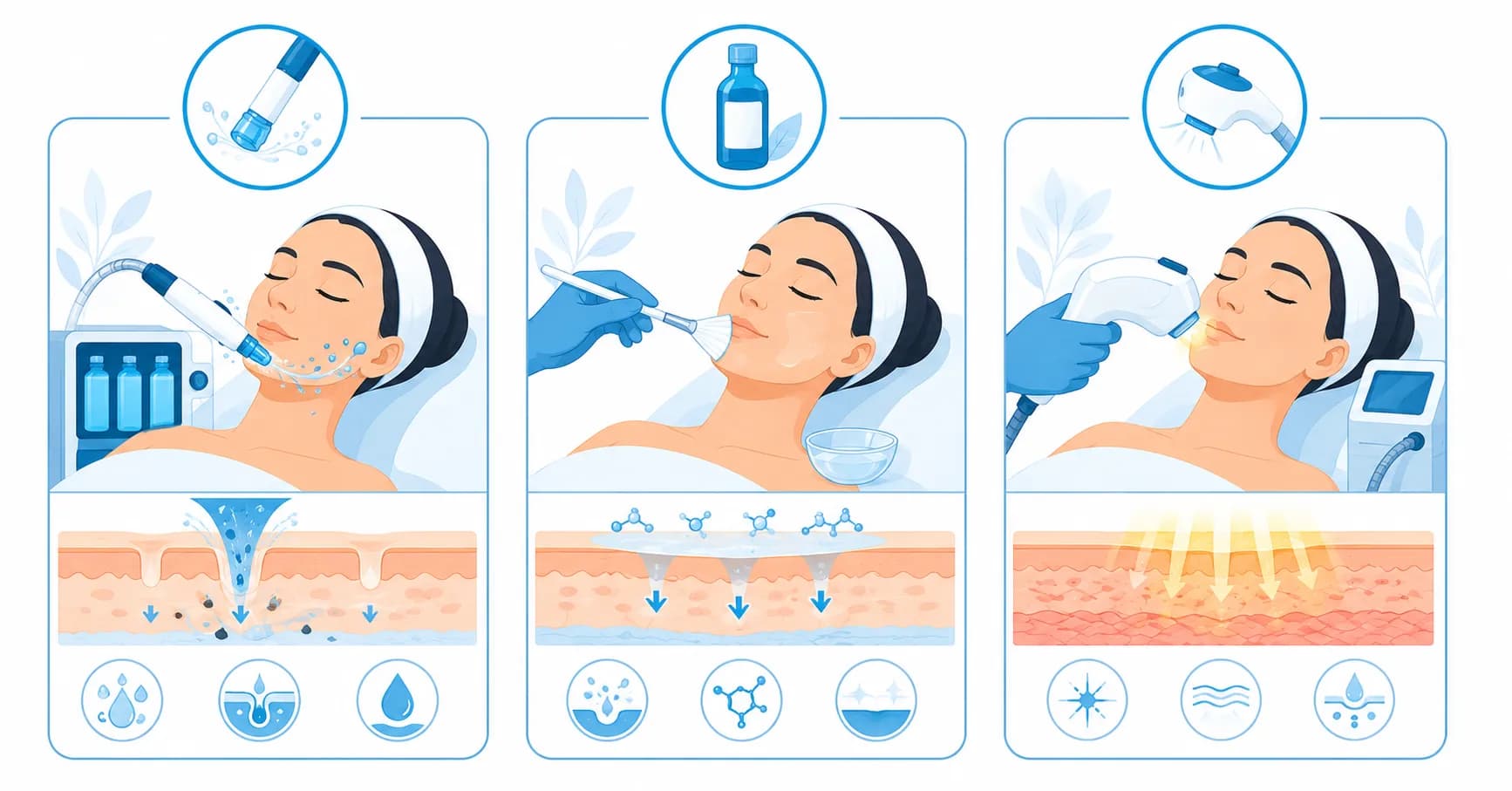
HydraFacial is a multi-step, machine-assisted facial treatment that simultaneously cleanses, exfoliates, extracts impurities, and infuses the skin with hydrating serums — all in a single 30–45 minute session. It uses a patented vortex-suction tip to deliver active ingredients (hyaluronic acid, peptides, antioxidants) deep into the skin without causing any surface trauma.
Best for: Dull skin, dehydration, mild fine lines, enlarged pores, uneven texture, and anyone who wants zero downtime. It is one of the most universally tolerated aesthetic treatments — suitable for sensitive skin and all Fitzpatrick skin types, including the deeper tones common across North India.
What to expect: Skin looks visibly brighter and feels plumper immediately after the session. There is no redness, peeling, or sun sensitivity. Most patients return to work or social activities the same day.
How many sessions? A single session delivers a noticeable glow, but for meaningful anti-ageing benefits — reduction in fine lines, improved skin tone, and pore minimisation — most dermatologists recommend a course of 4–6 sessions spaced 3–4 weeks apart, followed by monthly maintenance.
A chemical peel involves applying an acid solution — typically glycolic acid, salicylic acid, lactic acid, TCA (trichloroacetic acid), or a combination — to the skin surface. The acid causes controlled exfoliation of the outermost skin layers, stimulating the body's natural healing response and triggering new collagen synthesis.
Peels are classified by depth:
Superficial peels (e.g., glycolic 20–35%, lactic acid): Minimal downtime, mild flaking for 2–3 days. Ideal for pigmentation, dullness, and mild acne marks.
Medium-depth peels (e.g., TCA 20–35%): 5–7 days of peeling and redness. Effective for moderate wrinkles, sun damage, and uneven tone.
Deep peels (e.g., phenol): Significant downtime (2–3 weeks), performed under medical supervision. Reserved for deep wrinkles and severe sun damage.
Best for: Hyperpigmentation, melasma, acne scars, sun damage, and moderate-to-deep wrinkles. Chemical peels offer some of the strongest evidence for collagen remodelling among non-invasive treatments, as noted in clinical literature published by the National Institutes of Health (NIH).
Important note for Indian skin tones: Medium and deep peels carry a higher risk of post-inflammatory hyperpigmentation (PIH) in Fitzpatrick skin types IV–VI, which are prevalent in Gurugram's patient population. It is essential that peels are selected and applied by a qualified clinician who understands darker skin physiology. Superficial peels with appropriate pre-conditioning (topical retinoids, hydroquinone) are generally safe and effective for most Indian skin types when managed correctly.
At Profrea, Dr. Shikha Bansal (MCh Plastic Surgery, SMS Medical College, Jaipur; 9+ years of experience) oversees aesthetic treatment planning, ensuring peel selection is matched to each patient's skin type and concern.
A photofacial — most commonly performed using Intense Pulsed Light (IPL) technology — delivers broad-spectrum light energy into the deeper layers of the skin. Unlike a laser, IPL uses multiple wavelengths simultaneously, targeting both melanin (pigment) and haemoglobin (redness) without damaging the skin surface.
Best for: Sun spots, age spots, broken capillaries, rosacea, diffuse redness, and overall skin tone evening. Photofacials also stimulate collagen production over time, making them a genuine anti-ageing tool for patients with significant photodamage.
Is photofacial safe for Indian skin tones? This is one of the most common questions asked by patients in Gurugram. Standard IPL settings used for lighter skin types can cause burns or hyperpigmentation on darker skin (Fitzpatrick IV–VI). However, newer IPL platforms with adjustable filters and lower fluence settings, combined with proper skin cooling, can be used safely on medium-to-dark Indian skin tones — provided the treating clinician has specific experience with darker skin. Always ask your provider about their IPL device specifications and experience with your skin type before proceeding.
What to expect: A mild snapping sensation during treatment, followed by slight redness for a few hours. Pigmented spots may temporarily darken before flaking off over 7–10 days. Most patients need 3–5 sessions for optimal results.
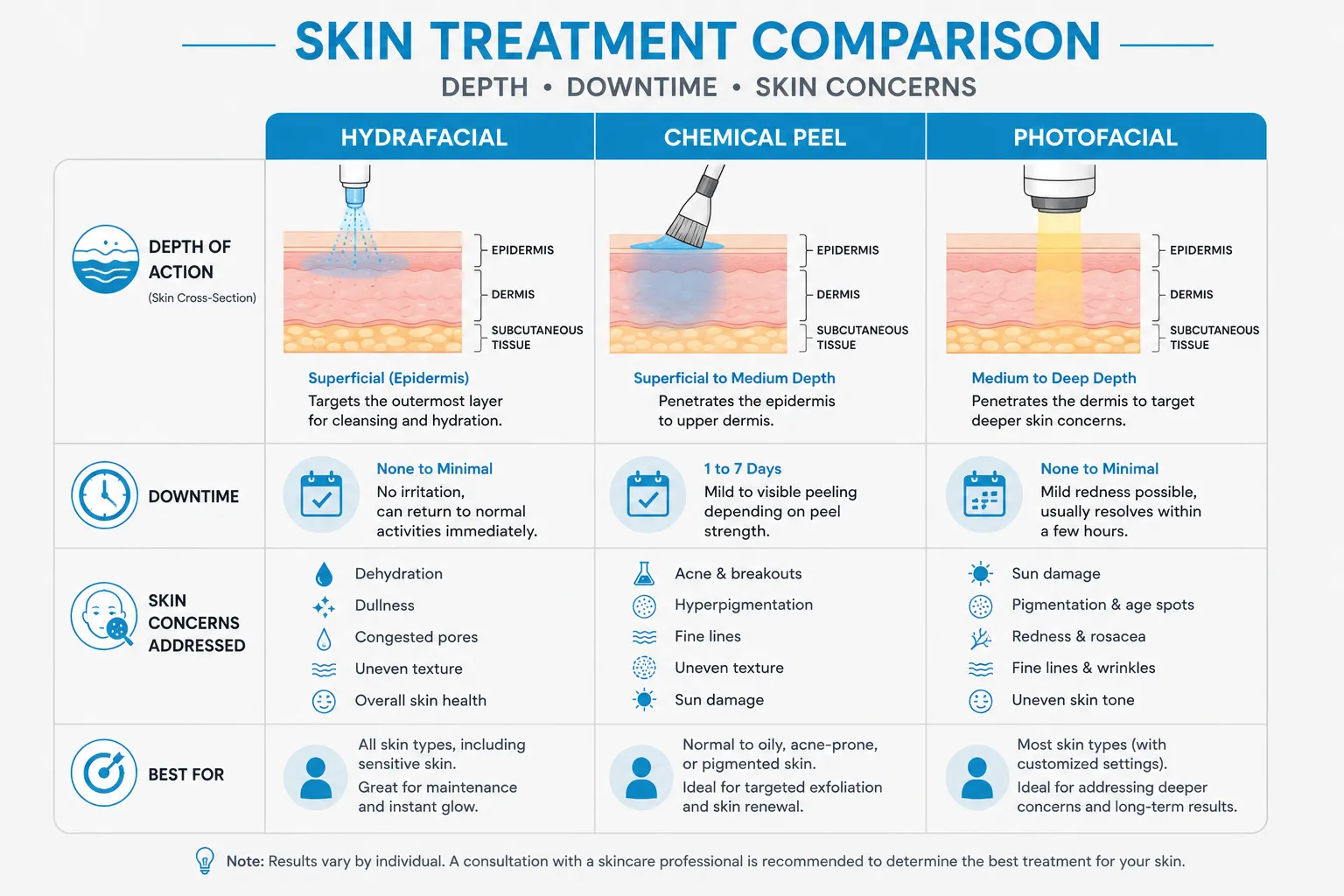
| Factor | HydraFacial | Chemical Peel | Photofacial (IPL) |
|---|---|---|---|
| Primary action | Hydration + gentle exfoliation + infusion | Controlled skin resurfacing | Light-based pigment & collagen targeting |
| Downtime | None | 2–14 days (depth-dependent) | Minimal (few hours to 1–2 days) |
| Best anti-ageing target | Fine lines, dullness, dehydration | Wrinkles, scars, pigmentation | Sun spots, redness, diffuse pigment |
| Skin type suitability | All types, including sensitive | All types (superficial); caution with deeper peels on dark skin | Lighter to medium tones preferred; advanced devices needed for darker skin |
| Sessions needed | 4–6 (course); 1 for event glow | 3–6 superficial; 1–3 medium/deep | 3–5 |
| Results duration | 4–6 weeks per session | 3–6 months (medium/deep) | 6–12 months with maintenance |
| Pain level | None | Mild tingling to moderate stinging | Mild snapping sensation |
There is no single "best" anti-ageing facial treatment — the right choice depends on your specific skin concerns, skin tone, lifestyle, and how much downtime you can tolerate. Here is a practical decision guide:
You want immediate, visible radiance with zero downtime. You have sensitive, reactive, or dehydrated skin. You are preparing for a wedding, event, or photoshoot. You are new to aesthetic treatments and want a gentle introduction. HydraFacial is also an excellent monthly maintenance treatment to complement other procedures.
You have visible pigmentation, acne scars, sun damage, or moderate wrinkles. You can tolerate a few days of peeling and redness. You want a cost-effective treatment with strong clinical evidence for skin resurfacing. Superficial peels are safe for most Indian skin tones when properly selected; medium-depth peels should only be performed by experienced clinicians.
Your primary concern is sun spots, age spots, broken blood vessels, or diffuse redness. You have a lighter to medium skin tone (or access to a clinic with advanced IPL technology for darker skin). You want longer-lasting results with minimal downtime. Photofacial is particularly effective for patients with significant photodamage from years of sun exposure — a common concern among Gurugram residents who spend time outdoors.
Many patients achieve the best results by combining treatments strategically. For example: a superficial chemical peel to address pigmentation, followed by monthly HydraFacials for maintenance hydration and glow. Or a course of photofacial sessions to clear sun damage, with HydraFacial sessions in between to keep skin nourished. A qualified aesthetic clinician can design a personalised protocol based on your skin assessment.
Gurugram has seen a significant rise in aesthetic clinics over the past decade, but the quality of care varies considerably. When choosing a clinic for HydraFacial, chemical peel, or photofacial treatment, consider the following:
Clinician qualifications: Aesthetic treatments should be performed or supervised by qualified medical professionals — plastic surgeons, dermatologists, or trained aesthetic physicians — not just technicians.
Skin assessment before treatment: A reputable clinic will assess your Fitzpatrick skin type, medical history, and specific concerns before recommending any treatment.
Transparency about risks: Especially for chemical peels and IPL on darker skin tones, the clinician should discuss the risk of PIH and how it will be managed.
Follow-up care: Post-treatment skincare guidance and follow-up appointments are essential for optimal results and safety.
Profrea's clinic network across Gurugram — including locations in Sector 45, South City-I, and Sector 52 — offers doctor-managed aesthetic consultations. The team includes Dr. Shikha Bansal, MCh Plastic Surgeon, who brings over 9 years of experience in aesthetic and reconstructive procedures. For patients with skin concerns linked to hormonal changes or metabolic conditions, the clinic also has Dr. Ladli Chatterjee (MD, Fellowship in Diabetes, Royal Liverpool Academy, UK) available for integrated care — since conditions like diabetes can significantly affect skin health and healing.
The immediate glow from a single HydraFacial session typically lasts 4–6 weeks. However, the hydration and pore-clearing benefits begin to diminish as the skin's natural oil production and environmental exposure resume. This is why most aesthetic clinicians recommend monthly HydraFacial sessions as part of an ongoing skin health routine, rather than a one-off treatment.
For patients undergoing a structured anti-ageing programme, a course of 4–6 sessions over 3–6 months can produce cumulative improvements in skin texture, tone, and fine line appearance that last considerably longer — particularly when combined with a good at-home skincare regimen (SPF, retinoids, antioxidant serums).
It is worth noting that no aesthetic treatment works in isolation. Skin ageing is influenced by multiple systemic factors: hormonal changes, blood sugar levels, nutritional status, sleep quality, and chronic stress. As the World Health Organization notes, healthy ageing involves addressing biological, psychological, and environmental factors together — not just surface-level interventions.
This is one of the reasons Profrea's multi-specialty model is particularly well-suited to patients seeking comprehensive anti-ageing care. Beyond aesthetic treatments, the network includes specialists in gynaecology and hormonal health, clinical psychology and stress management, and nutrition — all of which play a meaningful role in how your skin ages and responds to treatment.
Profrea also offers comprehensive health screening packages that can identify underlying metabolic or hormonal factors affecting skin health before you begin an aesthetic treatment programme.
A HydraFacial is a gentle, machine-assisted treatment that cleanses, exfoliates, and infuses hydrating serums into the skin — with no downtime and no peeling. A chemical peel uses acid solutions to deliberately remove the outer skin layers, stimulating new skin cell turnover and collagen production. Peels involve some degree of peeling and redness (from 2 days for superficial peels to 2 weeks for deeper ones). HydraFacial is better for hydration and immediate glow; chemical peels are more effective for pigmentation, scars, and deeper wrinkles.
You will notice an immediate improvement in skin brightness and texture after just one session. For meaningful anti-ageing results — reduction in fine lines, improved pore size, and more even skin tone — most clinicians recommend a course of 4–6 sessions spaced 3–4 weeks apart. Monthly maintenance sessions help sustain the results long-term.
Standard IPL photofacial settings designed for lighter skin types can cause burns or hyperpigmentation on darker Indian skin tones (Fitzpatrick IV–VI). However, modern IPL platforms with adjustable wavelength filters and experienced clinicians can perform photofacials safely on medium-to-dark skin. Always consult a qualified aesthetic physician who has specific experience with your skin type before undergoing IPL treatment.
There is no single "best" treatment — it depends on your skin concerns. HydraFacial is ideal for hydration and glow with zero downtime. Chemical peels are most effective for pigmentation, acne scars, and moderate wrinkles. Photofacial works best for sun spots, age spots, and diffuse redness. Many patients benefit most from a combination approach designed by a qualified clinician.
The visible glow from a single HydraFacial session typically lasts 4–6 weeks. For sustained anti-ageing benefits, monthly sessions are recommended. A structured course of 4–6 sessions over several months produces cumulative improvements that last longer, especially when supported by a good at-home skincare routine including SPF and antioxidant serums.
Book a personalised skin consultation with Profrea's aesthetic team in Gurugram — available across 7 clinic locations and via video consultation.