
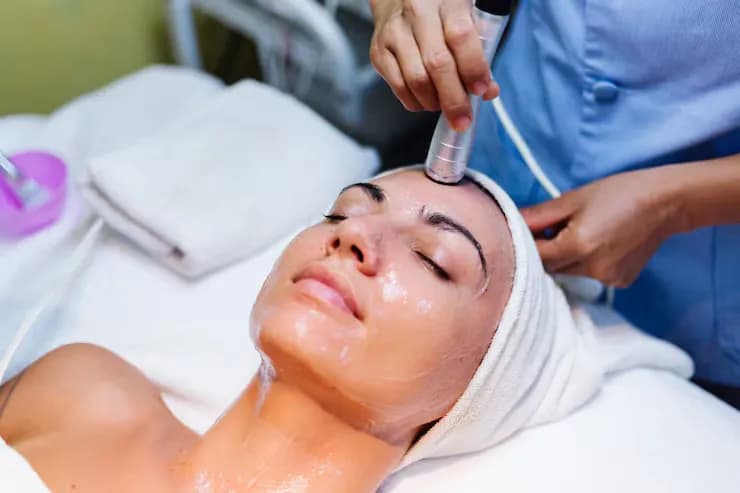
A complete guide to one of the most popular non-invasive skin treatments — from the science behind it to the results you can realistically expect.
By Profrea · Published July 2026
If you have spent any time researching skin treatments, you have almost certainly come across the term Hydrafacial. It has become one of the most talked-about aesthetic procedures globally — and for good reason. Unlike many facial treatments that focus on just one concern, Hydrafacial combines multiple steps into a single, comfortable session that suits a wide range of skin types and concerns.
This article breaks down exactly what a Hydrafacial is, how the treatment works step by step, the specific skin benefits it delivers, who it is suitable for, and what you should realistically expect before, during, and after your session. Whether you are considering your first treatment or looking to understand whether it is right for a specific skin concern, this guide covers everything you need to know.
A Hydrafacial is a multi-step, non-invasive skin treatment that uses a specialised device to simultaneously cleanse, exfoliate, extract impurities, and infuse the skin with targeted serums. The procedure is sometimes described as a hydradermabrasion treatment because it combines the mechanical exfoliation principles of microdermabrasion with simultaneous serum delivery and gentle suction-based extraction.
What sets it apart from a standard facial is the use of a vortex-fusion tip that creates a swirling motion, allowing the device to loosen and remove dead skin cells and debris while simultaneously pushing nourishing ingredients deep into the skin. The result is a treatment that cleanses and hydrates at the same time — rather than stripping the skin and leaving it feeling tight or irritated.
At Profrea's aesthetic clinics in Gurugram, experienced aesthetic physicians assess each patient's individual skin concerns before recommending a Hydrafacial protocol, ensuring the serums and intensity are matched to your specific skin goals. You can learn more about the skin care specialists at Profrea who guide these personalised treatment plans.
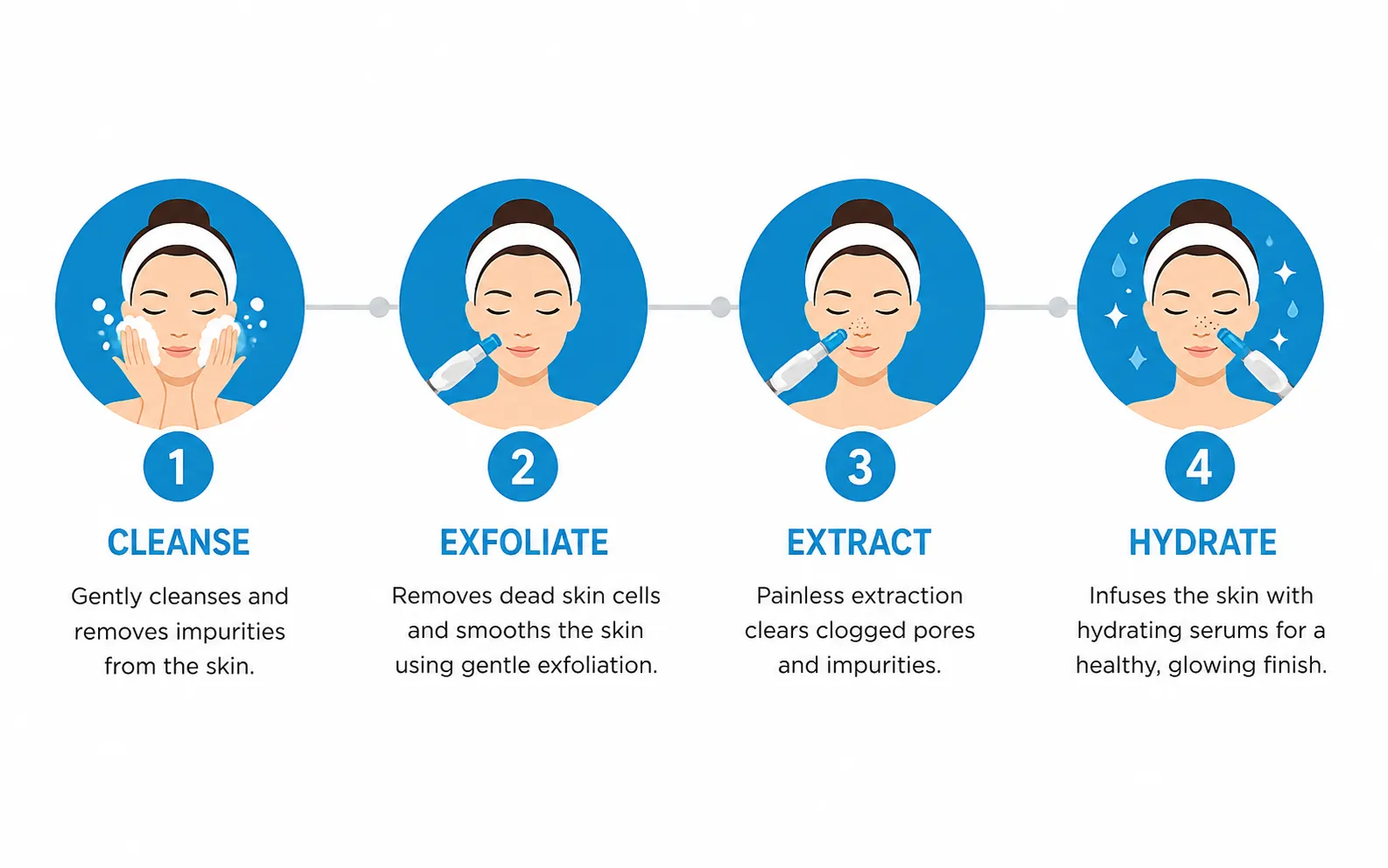
A standard Hydrafacial session typically takes between 30 and 45 minutes and involves the following core steps:
The session begins with a thorough cleanse to remove surface-level makeup, oil, and environmental debris. A trained aesthetic physician or therapist will also assess your skin type, hydration levels, and any specific concerns such as acne, pigmentation, or fine lines. This assessment shapes the choice of serums used in subsequent steps.
A gentle exfoliating tip is used to remove the outermost layer of dead skin cells. This step reveals fresher, smoother skin underneath and prepares the surface to absorb the serums more effectively. Unlike physical scrubs, this mechanical exfoliation is controlled and consistent, reducing the risk of over-exfoliation.
A mild glycolic and salicylic acid solution is applied to loosen debris from within the pores. This is a much gentler version of a chemical peel — most patients feel only a mild tingling sensation and there is no visible peeling or downtime associated with this step.
The vortex suction tip is used to extract blackheads, whiteheads, and congestion from the pores without the discomfort of manual extraction. Many patients find this the most satisfying step, as it visibly clears pores without leaving redness or trauma on the skin.
This is the defining step of the Hydrafacial. Targeted serums — typically containing hyaluronic acid, antioxidants, and peptides — are infused into the skin using the vortex-fusion technology. The specific serum blend is chosen based on your skin assessment. Common options include brightening serums for pigmentation, growth factor serums for anti-ageing, and clarifying serums for acne-prone skin.
The session concludes with the application of a broad-spectrum SPF and a brief consultation on post-treatment skincare. At Profrea, this guidance is provided by the treating physician, not just a therapist, ensuring that your at-home routine supports and extends the results of the in-clinic treatment.
The multi-step nature of the Hydrafacial means it delivers several benefits simultaneously — something that is difficult to achieve with a single-modality treatment. Here are the most clinically relevant benefits:
The infusion of hyaluronic acid directly into the skin provides an immediate plumping and hydrating effect. Patients typically notice a visible improvement in skin texture and radiance immediately after the session — which is why the Hydrafacial has become a popular pre-event treatment.
The suction-based extraction step removes congestion from pores more effectively than manual extraction and without the associated redness or post-treatment sensitivity. This makes it suitable even for patients with sensitive skin who cannot tolerate traditional extractions.
Peptide-rich and growth factor serums used during the infusion step support collagen synthesis over time. With regular sessions, patients often report a reduction in the appearance of fine lines, particularly around the eyes and mouth. Aesthetic physicians at Profrea often recommend a course of monthly treatments for patients with early ageing concerns to achieve cumulative results.
The exfoliation and brightening serum combination helps address uneven skin tone, sun damage, and mild hyperpigmentation. While a single session provides noticeable brightening, a series of treatments produces more sustained improvement in pigmentation concerns.
For patients with acne-prone or oily skin, the salicylic acid peel step and clarifying serum infusion help manage active congestion and reduce the frequency of breakouts. Importantly, the treatment does not trigger the dryness or irritation that many topical acne treatments cause, making it a useful adjunct to a broader acne management plan.
One of the most practically significant benefits of the Hydrafacial is that there is no recovery period. Patients can return to work, apply makeup, and resume normal activities immediately after the session. This makes it a realistic option even for people with busy schedules.
Because the serum selection and device settings can be adjusted, the Hydrafacial is one of the few aesthetic treatments that is genuinely suitable for all skin types — including sensitive, oily, dry, combination, and mature skin. It is also safe for darker skin tones, where some laser-based treatments carry a higher risk of post-inflammatory hyperpigmentation.
Hydrafacial is not a one-size-fits-all treatment — the protocol is adapted to target specific concerns. Common skin concerns that respond well to Hydrafacial include:
Dull or dehydrated skin — the hydration infusion restores radiance and plumpness
Enlarged or congested pores — extraction and exfoliation visibly reduce pore appearance
Mild to moderate acne and oily skin — salicylic acid and clarifying serums manage sebum and congestion
Uneven skin tone and sun damage — brightening serums and exfoliation improve pigmentation
Fine lines and early skin laxity — peptide and growth factor serums support collagen over time
Post-acne marks and mild scarring — regular exfoliation and serum infusion improve skin texture
Sensitive or reactive skin — the gentle, controlled nature of the treatment suits patients who cannot tolerate more aggressive procedures
It is worth noting that while Hydrafacial delivers meaningful improvements for the concerns listed above, it is not a replacement for more targeted treatments such as laser resurfacing, chemical peels of higher strength, or injectable therapies for deeper wrinkles. A thorough skin assessment by a qualified aesthetic physician will help determine whether Hydrafacial alone is sufficient or whether it should be combined with other treatments for your specific goals. The aesthetic doctors at Profrea offer personalised skin consultations to help you understand the most appropriate treatment pathway.
Almost anyone looking to improve their skin health and appearance can benefit from a Hydrafacial. It is particularly well-suited to:
Adults of any age who want a visible skin refresh without downtime
Patients with sensitive skin who have had adverse reactions to more aggressive treatments
Those with oily or acne-prone skin looking for a professional deep-cleanse
Individuals in their 30s and 40s who are beginning to notice early signs of ageing
Anyone preparing for a special event and wanting an immediate glow
Patients who want to maintain results between more intensive aesthetic procedures
There are a small number of situations where Hydrafacial may not be appropriate, including active rosacea flares, open wounds or active skin infections, and certain skin conditions such as eczema or psoriasis in an active phase. A pre-treatment consultation with a physician — rather than a therapist alone — is important to rule out any contraindications specific to your skin history.
In the days leading up to your Hydrafacial, it is advisable to avoid strong retinoids, prescription-strength exfoliants, and any other active treatments that may sensitise the skin. You should also avoid prolonged sun exposure and arrive at your appointment with a clean face, free of heavy makeup. Your treating physician will conduct a brief skin assessment at the start of the session to confirm the appropriate serum selection.
Most patients find the Hydrafacial comfortable and even relaxing. The sensation during exfoliation is similar to a light scratching, the acid peel step produces a mild tingling, and the extraction step feels like a gentle vacuum on the skin. There is no pain, no needles, and no heat involved. The full session typically takes 30 to 45 minutes, though this can extend to 60 minutes if add-on boosters are included.
Your skin will appear noticeably brighter, smoother, and more hydrated immediately after the session. There is typically no redness, swelling, or irritation. You can apply makeup and return to your normal routine straight away. Most patients describe the immediate post-treatment skin as their skin looking like the best version of itself.
The brightening and hydrating effects of a single session typically last between five and seven days, though this varies depending on your skin type and how well you maintain your skincare routine at home. For longer-lasting improvements — particularly for concerns like pigmentation, fine lines, or acne management — a course of monthly sessions is generally recommended. Post-treatment care guidance provided by your physician at Profrea will include specific product recommendations to extend and support your results.
The frequency of Hydrafacial sessions depends on your skin concerns and goals:
Maintenance and general skin health: Once a month is the most commonly recommended frequency for patients who want to maintain healthy, glowing skin year-round.
Specific skin concerns (pigmentation, acne, ageing): An initial course of 4–6 sessions spaced two to four weeks apart, followed by monthly maintenance, tends to produce the most significant and sustained results.
Pre-event preparation: A single session one to two days before an important event delivers an immediate radiance boost.
Your treating physician will recommend a personalised treatment schedule based on your skin assessment and goals. At Profrea, this is part of the initial consultation process — the aim is always to create a realistic, goal-oriented plan rather than a generic protocol. You can explore our aesthetic physicians and book a skin consultation to discuss the right frequency for your skin.
Patients often ask how Hydrafacial compares to other popular facial treatments. Here is a brief, honest comparison:
Hydrafacial vs. Microdermabrasion: Both exfoliate the skin mechanically, but Hydrafacial simultaneously hydrates and infuses serums, whereas microdermabrasion focuses purely on abrasion. Hydrafacial is generally better tolerated by sensitive skin.
Hydrafacial vs. Chemical Peel: Chemical peels use acids to resurface the skin and often involve downtime with visible peeling. Hydrafacial's acid step is much milder and produces no peeling, making it suitable for patients who cannot afford downtime.
Hydrafacial vs. Traditional Facial: A traditional facial relies on manual techniques and standard products. Hydrafacial uses medical-grade serums delivered by a device, producing more consistent and measurable results.
Hydrafacial vs. Laser Treatments: Laser treatments target specific concerns (pigmentation, resurfacing) at a deeper level and often require recovery time. Hydrafacial is a surface-level treatment with no downtime, making it complementary rather than competitive with laser procedures.
For patients with more complex skin concerns — such as deep acne scarring, significant pigmentation, or moderate to severe skin laxity — a combination approach involving Hydrafacial alongside other treatments may be recommended by your physician. The skin specialists at Profrea are experienced in designing combination treatment plans tailored to individual skin goals.
Experienced aesthetic physicians: Every Hydrafacial at Profrea is guided by qualified aesthetic doctors who conduct a thorough skin assessment and personalise the serum selection to your individual skin concerns and goals — not a one-size-fits-all protocol.
Modern, hygienic clinic environment: Profrea's aesthetic clinics across Gurugram are designed to provide a comfortable, patient-friendly experience with strict hygiene standards and a calm, professional atmosphere.
Comprehensive treatment pathway: Your Hydrafacial journey at Profrea includes a pre-treatment skin assessment, a customised in-clinic procedure, and post-treatment care guidance — ensuring your results are supported both in the clinic and at home.
Advanced aesthetic technologies: Profrea's clinics are equipped with advanced aesthetic technologies to address acne, pigmentation, ageing, skin texture, and overall skin rejuvenation, allowing your physician to recommend the most appropriate treatment or combination for your goals.
Personalised, long-term skin improvement: The focus at Profrea is on safe, natural-looking, and sustainable skin improvement — not quick fixes. Treatment plans are designed with your long-term skin health in mind.
No. The Hydrafacial is widely regarded as one of the most comfortable aesthetic treatments available. Most patients describe the sensation as a light suction or gentle scratching — similar to a soft massage. There is no pain, no needles, and no heat involved at any stage of the treatment.
A standard Hydrafacial session takes approximately 30 to 45 minutes. If additional booster serums or add-on treatments are included, the session may extend to 60 minutes. There is no downtime, so you can return to your normal activities immediately afterwards.
Results are visible immediately after the session. Your skin will appear brighter, smoother, and more hydrated right away. The immediate effects typically last five to seven days, while cumulative improvements in skin tone, texture, and specific concerns develop over a course of regular treatments.
Yes. Hydrafacial is one of the few aesthetic treatments specifically well-suited to sensitive skin. The device settings and serum selection can be adjusted to minimise any risk of irritation. However, it is important to disclose any known skin sensitivities or conditions to your treating physician before the session.
Yes, and it is often recommended as part of a broader skin treatment plan. Hydrafacial works well as a preparatory or maintenance treatment alongside procedures such as laser therapy, chemical peels, or injectable treatments. Your physician will advise on the appropriate timing and sequencing of treatments based on your skin goals.
For general skin maintenance, a monthly session is typically sufficient. For specific concerns such as pigmentation, acne, or early ageing, an initial course of 4–6 sessions spaced two to four weeks apart is usually recommended, followed by monthly maintenance. Your treating physician will create a personalised schedule during your consultation.
For the first 24 to 48 hours after your Hydrafacial, it is advisable to avoid direct sun exposure without SPF, strong retinoids or active exfoliants, saunas, steam rooms, and heavy exercise that causes significant sweating. Your physician will provide specific post-treatment guidance tailored to your skin type and the serums used during your session.
The Hydrafacial has earned its popularity for a straightforward reason: it delivers visible, immediate results for a wide range of skin concerns without any downtime, discomfort, or risk of significant side effects. It is one of the most versatile non-invasive skin treatments available, suitable for virtually all skin types and adaptable to a broad spectrum of concerns — from basic hydration and glow to acne management, pigmentation, and early anti-ageing.
As with any aesthetic treatment, the quality of the outcome depends significantly on the expertise of the treating physician and the thoroughness of the pre-treatment assessment. A Hydrafacial performed with a personalised serum selection and a well-designed treatment plan will always deliver better results than a generic, off-the-shelf session.
If you are considering a Hydrafacial and would like to understand whether it is the right treatment for your specific skin concerns, a consultation with one of the aesthetic physicians at Profrea is a good starting point. You can also explore the full range of skin specialists at Profrea to find the right doctor for your needs. Profrea's clinics across Gurugram offer in-clinic consultations as well as video consultation options for an initial discussion about your skin goals.
Book a personalised skin consultation at Profrea and let our experienced aesthetic physicians design a Hydrafacial treatment plan tailored to your skin concerns and goals.