
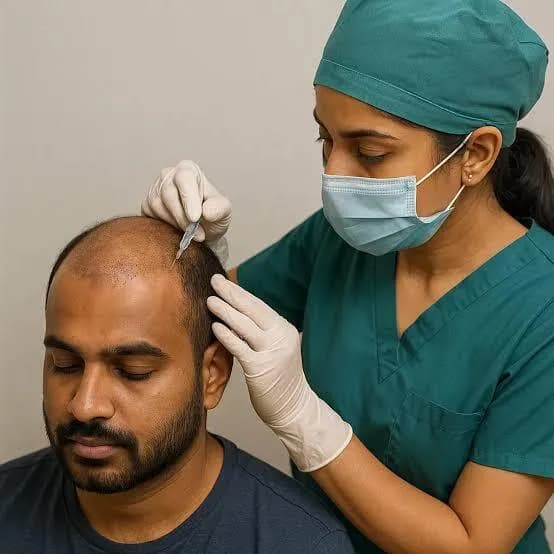
Everything you need to know about hair transplant techniques, candidacy, recovery, and realistic results — so you can make a confident, informed decision about hair restoration.
By the Profrea Editorial Team · Published July 2026
Hair loss is one of the most common concerns that people bring to aesthetic clinics — and for good reason. Whether it begins with a receding hairline in your twenties or a gradually thinning crown in your forties, the psychological impact of losing hair can be significant. It affects how people style themselves, how they feel in social settings, and sometimes how they see themselves.
A hair transplant is a surgical hair restoration procedure that moves healthy, genetically resistant hair follicles from a donor area — typically the back or sides of the scalp — to regions affected by thinning or baldness. Unlike topical treatments or medications that may only slow hair loss, a hair transplant procedure aims to permanently restore hair in the treated area using your own follicles.
This guide covers the main hair transplant techniques, who is a suitable candidate, what the procedure involves, what recovery looks like, and how to set realistic expectations. If you are considering hair restoration, understanding these fundamentals is the first step toward making a well-informed choice.
Before exploring hair transplant surgery, it helps to understand why hair loss occurs in the first place. The most common cause is androgenetic alopecia — also called male-pattern or female-pattern hair loss — which is driven by a genetic sensitivity to dihydrotestosterone (DHT), a hormone derived from testosterone. DHT gradually miniaturises hair follicles, causing them to produce thinner, shorter hairs until they eventually stop producing hair altogether.
Other causes of hair loss include:
Alopecia areata — an autoimmune condition causing patchy hair loss
Telogen effluvium — diffuse shedding triggered by stress, illness, nutritional deficiency, or hormonal changes
Traction alopecia — hair loss caused by prolonged tension on the hair shaft from tight hairstyles
Scarring alopecia — permanent follicle damage from inflammation or injury
Medical treatments — such as chemotherapy-related hair loss
According to the National Institutes of Health (NIH), androgenetic alopecia affects approximately 50% of men by the age of 50 and up to 40% of women at some point in their lives. Hair transplant treatment is most effective for androgenetic alopecia, where the donor area remains stable and genetically resistant to DHT.
Not everyone experiencing hair loss is automatically a good candidate for a hair transplant procedure. A thorough clinical assessment is essential before any recommendation is made. Broadly, suitable candidates tend to share the following characteristics:
Stable hair loss — the pattern of loss has not changed significantly for at least one to two years
Adequate donor density — sufficient healthy follicles at the back and sides of the scalp to harvest
Realistic expectations — understanding that results take time and that the goal is improvement, not perfection
Good general health — no uncontrolled medical conditions that would impair healing
Age — most specialists prefer to wait until the mid-twenties or later, when the hair loss pattern is more predictable
People with diffuse unpatterned alopecia, very limited donor supply, or active scalp conditions may not be ideal candidates for surgical hair restoration at that time. An individual assessment by a qualified hair transplant doctor is the only reliable way to determine suitability.
At Profrea, our experienced aesthetic physicians conduct a detailed scalp and hair analysis before recommending any treatment pathway, ensuring that every plan is personalised to the individual's hair loss pattern, donor characteristics, and goals.
Modern hair transplant clinics typically offer one or more of the following techniques. Each has distinct advantages depending on the extent of hair loss, the patient's scalp characteristics, and the desired outcome.
FUE is currently the most widely performed hair transplant technique globally. Individual follicular units — naturally occurring groups of one to four hairs — are extracted one by one from the donor area using a small circular punch tool, typically 0.6 mm to 1.0 mm in diameter. These grafts are then implanted into tiny incisions made in the recipient area.
Key advantages of FUE:
No linear scar — small dot-like marks that are virtually invisible once healed
Suitable for patients who prefer shorter hairstyles
Faster recovery compared to FUT
Can harvest grafts from beard or body hair in some cases
FUT, sometimes called the strip method, involves removing a narrow strip of scalp from the donor area. The strip is then dissected under a microscope into individual follicular units, which are implanted into the recipient area. The donor site is closed with sutures, leaving a linear scar that can be concealed by surrounding hair.
FUT can yield a higher number of grafts in a single session and may be preferred when a large area needs to be covered. However, it requires a longer recovery period and leaves a permanent linear scar.
DHI is a refinement of FUE in which extracted follicles are implanted directly using a specialised implanter pen (often called a Choi pen), without the need to pre-make recipient site incisions. This allows for more precise control over the angle, direction, and depth of each implanted hair, which can contribute to a more natural-looking result.
Key advantages of DHI:
Higher precision in graft placement
Reduced time follicles spend outside the body, potentially improving graft survival
Can be performed without shaving the recipient area in some cases
Well-suited for hairline refinement and density work
The choice between FUE, FUT, and DHI depends on multiple factors including the degree of hair loss, donor density, the area to be treated, and the surgeon's assessment. There is no universally superior technique — the best approach is the one most appropriate for the individual patient.

A visual comparison of the three main hair transplant techniques: FUE, FUT, and DHI.
Understanding the step-by-step process can help reduce anxiety and set accurate expectations. While specific protocols vary between clinics and techniques, a typical hair transplant surgery follows this general sequence:
Consultation and planning — A detailed assessment of hair loss pattern, donor density, and scalp health. The hairline design is discussed and agreed upon.
Preparation — The donor area is trimmed (in FUE/DHI) or the strip is marked (in FUT). Local anaesthesia is administered to both donor and recipient areas.
Extraction — Follicular units are harvested from the donor area using the chosen technique.
Graft preparation — Extracted follicles are sorted, counted, and kept in a preservation solution to maintain viability.
Recipient site creation — Tiny incisions are made in the thinning or bald area at the correct angle and direction to mimic natural hair growth (in FUE/FUT; this step is combined with implantation in DHI).
Implantation — Grafts are carefully placed into the recipient sites.
Post-procedure care — Instructions are provided for washing, sleeping position, activity restrictions, and follow-up appointments.
The procedure is performed under local anaesthesia and is generally well tolerated. Depending on the number of grafts, a session can last anywhere from four to eight hours. Most patients are able to return home the same day.
Recovery from a hair transplant procedure is gradual. Here is a general timeline of what most patients experience:
Mild swelling of the forehead and around the eyes is common and usually resolves within a few days. Small scabs form around each implanted graft. The scalp may feel tender or tight. Patients are advised to sleep with the head elevated and avoid touching or wetting the scalp for the first 24–48 hours.
Scabs gradually loosen and fall off, often during gentle washing. This is normal and does not indicate graft loss. Most patients can return to desk-based work within a week.
Many patients experience shock loss — a temporary shedding of the transplanted hairs. This is a normal part of the hair growth cycle and does not mean the procedure has failed. The follicles remain intact beneath the scalp and will begin producing new hair in due course.
New hair begins to emerge from the transplanted follicles. Initial growth may appear fine or slightly wavy before it matures. Patients often start to see encouraging progress during this phase.
The majority of the final result becomes visible between nine and twelve months, with some patients continuing to see improvement up to eighteen months post-procedure. The transplanted hair grows, thickens, and blends with existing hair to create a natural appearance.
The outcome of a hair transplant surgery is influenced by several variables, not all of which are within the surgeon's control. Being aware of these factors helps set realistic expectations:
Donor hair quality and density — Thicker, coarser donor hair tends to provide better coverage per graft.
Degree of hair loss — More advanced hair loss requires more grafts and may limit what can be achieved in a single session.
Surgeon skill and technique — The angle, depth, and density of implantation significantly affect the naturalness of the result.
Graft survival rate — Proper handling and minimal time outside the body improve the likelihood that transplanted follicles will thrive.
Post-operative care — Following aftercare instructions carefully protects grafts during the vulnerable early period.
Ongoing hair loss — If hair loss continues in non-transplanted areas, additional sessions or medical management may be needed over time.
A skilled hair transplant doctor will discuss all of these factors during the consultation and help you understand what outcome is realistic for your specific situation.
Hair transplant surgery addresses areas of established hair loss, but it does not stop ongoing hair thinning in other parts of the scalp. For this reason, many specialists recommend combining surgical hair restoration with non-surgical treatments to preserve existing hair and optimise long-term results.
Commonly used adjunct treatments include:
Minoxidil — A topical or oral medication that prolongs the growth phase of hair follicles and is widely used to slow hair loss.
Finasteride or dutasteride — Oral medications that reduce DHT levels, helping to preserve remaining hair in men with androgenetic alopecia.
Platelet-Rich Plasma (PRP) therapy — Injections of concentrated growth factors derived from the patient's own blood, used to stimulate follicle activity and support graft survival post-transplant.
Low-level laser therapy (LLLT) — A non-invasive treatment that uses specific wavelengths of light to stimulate hair follicles.
The most appropriate combination of treatments depends on the individual's hair loss pattern, medical history, and goals. Our aesthetic physicians at Profrea develop personalised care plans that may incorporate both surgical and non-surgical approaches for comprehensive hair restoration.
While hair transplant surgery is more commonly associated with men, women experiencing hair loss can also benefit from the procedure — though the approach differs in several important ways.
Female hair loss often presents as diffuse thinning across the scalp rather than the defined bald patches seen in male-pattern baldness. This means the donor area may also be affected, which can limit the number of grafts available. A careful assessment is essential to determine whether the donor hair is stable enough to support transplantation.
Women with traction alopecia, hairline recession, or localised areas of thinning (such as at the temples or crown) are often better candidates than those with widespread diffuse loss. The underlying cause of hair loss must also be investigated and, where possible, treated before surgery is considered.
Our team includes specialist physicians experienced in assessing and managing hair loss in women, ensuring that any treatment recommendation is appropriate for the individual's specific pattern and cause of hair loss.
The quality of the outcome is closely tied to the quality of the clinic and the team performing the procedure. When evaluating a hair transplant clinic, consider the following:
Qualified and experienced practitioners — Ensure the procedure is performed or directly supervised by a qualified medical professional with specific training in hair restoration.
Transparent consultation process — A reputable clinic will conduct a thorough assessment, explain all options, and provide honest guidance about what is and is not achievable.
Before-and-after documentation — Reviewing real patient outcomes from the clinic gives a realistic sense of the quality of results.
Aftercare support — Post-procedure follow-up and guidance are essential for protecting the investment and ensuring optimal graft survival.
Hygienic, well-equipped environment — The clinic should meet appropriate standards for a minor surgical procedure.
Profrea operates across 7 clinic locations in Gurugram, each equipped with modern facilities and staffed by experienced aesthetic physicians. Our approach begins with a detailed skin and scalp assessment, followed by a customised treatment plan — whether that involves a hair transplant procedure, non-surgical hair restoration, or a combination of both. Post-treatment care guidance is provided as a standard part of every patient journey.
You can also explore our specialist doctors and health screening packages to support a holistic approach to your wellbeing alongside hair restoration.
The transplanted follicles are taken from areas genetically resistant to DHT, which means they are designed to continue growing hair in their new location for life. However, hair loss may continue in non-transplanted areas over time, which is why ongoing medical management is often recommended alongside surgery.
The procedure is performed under local anaesthesia, so the scalp is numb during extraction and implantation. Most patients report feeling pressure or mild discomfort rather than sharp pain. Some tenderness in the days following the procedure is normal and manageable with standard pain relief.
The number of grafts required depends on the size of the area to be covered and the desired density. A small hairline correction may require 500–1,500 grafts, while covering a larger bald area may require 2,000–4,000 or more. This is determined during the consultation based on your specific hair loss pattern.
Most patients see significant improvement between nine and twelve months after the procedure. Some continue to see gradual thickening and maturation of the transplanted hair up to eighteen months post-surgery. Patience is an important part of the hair restoration journey.
Yes. Some patients choose to have a second session to increase density in previously treated areas or to address new areas of hair loss that have developed over time. The feasibility of a second session depends on the remaining donor supply and is assessed on an individual basis.
Both FUE and DHI involve extracting individual follicular units from the donor area. The key difference is in the implantation step: FUE requires pre-made incisions in the recipient area before grafts are placed, while DHI uses a specialised implanter pen to extract and implant in a more direct sequence. DHI can offer greater precision in placement and may reduce graft handling time, but both techniques can produce excellent results in the right hands.
A personalised consultation with one of Profrea's experienced aesthetic physicians is the best first step toward understanding your options and developing a hair restoration plan that suits your goals.