

A practical guide to recognising when you need specialist women's care — and how Profrea's experienced gynaecologists across Gurugram can help.
By the Profrea Editorial Team · Published July 2026
Finding the right gynaecologist in Gurgaon can feel overwhelming — especially when you're already dealing with a health concern that feels deeply personal. Whether you're navigating irregular periods, planning a pregnancy, managing a high-risk condition, or exploring fertility treatment, timely specialist care makes a measurable difference. This guide walks you through the most common reasons women seek gynaecological care, explains what to expect from a consultation, and introduces the women's health specialists at Profrea — a multi-specialty clinic network with seven locations across Gurugram.

A gynaecologist is a doctor who specialises in the female reproductive system — including the uterus, ovaries, fallopian tubes, cervix, and vagina. Many gynaecologists are also trained as obstetricians, meaning they manage both pregnancy and non-pregnancy conditions. The scope of gynaecological care is broader than most people realise:
Menstrual disorders — irregular, heavy, painful, or absent periods (amenorrhoea, dysmenorrhoea, menorrhagia)
Polycystic Ovary Syndrome (PCOS) — one of the most common hormonal conditions affecting women of reproductive age
Endometriosis — tissue similar to the uterine lining growing outside the uterus, often causing chronic pelvic pain
Uterine fibroids and ovarian cysts — benign growths that can cause pain, bloating, or fertility problems
Sexually transmitted infections (STIs) and vaginal infections
Cervical screening and HPV management
Menopause and perimenopause — hormonal changes, hot flushes, mood shifts, and bone health
Infertility evaluation and treatment — including IUI, IVF, and other Assisted Reproductive Technologies (ART)
High-risk pregnancy monitoring — gestational diabetes, hypertension, multiple pregnancies, previous pregnancy loss
Minimally invasive gynaecological surgery — laparoscopy, hysteroscopy, and day-care procedures
According to the World Health Organization, polycystic ovary syndrome affects an estimated 8–13% of women of reproductive age globally, and up to 70% of affected women remain undiagnosed. Early gynaecological assessment is key to preventing long-term metabolic and reproductive complications.
Many women delay seeking care because symptoms seem manageable or because they're unsure whether their concern warrants a specialist visit. Here are clear signals that it's time to book an appointment:
Sudden changes in cycle length, flow, or pain level — especially if they persist for two or more cycles — deserve evaluation. Conditions like fibroids, endometriosis, or thyroid dysfunction can all alter menstrual patterns.
Infertility affects roughly one in six couples globally. A gynaecologist with fertility expertise can identify ovulatory dysfunction, tubal factors, or uterine abnormalities — and refer you to an infertility specialist or ART centre when needed.
Diabetes, hypertension, thyroid disorders, autoimmune conditions, or a history of miscarriage all place a pregnancy in the high-risk category. Specialist obstetric monitoring from the first trimester significantly improves outcomes for both mother and baby.
Chronic or recurring pelvic pain — whether related to the menstrual cycle or not — should never be dismissed as normal. It can indicate endometriosis, ovarian cysts, pelvic inflammatory disease, or adhesions from previous surgery.
Hot flushes, sleep disturbance, mood changes, and vaginal dryness are common but not inevitable. A gynaecologist can discuss hormone therapy options, lifestyle modifications, and bone health screening to help you navigate this transition confidently.
Annual pelvic examinations, Pap smears (every 3–5 years depending on age and history), and breast examinations are preventive essentials. Cervical cancer is largely preventable with regular screening — yet many women in urban India still miss these checks.
The terms are often used interchangeably, but they describe different — though overlapping — areas of practice:
Gynaecologist: Focuses on the health of the female reproductive system outside of pregnancy — diagnosing and treating conditions like PCOS, endometriosis, fibroids, and infections, and performing gynaecological surgeries.
Obstetrician: Specialises in pregnancy, labour, delivery, and the postpartum period. Obstetricians manage both routine and complicated pregnancies.
Obs & Gynae (OB-GYN): Most specialists in India hold a combined qualification (MD/DNB in Obstetrics & Gynaecology), meaning they are trained to manage both.
When you see a specialist at Profrea, you benefit from this combined expertise — so whether your concern is a missed period or a complicated twin pregnancy, you're in the right hands from the very first visit.
Profrea's gynaecology team brings together specialists with advanced qualifications and sub-specialty expertise. Two of the most prominent names in the network are:
Dr. Soma Kumari holds an MBBS from Siksha 'O' Anusandhan University and a DNB in Obstetrics & Gynaecology from Deen Dayal Upadhyay Hospital, New Delhi — one of the country's leading public teaching hospitals. She has further completed a Fellowship in Assisted Reproductive Technology (ART) from RISSA IVF Center, Delhi, and brings over 7 years of clinical experience to her practice at Profrea, Gurugram. Previously associated with Paras Hospital and Rainbow Hospital, Dr. Kumari has a particular interest in:
Infertility evaluation and management
IUI and IVF counselling and coordination
High-risk obstetric care
Laparoscopic gynaecological procedures
PCOS and hormonal disorders
Dr. Simantini Sircar is another experienced gynaecologist within the Profrea network, available for consultations across Gurugram. Her practice covers the full spectrum of outpatient and procedural gynaecological care, including menstrual health, cervical screening, and antenatal monitoring.
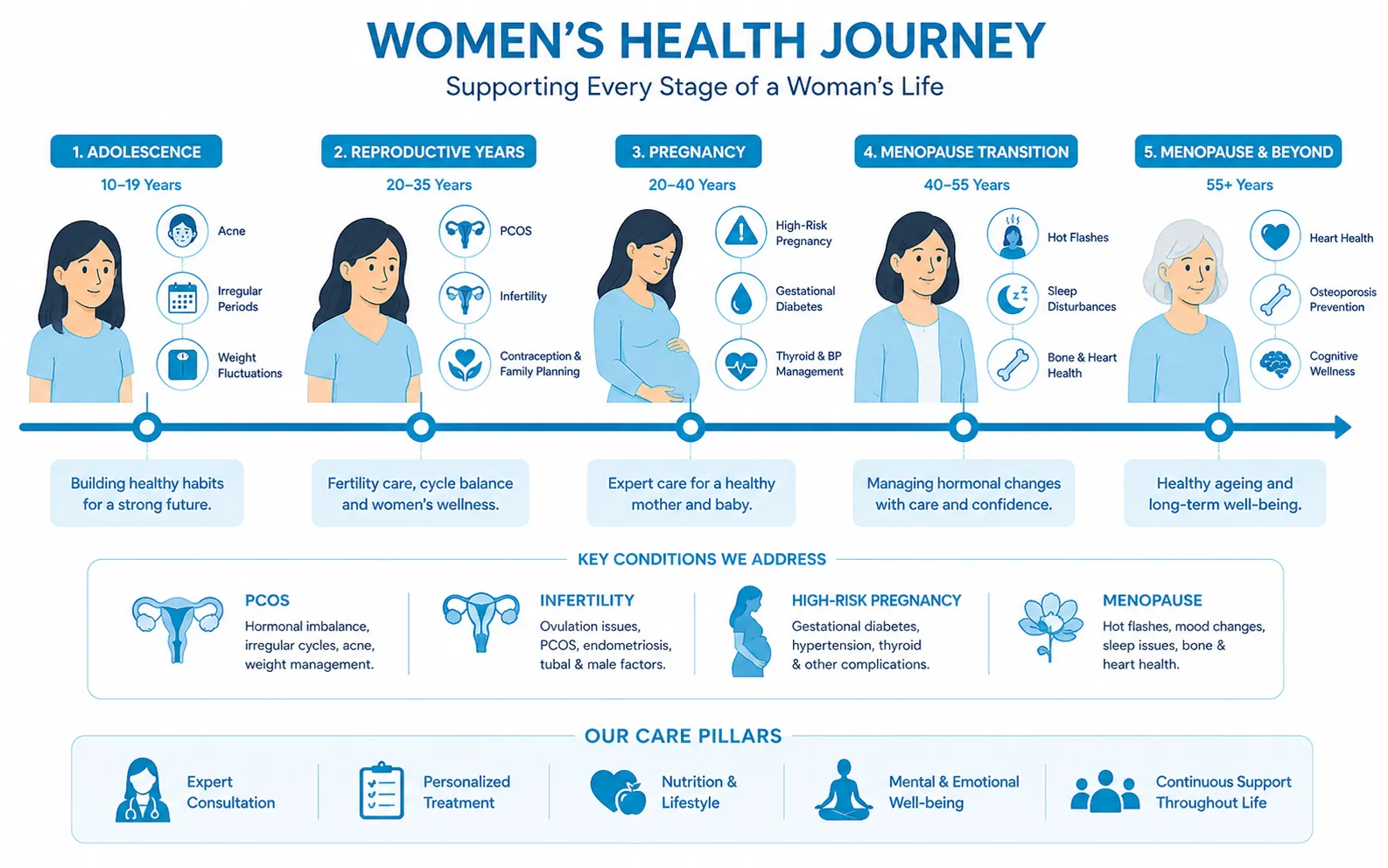
Together, these specialists ensure that women at every life stage — from adolescence through menopause — have access to evidence-based, compassionate care close to home.

Key moments in a woman's health journey when specialist gynaecological care makes a difference.
A pregnancy is classified as high-risk when the mother or baby has a condition that increases the likelihood of complications before, during, or after delivery. Common high-risk factors include:
Maternal age under 17 or over 35
Pre-existing diabetes, hypertension, or autoimmune disease
Gestational diabetes or pre-eclampsia in the current pregnancy
Multiple pregnancy (twins, triplets)
History of recurrent miscarriage or preterm birth
Foetal growth restriction or structural abnormalities detected on scan
High-risk pregnancies require more frequent antenatal visits, specialised ultrasound monitoring, and coordinated care between the obstetrician, physician, and sometimes a neonatologist. At Profrea, Dr. Soma Kumari's combined obstetric and fertility background means she is well-placed to manage complex pregnancies — particularly those arising after fertility treatment, where the risk profile is often elevated.
A 2019 review published on PubMed Central confirmed that structured antenatal care programmes for high-risk pregnancies significantly reduce maternal and perinatal mortality — underscoring why early specialist involvement matters.
Infertility is defined as the inability to conceive after 12 months of regular, unprotected intercourse (or 6 months for women over 35). It affects both men and women equally — roughly 40–50% of cases involve a male factor. A thorough infertility workup at Profrea typically includes:
Hormonal blood tests (FSH, LH, AMH, prolactin, thyroid panel)
Transvaginal ultrasound for antral follicle count and uterine assessment
Hysterosalpingography (HSG) to evaluate tubal patency
Semen analysis for the male partner
Hysteroscopy or laparoscopy when structural causes are suspected
Dr. Soma Kumari's Fellowship in ART equips her to guide couples through the full spectrum of fertility treatment — from ovulation induction and IUI to IVF coordination — with sensitivity and clinical precision. She works closely with Profrea's broader multi-specialty network, including Dr. Deepa Agarwal and other specialists, to ensure holistic support throughout the fertility journey.
With dozens of options across the city, choosing a gynaecologist can feel daunting. Here are five practical criteria:
Qualifications and sub-specialty training: Look for MD, MS, or DNB in Obstetrics & Gynaecology. For fertility concerns, a Fellowship in ART or Reproductive Medicine is a significant advantage.
Scope of services: Does the clinic offer both outpatient consultations and procedural care (laparoscopy, hysteroscopy)? Can they manage high-risk pregnancies?
Accessibility: Multiple clinic locations and video consultation options reduce the friction of follow-up care — particularly important during pregnancy.
Continuity of care: Will you see the same doctor at each visit, or be rotated through a roster? Continuity matters enormously in obstetric and fertility care.
Communication style: You should feel comfortable asking questions. A good gynaecologist explains diagnoses clearly and involves you in treatment decisions.
Profrea's model is built around continuity and accessibility. With 7 clinic locations across Gurugram and a dedicated video consultation facility, patients can choose the format that suits their schedule — whether that's an in-person visit at Sector 45, South City-I, or Sector 52, or a secure video call from home. The Profrea mobile app also allows patients to manage appointments, access care plans, and communicate with their care team between visits.
Yes — and for many concerns, a video consultation is an excellent starting point. At Profrea, video consultations are available with gynaecologists including Dr. Soma Kumari, allowing you to discuss symptoms, review previous reports, and receive an initial assessment without leaving home. Video consultations are particularly useful for:
First-time consultations to discuss symptoms and medical history
Follow-up after investigations (reviewing blood test or scan results)
Prescription renewals for ongoing hormonal or contraceptive management
Second opinions on a diagnosis or proposed treatment plan
Antenatal check-ins between scheduled in-person visits
Physical examinations, ultrasounds, and procedures will always require an in-clinic visit — but the ability to begin your care journey from home removes a significant barrier for many women.
Prioritise qualifications (MD/DNB in Obs & Gynae), sub-specialty training relevant to your concern (e.g. ART Fellowship for fertility), accessibility (clinic locations and video options), and a communication style that makes you feel heard. Profrea's specialists combine advanced credentials with multiple clinic locations across Gurugram for convenient, continuous care.
Gynaecologists treat a wide range of conditions affecting the female reproductive system: PCOS, endometriosis, uterine fibroids, ovarian cysts, menstrual disorders, vaginal infections, STIs, cervical abnormalities, menopause symptoms, and infertility. Those with obstetric training also manage pregnancy, labour, and postpartum care.
Dr. Soma Kumari at Profrea has specific expertise in high-risk obstetric care, particularly pregnancies following fertility treatment. She holds a DNB in Obstetrics & Gynaecology and a Fellowship in ART, and is available at multiple Profrea clinic locations in Gurugram.
A gynaecologist manages reproductive health conditions outside of pregnancy; an obstetrician specialises in pregnancy and childbirth. Most specialists in India hold a combined OB-GYN qualification, meaning they are trained in both areas — as is the case with Profrea's women's health team.
Yes. Profrea offers video consultations with its gynaecology team, including Dr. Soma Kumari. Video appointments are suitable for initial symptom discussions, report reviews, follow-ups, and prescription renewals. In-person visits remain necessary for physical examinations, ultrasounds, and procedures.
Profrea offers comprehensive infertility evaluation and ART counselling through Dr. Soma Kumari, who holds a Fellowship in Assisted Reproductive Technology. She can guide couples through investigations, ovulation induction, IUI, and IVF coordination, supported by Profrea's multi-specialty network.
Profrea's women's health specialists — including Dr. Soma Kumari and Dr. Simantini Sircar — are available for in-clinic and video consultations across 7 locations in Gurugram.