
A clinically grounded guide to electrotherapy in physiotherapy — covering conditions treated, types of electrical stimulation, and what to expect from a session in Gurugram.
By the Profrea Clinical Team · Published July 2026
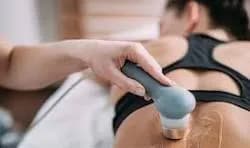
Electrotherapy is a group of physiotherapy techniques that use controlled electrical currents to stimulate nerves, muscles, and soft tissue. Rather than masking pain with medication, electrotherapy works by interacting with the body's own electrical signalling system — influencing how pain signals travel to the brain, how muscles contract, and how tissue heals.
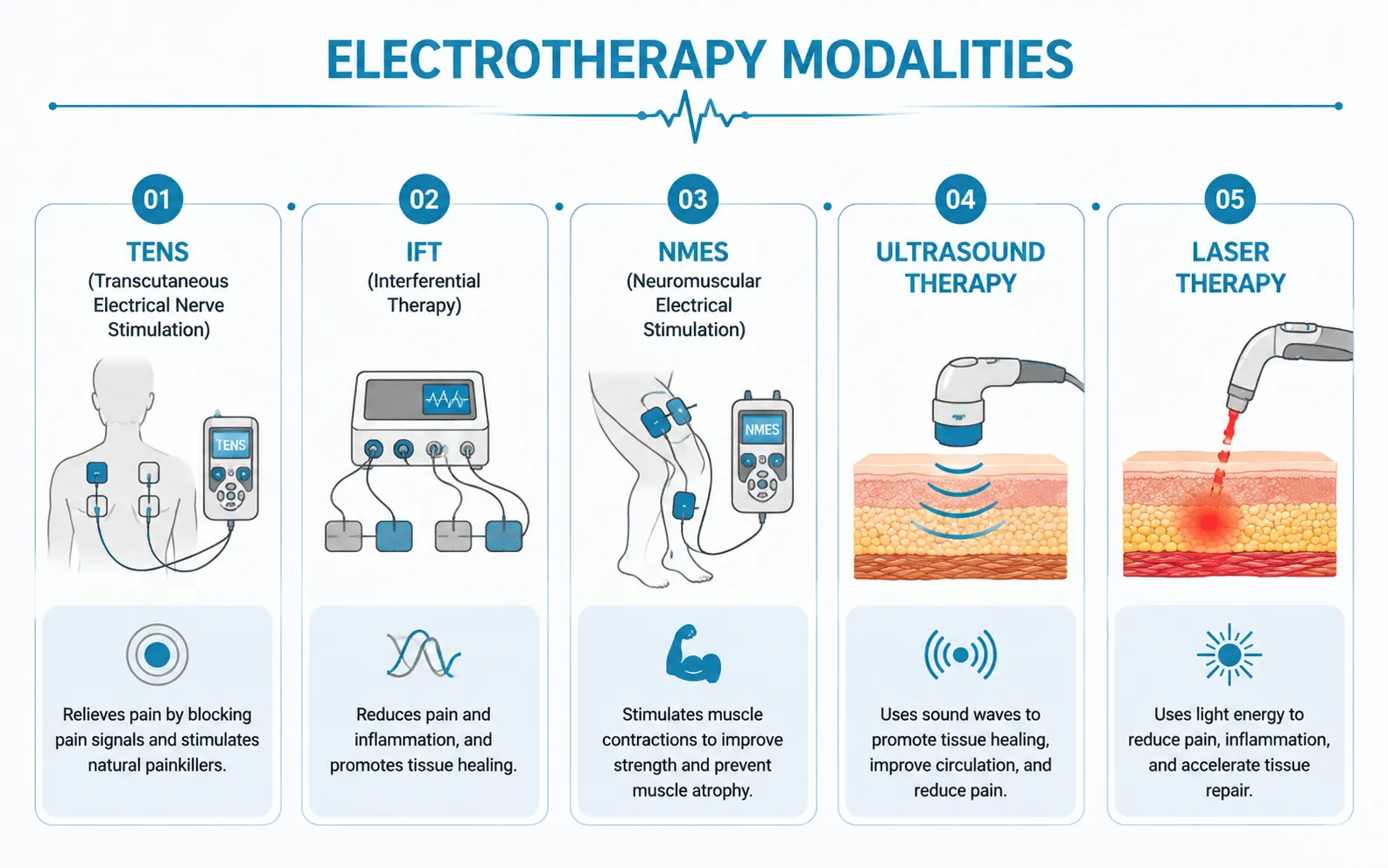
The term covers several distinct modalities — from TENS (Transcutaneous Electrical Nerve Stimulation) and IFT (Interferential Therapy) to ultrasound therapy, NMES (Neuromuscular Electrical Stimulation), and laser therapy. Each works through a different mechanism and is selected based on a thorough physiotherapy assessment of the patient's condition, pain pattern, and rehabilitation goals.
According to a review published by the National Institutes of Health (NIH), electrical stimulation modalities have demonstrated clinically meaningful reductions in musculoskeletal pain and improvements in functional outcomes across a range of conditions, including chronic low back pain, osteoarthritis, and post-surgical rehabilitation.
Electrotherapy is not a one-size-fits-all intervention. A qualified physiotherapist will assess your presentation before recommending a specific modality. That said, the following conditions are among those most frequently managed with electrical stimulation as part of a broader physiotherapy plan:
Back pain and neck pain — including chronic lower back pain, cervical spondylosis, and disc-related discomfort
Joint pain and arthritis — osteoarthritis of the knee, hip, and shoulder; rheumatoid arthritis flare management
Sports injuries — ligament sprains, muscle strains, tendinopathies, and delayed-onset muscle soreness
Muscle weakness — post-immobilisation atrophy, neurological weakness, and post-operative muscle inhibition
Nerve-related pain — sciatica, peripheral neuropathy, and radiculopathy
Post-operative rehabilitation — accelerating tissue healing and restoring neuromuscular control after surgery
Swelling and oedema — reducing localised inflammation in acute and sub-acute injuries
In Gurugram, where a large proportion of the working population spends extended hours at desks or commuting, neck pain, lower back pain, and repetitive strain injuries are among the most common reasons patients seek physiotherapy. Electrotherapy is frequently integrated into rehabilitation programmes for these presentations.
Understanding the different modalities helps patients have more informed conversations with their physiotherapist. Here is a concise overview of the most widely used forms:
TENS delivers low-voltage electrical pulses through electrodes placed on the skin. It is primarily used for pain relief, working via two mechanisms: at high frequency, it activates large sensory nerve fibres that effectively 'gate' pain signals (the gate control theory); at low frequency, it may stimulate endorphin release. TENS is non-invasive, well-tolerated, and commonly used for chronic musculoskeletal pain.
IFT uses two medium-frequency currents that intersect within the tissue, producing a low-frequency interference effect at depth. Because medium-frequency currents penetrate deeper with less skin resistance, IFT can reach structures like deep muscles, joints, and ligaments more effectively than standard TENS. It is particularly useful for deep joint pain, post-traumatic swelling, and muscle spasm.
NMES uses electrical impulses to trigger muscle contractions in cases where voluntary activation is impaired or insufficient. It is widely used in post-surgical rehabilitation (for example, quadriceps re-education after knee surgery), stroke rehabilitation, and management of muscle atrophy. Unlike TENS, NMES is specifically designed to produce a visible, functional muscle contraction.
While technically acoustic rather than electrical, therapeutic ultrasound is delivered by physiotherapy electrotherapy units and is often grouped within this category. High-frequency sound waves generate deep tissue heating (thermal effect) and micro-vibration (non-thermal effect), promoting collagen extensibility, reducing scar tissue adhesion, and accelerating soft tissue healing. It is commonly used for tendinopathies, bursitis, and ligament injuries.
LLLT uses specific wavelengths of light to stimulate cellular repair processes, reduce inflammation, and modulate pain. It is particularly effective for wound healing, nerve pain, and superficial musculoskeletal conditions. Sessions are painless and non-thermal at therapeutic doses.
For most patients, the process follows a predictable and comfortable sequence:
Assessment: Your physiotherapist takes a detailed history of your symptoms, reviews any imaging or reports, and performs a physical examination to identify the structures involved and the severity of the condition.
Treatment planning: Based on the assessment, the physiotherapist selects the most appropriate electrotherapy modality (or combination), sets the parameters (frequency, intensity, duration), and explains what you will feel during the session.
Application: Electrodes, ultrasound probes, or laser handpieces are positioned over the target area. Most patients describe the sensation as a mild tingling, warmth, or gentle pulsing — not painful. Sessions typically last 15–30 minutes.
Review and home advice: After the session, the physiotherapist reviews your response, adjusts the plan if needed, and may provide exercises or postural advice to complement the in-clinic treatment.
At Profrea's physiotherapy clinics across Gurugram, this consultation-led approach — assessment, customised planning, guided treatment, and structured follow-up — is central to how rehabilitation sessions are delivered. You can explore our physiotherapy clinicians and book an initial assessment through the Profrea platform.
Chronic low back pain is one of the most studied indications for electrotherapy. TENS and IFT have both shown statistically significant reductions in pain intensity and disability scores in randomised controlled trials. The World Health Organization identifies low back pain as the leading cause of disability globally, underscoring the importance of effective, non-pharmacological management options like electrotherapy.
Cervical pain — whether from spondylosis, poor posture, or acute strain — responds well to a combination of IFT (for deep muscle spasm) and TENS (for surface pain modulation). Physiotherapy guidelines generally recommend electrotherapy as an adjunct to manual therapy and exercise, not as a standalone treatment.
For knee osteoarthritis in particular, TENS has a well-established evidence base for short-term pain relief and improved functional mobility. IFT is often preferred for deeper joint involvement. Electrotherapy does not reverse structural joint changes, but it can meaningfully reduce pain and improve quality of life — allowing patients to engage more effectively in strengthening and mobility exercises.
Athletes and active individuals in Gurugram frequently use electrotherapy as part of injury rehabilitation. Ultrasound therapy accelerates healing in ligament and tendon injuries; NMES supports muscle re-education after immobilisation; TENS manages pain during the early recovery phase. The goal is always to restore full function as efficiently and safely as possible.
NMES is particularly valuable after orthopaedic surgery — for example, following knee replacement or ACL reconstruction — where voluntary muscle activation is inhibited by pain and swelling. By electrically stimulating the muscle to contract, NMES helps maintain muscle bulk and neuromuscular coordination during the early post-operative period when active exercise is limited. Profrea's multi-specialty network means physiotherapy can be coordinated closely with orthopaedic specialists for seamless post-surgical care.
Electrotherapy is generally very safe when administered by a trained physiotherapist. However, there are specific contraindications that your clinician will screen for during the assessment:
Cardiac pacemakers or implanted electronic devices (absolute contraindication for most electrical modalities)
Active malignancy in or near the treatment area
Pregnancy (particularly over the abdomen or lower back)
Thrombosis or active deep vein thrombosis
Open wounds, broken skin, or active skin infections at the electrode site
Impaired sensation (risk of burns if the patient cannot accurately report discomfort)
Epilepsy (for certain modalities)
This is why a proper physiotherapy assessment before commencing electrotherapy is not just best practice — it is essential for patient safety. Self-administering electrotherapy devices purchased online, without professional guidance, carries real risks of incorrect application, inadequate dosing, or use in contraindicated conditions.
There is no universal answer — the number of sessions depends on the condition, its chronicity, the patient's overall health, and how electrotherapy is integrated with other physiotherapy interventions. As a general guide:
Acute injuries (sprains, strains): 4–8 sessions over 2–4 weeks, often combined with manual therapy and exercise
Chronic pain conditions (osteoarthritis, chronic back pain): 8–12 sessions, with reassessment at the midpoint
Post-surgical rehabilitation: Variable — typically 12–20 sessions over 6–12 weeks, depending on the procedure
Your physiotherapist will set clear, measurable goals at the outset and review progress at regular intervals. If a modality is not producing the expected response, the plan is adjusted — not continued indefinitely. This is the kind of structured, outcome-focused approach that Profrea's rehabilitation clinicians bring to every patient's care pathway.
Electrotherapy is most effective when used as part of a comprehensive physiotherapy programme — not in isolation. The evidence consistently shows that combining electrotherapy with manual therapy, therapeutic exercise, and patient education produces better long-term outcomes than any single modality alone.
Think of electrotherapy as a tool that creates a therapeutic window: it reduces pain and muscle spasm sufficiently for the patient to engage in active rehabilitation. The exercises and movement re-education that follow are what produce lasting functional improvement. A physiotherapist who relies solely on electrotherapy — without progressing to active rehabilitation — is not delivering optimal care.
At Profrea, physiotherapy sessions are structured around this principle. The initial sessions may lean more heavily on electrotherapy for pain control; as the patient improves, the balance shifts toward active exercise and functional training. This progression is planned from the outset, not improvised session by session.
If you are considering electrotherapy in Gurugram, here are the key factors that distinguish a high-quality physiotherapy service from a basic one:
Qualified physiotherapists — look for BPT (Bachelor of Physiotherapy) or MPT (Master of Physiotherapy) credentials, with relevant clinical experience
Thorough initial assessment — a good clinic will not begin electrotherapy without first understanding your full clinical picture
Calibrated, maintained equipment — electrotherapy machines require regular calibration; ask about the clinic's equipment maintenance protocols
Integrated care — access to other specialists (orthopaedics, general medicine, nutrition) under the same network simplifies coordinated care
Transparent treatment planning — you should know from the outset how many sessions are planned, what the goals are, and how progress will be measured
Profrea's 7 clinic locations across Gurugram offer physiotherapy and rehabilitation services within a multi-specialty environment — meaning that if your pain has an underlying cause that requires input from, say, an orthopaedic specialist or a general medicine physician, that coordination happens within the same network. Video consultation options also mean that follow-up reviews and progress checks can happen without an additional clinic visit.
No. Most patients describe the sensation as a mild tingling, warmth, or gentle pulsing. The intensity is always set within the patient's comfort range. If you feel any sharp pain or burning, you should tell your physiotherapist immediately so the parameters can be adjusted.
Some patients notice a reduction in pain after the first session; for others, improvement becomes apparent after 3–5 sessions. Chronic conditions generally take longer to respond than acute injuries. Your physiotherapist will set realistic expectations based on your specific presentation.
Home TENS units are available and can be useful for ongoing pain management once a physiotherapist has assessed your condition and taught you correct electrode placement. However, they are not a substitute for a professional assessment, and using them without guidance — particularly if you have any of the contraindications listed above — carries risks. Always get a proper diagnosis first.
Coverage varies by insurer and policy. Some group health insurance plans cover physiotherapy sessions, including electrotherapy, when prescribed by a doctor. It is advisable to check your policy documents or speak to your insurer directly. Profrea's corporate portal may also offer relevant information for employer-linked health plans.
Yes — and in most cases, it should be. Electrotherapy is most effective as part of a multimodal physiotherapy programme that includes manual therapy, therapeutic exercise, and patient education. Your physiotherapist will design a programme that integrates these elements appropriately for your condition.
Yes, with appropriate precautions. Elderly patients with arthritis, post-fracture rehabilitation needs, or chronic pain conditions are among the most common recipients of electrotherapy. The physiotherapist will screen for contraindications (such as pacemakers or impaired skin sensation) and adjust parameters accordingly.
A proper physiotherapy assessment is the right first step — speak to a Profrea clinician to understand whether electrotherapy is appropriate for your condition and how it fits into a personalised rehabilitation plan.