

A practical guide to understanding the difference — and finding the right expert for your health goals in Gurgaon.
By the Profrea Editorial Team · Published July 2026
If you have ever typed “dietitian Gurgaon” or “nutritionist Gurgaon” into a search bar and felt confused about which professional you actually need, you are not alone. The two titles are used interchangeably in everyday conversation, but they carry meaningfully different qualifications, scopes of practice, and clinical roles — especially in the Indian healthcare context. Getting this distinction right can save you time, money, and months of trial-and-error with generic diet advice.
This article breaks down the difference clearly, explains when each professional is the right choice, and walks you through what a structured diet counselling session at a multi-specialty clinic in Gurgaon actually looks like.
In India, the term dietitian typically refers to a healthcare professional who holds a formal degree in Food Science, Dietetics, or Clinical Nutrition — often a B.Sc. or M.Sc. in Dietetics or a postgraduate diploma recognised by the Indian Dietetic Association (IDA). Dietitians are trained to work within clinical settings: hospitals, diabetes clinics, oncology wards, and multi-specialty outpatient departments. They translate medical diagnoses into therapeutic meal plans and work alongside physicians, endocrinologists, and gastroenterologists.
A nutritionist, on the other hand, is a broader and less regulated title in India. While many nutritionists hold legitimate degrees in nutrition science, public health nutrition, or sports nutrition, the term is not legally protected the way “registered dietitian” is in countries like the UK or USA. This means the quality of training can vary widely. A nutritionist is generally best suited for wellness coaching, sports performance, general healthy eating guidance, and weight management in otherwise healthy individuals.
The practical takeaway: if you have a diagnosed medical condition — diabetes, thyroid disorder, kidney disease, PCOS, or a gastrointestinal condition — a clinical dietitian is the appropriate first choice. If your goal is general wellness, improving athletic performance, or learning healthier eating habits without an underlying diagnosis, a qualified nutritionist can be an excellent starting point.
The following situations call specifically for a trained clinical dietitian rather than a general nutritionist:
Type 2 Diabetes or Pre-Diabetes: Carbohydrate counting, glycaemic index management, and medication-diet interactions require clinical expertise. A dietitian working alongside your diabetologist at Profrea can create a meal plan that complements your prescribed treatment.
Thyroid Disorders (Hypothyroidism / Hyperthyroidism): Certain foods and micronutrients directly affect thyroid hormone levels and medication absorption. A dietitian can navigate these interactions safely.
PCOS and Hormonal Imbalance: Insulin resistance, inflammation, and hormonal fluctuations all respond to targeted dietary intervention — but the plan must be coordinated with your gynaecologist or endocrinologist.
Post-Surgical Nutrition: Recovery from bariatric surgery, oncology treatment, or orthopaedic procedures requires carefully staged dietary protocols.
Eating Disorders: Conditions like anorexia, bulimia, or binge eating disorder need a multidisciplinary team that includes a dietitian and a mental health professional.
Paediatric Nutrition Concerns: Failure to thrive, childhood obesity, or food allergies in children need specialised paediatric dietetic input.
Vitamin and Mineral Deficiencies: If blood tests have flagged low Vitamin D, B12, iron, or folate, a dietitian can design a food-first correction plan alongside any supplementation your doctor recommends.
If you are unsure which professional you need, a good starting point is a consultation with a general physician or diabetologist in Gurgaon who can review your blood reports and refer you appropriately.
Yes — and the evidence base for this is substantial. A 2019 systematic review published on PubMed found that medical nutrition therapy delivered by a registered dietitian significantly improved HbA1c levels in people with Type 2 diabetes, often reducing the need for medication escalation. For thyroid patients, a dietitian helps identify goitrogenic foods, optimises selenium and iodine intake, and times meals around levothyroxine dosing to maximise absorption.
At Profrea's clinics across Gurgaon, the nutrition and dietetics team works in close coordination with the general medicine and diabetology departments. This integrated model means your diet plan is never created in isolation — it is aligned with your current medications, lab values, and overall treatment goals. Patients managing diabetes alongside other conditions such as hypertension or fatty liver particularly benefit from this coordinated approach.
Weight loss is one of the most common reasons people search for a weight loss dietitian in Gurgaon — and rightly so. While a nutritionist can provide general calorie-deficit guidance and healthy eating principles, sustainable weight loss in the presence of metabolic conditions (insulin resistance, hypothyroidism, PCOS) genuinely requires a clinical dietitian's expertise.
The most effective weight loss programmes combine dietary intervention with behavioural support. Profrea's multi-specialty network means that if emotional eating or stress is a factor in your weight gain, you can also access clinical psychology support from Dr. Sarika Thakral, who brings over 15 years of experience in behavioural therapy and is a certified NLP Practitioner. This kind of cross-specialty collaboration is rare in standalone nutrition clinics.
For women, weight gain linked to PCOS or post-pregnancy hormonal changes benefits from the combined input of a dietitian and a gynaecologist. Profrea's gynaecology team, including Dr. Soma Kumari — an Obstetrician, Gynaecologist, and Infertility Specialist with 7+ years of experience — can provide the hormonal context that shapes a truly personalised nutrition plan.
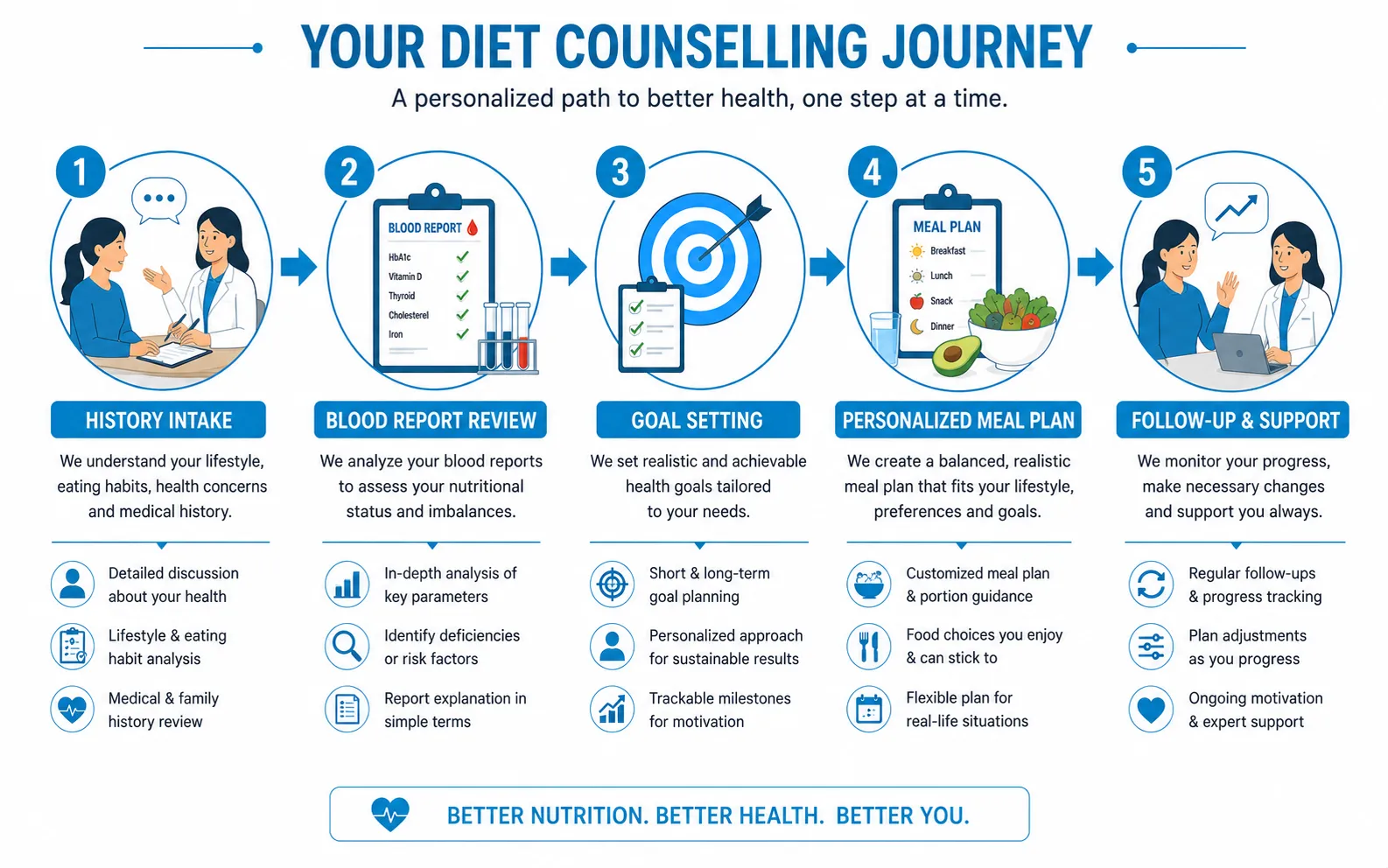
Many people avoid booking a nutrition consultation because they are not sure what to expect. Here is a realistic picture of what a structured first session looks like at a clinical setting:
Dietary History & 24-Hour Recall: The dietitian asks about your typical eating patterns, meal timings, food preferences, allergies, and cultural food habits. This is not a judgement — it is data collection.
Medical History Review: Your current diagnoses, medications, recent blood reports (blood sugar, thyroid panel, lipid profile, vitamin levels), and family history are reviewed.
Anthropometric Measurements: Height, weight, BMI, and ideally body composition (fat percentage vs. lean mass) are recorded to set a baseline.
Goal Setting: Whether your goal is weight loss, blood sugar control, managing a deficiency, or improving energy levels, the dietitian helps you set realistic, time-bound targets.
Personalised Meal Plan: A practical, culturally appropriate meal plan is created — not a generic template. Indian dietary patterns, regional food preferences, and your daily schedule are all factored in.
Follow-Up Schedule: You will typically be advised to return every 2–4 weeks for the first three months to review progress, adjust the plan, and troubleshoot challenges.
Profrea also offers video consultations for diet counselling, which is particularly convenient for working professionals in Gurgaon who cannot always visit a clinic during the day. The mobile app allows you to track your plan, message your care team, and access your records between sessions.
This is one of the most common questions — and the honest answer is: it depends on your starting point and your goal. Here is a general framework:
General wellness or mild weight loss (5–8 kg): Most patients notice meaningful changes within 6–8 weeks with 3–4 sessions, provided they are consistent with the plan.
Diabetes or metabolic management: Expect a minimum of 3–6 months of structured sessions, with monthly follow-ups thereafter. HbA1c improvements are typically measurable at the 3-month mark.
Vitamin deficiency correction: Dietary changes alone may take 3–6 months to normalise levels; your dietitian will coordinate with your doctor on whether supplementation is needed in parallel.
Significant weight loss (15 kg or more): A 6–12 month programme with regular sessions and periodic medical review gives the best long-term outcomes.
Consistency matters far more than perfection. A good dietitian will build a plan you can actually follow — not one that looks impressive on paper but collapses after two weeks. At Profrea, the care team uses a membership model that supports ongoing engagement, making it easier to stay on track between formal sessions.
Vitamin and mineral deficiencies are remarkably common in urban India. The World Health Organization estimates that micronutrient deficiencies affect over 2 billion people globally, with Vitamin D, iron, and Vitamin B12 deficiencies being particularly prevalent in South Asia. In Gurgaon's largely desk-bound, indoor professional population, Vitamin D deficiency is especially widespread — often presenting as fatigue, bone pain, low mood, and recurrent infections.
A dietitian can assess your dietary intake of key micronutrients and design a food-first strategy — but they will also flag when supplementation is clinically necessary and coordinate with your physician. This is precisely why seeing a vitamin deficiency doctor in Gurgaon who works within a multi-specialty network is more effective than consulting a standalone nutritionist: the clinical oversight is built in.
Profrea's general medicine team, including Dr. Ladli Chatterjee (MBBS, MD, Fellowship in Diabetes — Royal Liverpool Academy, UK), routinely reviews micronutrient panels as part of comprehensive health assessments and coordinates dietary referrals where appropriate.
Standalone nutrition clinics have their place, but for patients managing complex or overlapping health conditions, a multi-specialty environment offers a significant advantage. When your dietitian, physician, gynaecologist, and psychologist are all accessible within the same network — sharing clinical context and communicating about your care — the quality of your nutrition plan improves substantially.
Profrea operates 7 clinic locations across Gurgaon, with in-clinic and video consultation options, a dedicated mobile app, and a membership portal that keeps your care team connected. Whether you are looking for a weight loss dietitian in Gurgaon, support for diabetes nutrition, or a comprehensive nutrition consultation in Gurgaon, the network is designed to make expert, coordinated care accessible without long waiting times or fragmented advice.
You can also explore Profrea's preventive health screening packages — such as the Profrea Health Screen — which include key blood markers relevant to nutrition status, giving your dietitian a solid clinical baseline from day one.
In India, a dietitian typically holds a formal clinical degree (B.Sc./M.Sc. in Dietetics or equivalent) and is trained to manage nutrition in medical conditions. A nutritionist is a broader, less regulated title that covers wellness, sports nutrition, and general healthy eating. For diagnosed medical conditions, a clinical dietitian is the appropriate choice.
See a dietitian when you have a diagnosed condition such as diabetes, thyroid disorder, PCOS, kidney disease, or a significant vitamin deficiency. A dietitian can create a therapeutic meal plan that works alongside your medications and medical treatment — something a general nutritionist is not trained to do.
Yes. Medical nutrition therapy from a clinical dietitian is a recognised and evidence-based component of diabetes and thyroid management. A dietitian can help control blood sugar through carbohydrate management, improve thyroid medication absorption through meal timing, and address associated weight issues — ideally in coordination with your treating physician.
For general wellness goals, 3–4 sessions over 6–8 weeks often produce noticeable results. For metabolic conditions like diabetes or significant weight loss, a structured 3–6 month programme with regular follow-ups is recommended. Your dietitian will set realistic milestones at the first session.
A first diet consultation typically includes a detailed dietary history, review of your medical records and blood reports, anthropometric measurements (weight, BMI, body composition), goal setting, and a personalised meal plan. At Profrea, both in-clinic and video consultation options are available for your convenience.
Yes. Profrea offers video consultations for nutrition and diet counselling, making it easy for working professionals and those with mobility constraints to access expert dietary guidance from any of Profrea's 7 Gurgaon locations — or from home.
Profrea's nutrition and dietetics team — available across 7 Gurgaon clinics and via video — can help you build a personalised, medically informed diet plan that fits your life.