

Managing three chronic conditions at once is harder than it looks — here is what the right doctor can do that a series of specialists cannot.
By Dr. Ladli Chatterjee, General Physician & Diabetologist, Profrea · Published July 2026
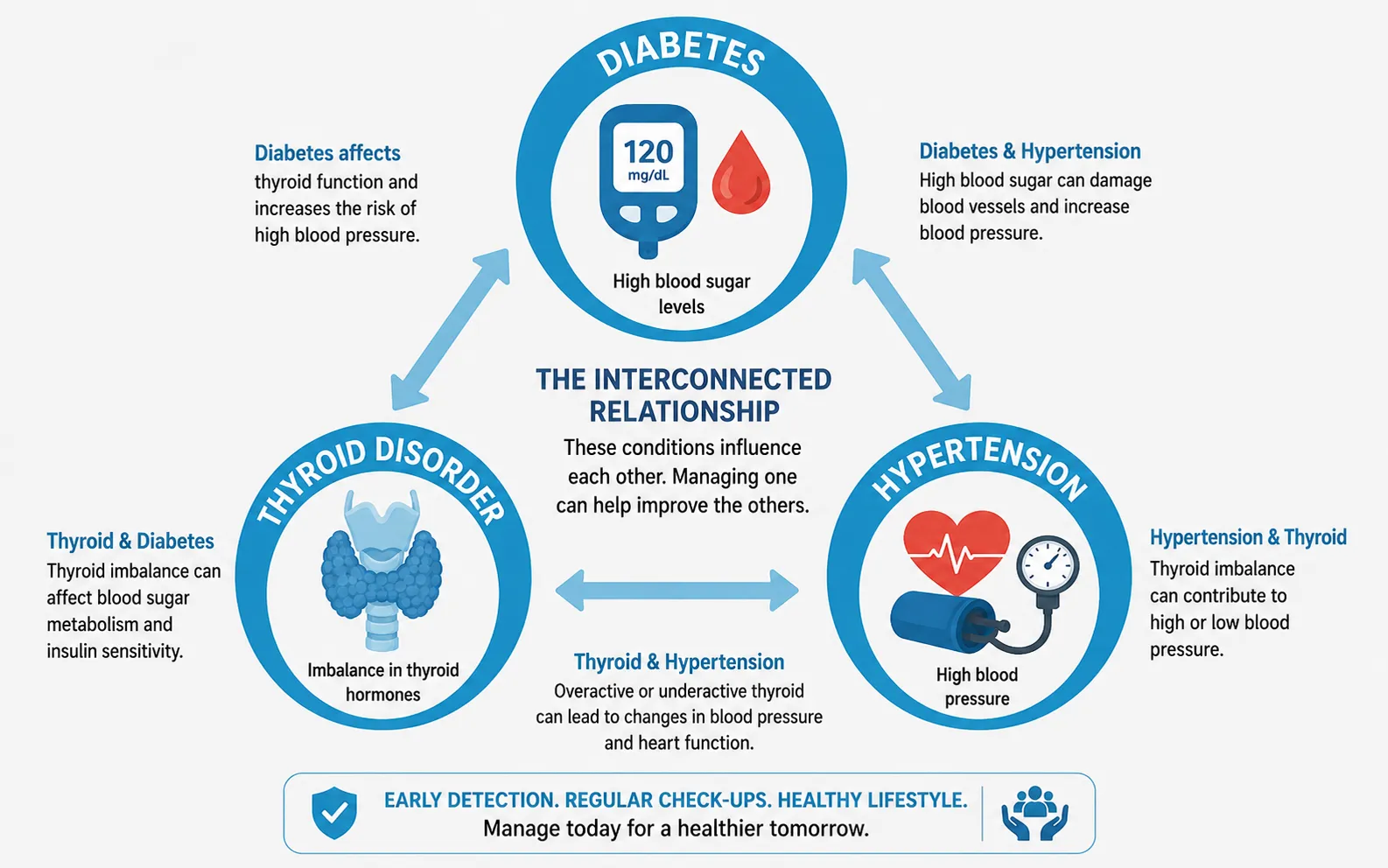
Walk into any busy outpatient department in Gurgaon and you will find the same story repeated: a patient with Type 2 diabetes who is also managing an underactive thyroid and borderline high blood pressure, juggling three separate specialists, three sets of prescriptions, and three different follow-up schedules. The result is often confusion, drug interactions, and — most critically — none of the three conditions being optimally controlled.
This is precisely where a specialist general physician in Gurgaon — one with dedicated training in chronic disease management — changes the equation. Rather than treating each condition in isolation, a well-trained general physician or internal medicine doctor in Gurgaon sees the whole picture: how your thyroid hormone levels affect blood sugar control, how uncontrolled hypertension accelerates diabetic kidney disease, and how a single coordinated care plan can address all three simultaneously.
At Profrea's multi-specialty clinic network across Gurugram, this integrated approach is built into every doctor-managed care plan. Below, we break down what you need to know about these three common chronic conditions, why they so often travel together, and what to look for in a diabetes doctor in Gurgaon who can manage them all.
These three conditions are not random companions. Research published by the National Institutes of Health (NIH) confirms that thyroid dysfunction — both hypothyroidism and hyperthyroidism — significantly alters insulin sensitivity and lipid metabolism, making blood sugar control harder for people who already have diabetes. Meanwhile, the World Health Organization (WHO) notes that hypertension affects approximately 1.28 billion adults globally, with prevalence disproportionately high among people with metabolic disorders like diabetes.
In practical terms, this means:
Hypothyroidism slows metabolism, raises LDL cholesterol, and can cause fluid retention — all of which worsen blood pressure and complicate diabetes management.
Hyperthyroidism can cause rapid heart rate and erratic blood sugar swings, mimicking or masking diabetic symptoms.
Uncontrolled hypertension in a diabetic patient dramatically increases the risk of nephropathy (kidney damage), retinopathy (eye damage), and cardiovascular events.
A thyroid doctor in Gurgaon who only manages thyroid levels, or a cardiologist who only adjusts blood pressure medication, may inadvertently create gaps in care. A specialist general physician — particularly one with fellowship-level training in diabetology — is uniquely positioned to see and manage these overlapping risks together.
This is one of the most common questions patients ask when searching for an internal medicine doctor in Gurgaon. The short answer: in the Indian healthcare context, the terms are often used interchangeably, but there are meaningful distinctions.
A General Physician (GP) holds an MBBS and typically an MD in General Medicine. They are trained to diagnose and manage a broad range of adult illnesses — acute infections, chronic diseases, and preventive care — and to refer appropriately when specialist intervention is needed.
An Internal Medicine specialist (also MD General Medicine in India) has the same foundational training but often pursues additional fellowships in sub-specialties such as diabetology, cardiology, or nephrology. This is where the distinction becomes clinically important: a general physician with a fellowship in diabetes, for example, brings subspecialist-level knowledge to a primary care setting — meaning you get the depth of a specialist with the breadth of a GP.
At Profrea, Dr. Ladli Chatterjee — MBBS, MD (General Medicine), FIDD, FAM, and Fellowship in Diabetes from the Royal Liverpool Academy, UK — exemplifies this model. Consulting at Profrea's Sector 45, South City-I, and Sector 52 clinics in Gurgaon, Dr. Chatterjee manages diabetes, thyroid disorders, and hypertension within a single, coordinated care plan rather than fragmenting care across multiple departments.
If you have been diagnosed with both diabetes and a thyroid disorder — or if you suspect you may have either — the most efficient first step is to see a general physician with diabetology training rather than booking separate appointments with an endocrinologist and a diabetologist. Here is why:
Single point of contact: One doctor reviews all your medications, reducing the risk of drug interactions (for example, certain thyroid medications can affect blood sugar levels).
Holistic investigation: A single set of blood tests — HbA1c, fasting glucose, TSH, T3/T4, lipid profile, kidney function — gives the physician a complete metabolic picture in one visit.
Coordinated targets: Blood sugar targets, thyroid hormone goals, and blood pressure targets are set together, not independently, which is clinically more effective.
Fewer appointments: For working professionals in Gurgaon, consolidating chronic disease management into one clinic visit per quarter is a significant practical advantage.
When a condition requires specialist input — for example, if diabetes has caused significant kidney disease requiring a nephrologist, or if a thyroid nodule needs an endocrinologist's assessment — a good general physician will refer and then re-integrate the specialist's findings into your overall care plan.
For the vast majority of patients with primary hypertension (high blood pressure without an identifiable secondary cause), the answer is yes — and guidelines from major cardiology bodies support this. A general physician is trained to initiate antihypertensive therapy, monitor response, adjust medications, and screen for target organ damage (kidneys, eyes, heart) at regular intervals.
A cardiologist referral becomes necessary when:
Blood pressure is resistant to three or more medications at optimal doses.
There is evidence of significant cardiac involvement — left ventricular hypertrophy, heart failure, or arrhythmia.
Secondary hypertension (caused by kidney disease, hormonal tumours, or sleep apnoea) is suspected.
For a hypertension doctor in Gurgaon who can manage your blood pressure alongside your diabetes and thyroid condition, a fellowship-trained general physician is often the most practical and clinically sound choice. Profrea's doctor-managed care plans include regular BP monitoring, medication reviews, and lifestyle counselling — all within the same consultation.
The phrase "diabetes care plan" is used loosely by many clinics. At Profrea, a doctor-managed care plan for chronic disease management in Gurgaon is structured around four pillars:
Baseline assessment: Comprehensive blood work (HbA1c, fasting and post-prandial glucose, lipid panel, kidney and liver function, thyroid panel, urine microalbumin), blood pressure measurement, BMI, and a detailed medical history review.
Personalised targets: HbA1c goals are not one-size-fits-all. A 35-year-old with newly diagnosed Type 2 diabetes has different targets than a 68-year-old with longstanding disease and cardiovascular risk. Your physician sets individualised, evidence-based goals.
Medication optimisation: Reviewing existing prescriptions for interactions, adjusting doses based on lab results, and — where appropriate — introducing newer diabetes medications (such as SGLT2 inhibitors or GLP-1 receptor agonists) that also benefit blood pressure and weight.
Lifestyle integration: Nutrition guidance (often in collaboration with Profrea's dietitian team), physical activity recommendations, and stress management — all tailored to the realities of a working professional's life in Gurgaon.
Follow-up frequency is determined by disease control: patients with well-controlled diabetes and stable thyroid function may need only quarterly reviews, while those with newly adjusted medications or poor control are seen more frequently — sometimes monthly. Profrea's mobile app and video consultation facility make interim check-ins accessible without requiring a clinic visit every time.
For patients interested in a comprehensive starting point, Profrea also offers structured health screening packages. The Profrea Health Screen provides a baseline metabolic panel that is an ideal first step before beginning a chronic disease management plan.
Clinical guidelines generally recommend the following visit schedule for adults with Type 2 diabetes:
Every 3 months: HbA1c check, blood pressure review, medication assessment, and brief lifestyle review — especially in the first year after diagnosis or after any medication change.
Every 6 months: Lipid panel, kidney function (eGFR and urine microalbumin), and liver function if on certain medications.
Annually: Full eye examination (diabetic retinopathy screening), foot examination, thyroid panel (TSH), and a comprehensive cardiovascular risk assessment.
In practice, many patients in Gurgaon visit their doctor only when symptoms worsen — which is too late for effective prevention of complications. Profrea's membership portal is designed to address this by sending automated reminders for upcoming tests and consultations, making it easier to stay on schedule even with a busy corporate lifestyle.
If you are unsure where to start, Dr. Ladli Chatterjee — available at three Profrea locations across Gurgaon — offers an initial consultation that maps out your personalised monitoring schedule based on your current health status.
Gurgaon's rapid urbanisation, high-stress corporate culture, sedentary office jobs, and food environment have created a fertile ground for metabolic disease. Diabetes prevalence in urban Haryana is significantly above the national average, and many working professionals delay seeking care until complications arise — partly because navigating multiple specialists feels overwhelming.
Profrea's network of 7 clinic locations across Gurugram — including Sector 45, South City-I, and Sector 52 — is specifically designed to make chronic disease management accessible for this demographic. With in-clinic consultations, video consultations, a corporate portal for employer-linked health plans, and a mobile app for tracking, the infrastructure supports consistent, long-term care rather than episodic crisis management.
Profrea also offers premium health screening packages — including the Health Screen Premium — that include thyroid panels, diabetes markers, and cardiovascular risk assessments in a single appointment, ideal for Gurgaon professionals who want a thorough annual review without spending a full day across multiple labs.
What distinguishes Profrea's general medicine offering is not just the credentials of its physicians — though those matter — but the structural commitment to doctor-managed, longitudinal care. Rather than a transactional consultation model where you see a different doctor each time, Profrea's care plans assign you to a named physician who tracks your progress across visits.
Dr. Ladli Chatterjee, with her MD in General Medicine, FIDD, FAM, and Fellowship in Diabetes from the Royal Liverpool Academy, UK (2018), brings subspecialist-level diabetology expertise to a primary care setting. This means patients with complex, overlapping conditions — diabetes plus thyroid plus hypertension — receive the depth of specialist knowledge without the fragmentation of seeing three separate doctors.
For patients whose needs extend beyond general medicine, Profrea's multi-specialty network includes Dr. Soma Kumari (Gynecology and Infertility), Dr. Sarika Thakral (Clinical Psychology), and a full roster of specialists — ensuring that when a referral is needed, it happens within the same trusted network.
In India, both terms typically refer to a doctor with an MBBS and MD in General Medicine. The practical difference lies in additional training: a general physician with a fellowship in a sub-specialty (such as diabetology) brings deeper expertise in that area while still managing the full spectrum of adult health conditions. An internal medicine specialist may also pursue super-specialisation in fields like cardiology or nephrology after their MD.
A general physician with fellowship-level training in diabetology is the most efficient choice. They can manage both conditions simultaneously, order a combined set of investigations, and set coordinated treatment targets — avoiding the confusion and potential drug interactions that can arise from seeing separate specialists.
Most guidelines recommend an HbA1c check and clinical review every three months, a kidney and lipid panel every six months, and a full annual review including eye and foot examinations. Your physician may adjust this schedule based on how well your condition is controlled and whether you have recently changed medications.
Yes, for the majority of patients with primary (essential) hypertension. A general physician is trained to initiate and adjust antihypertensive therapy, monitor for complications, and screen for target organ damage. A cardiologist referral is typically needed only for resistant hypertension, significant cardiac involvement, or suspected secondary causes.
A structured care plan includes a comprehensive baseline assessment (blood work, BP, BMI), personalised HbA1c and blood pressure targets, medication optimisation, lifestyle guidance (nutrition and physical activity), and a scheduled follow-up calendar. At Profrea, this is supported by a mobile app and video consultation facility for interim check-ins between clinic visits.
Book a consultation with Profrea's fellowship-trained general physicians and get a personalised, doctor-managed care plan — all at a clinic near you in Gurugram.