
A practical guide for patients in Gurugram navigating Type 2 diabetes — from recognising early warning signs to understanding what a structured, doctor-led care plan looks like.
By Dr. Ladli Chatterjee, General Physician & Diabetologist (MBBS, MD General Medicine, Fellowship in Diabetes — Royal Liverpool Academy, UK) · Published July 2026
India carries the second-largest diabetes burden in the world, and urban Haryana — including Gurugram — reflects that trend acutely. Sedentary corporate lifestyles, high-calorie food environments, and chronic stress have pushed the prevalence of Type 2 diabetes and pre-diabetes to alarming levels among working-age adults in the city. According to the World Health Organization, the number of people living with diabetes rose from 108 million in 1980 to 422 million in 2014, with low- and middle-income countries bearing a disproportionate share of the increase.
Yet diabetes is not a death sentence. With the right diagnosis, a personalised care plan, and consistent monitoring, most patients with Type 2 diabetes can live full, active lives — and some can even achieve remission. The key is moving beyond a single prescription and into a structured, doctor-managed programme that addresses blood sugar, weight, nutrition, and cardiovascular risk together.
At Profrea, our fellowship-trained diabetologist Dr. Ladli Chatterjee — who holds an MD in General Medicine and a Fellowship in Diabetes from the Royal Liverpool Academy, UK — leads doctor-managed diabetes care plans across multiple clinic locations in Gurugram, combining in-clinic consultations with video follow-ups through Profrea's mobile app.
Type 2 diabetes is notorious for developing silently. Many patients in Gurgaon discover their condition only during a routine health screen or when a complication — such as blurred vision, a slow-healing wound, or tingling in the feet — has already appeared. Knowing the early warning signs can make a significant difference to long-term outcomes.
Common early symptoms include:
Frequent urination, especially at night (polyuria)
Excessive thirst that is not relieved by drinking water (polydipsia)
Unexplained weight loss despite normal or increased appetite
Persistent fatigue and low energy, particularly after meals
Blurred vision or difficulty focusing
Slow-healing cuts, bruises, or skin infections
Tingling, numbness, or burning sensation in the hands or feet (early neuropathy)
Darkened skin patches around the neck or armpits (acanthosis nigricans — a sign of insulin resistance)
If you recognise two or more of these symptoms — or if you have risk factors such as a family history of diabetes, obesity, PCOS, or a sedentary desk job — it is worth booking a fasting blood glucose test without delay. Profrea's Profrea Health Screen packages include diabetes markers as part of a comprehensive preventive check-up.
Diagnosis is not based on a single reading. A responsible diabetologist will use a combination of tests to confirm the diagnosis, classify the type of diabetes, and assess how long the condition may have been present.
Taken after an 8-hour fast. A reading of ≥126 mg/dL on two separate occasions confirms diabetes. Values between 100–125 mg/dL indicate pre-diabetes (impaired fasting glucose).
This is the single most important monitoring test for diabetes. It reflects your average blood sugar over the past 2–3 months. An HbA1c of ≥6.5% confirms diabetes; 5.7–6.4% indicates pre-diabetes. As noted by the National Institute of Diabetes and Digestive and Kidney Diseases (NIDDK), HbA1c is also used to track how well a patient's diabetes management plan is working over time.
A 75 g glucose load is given after fasting, and blood sugar is measured at 2 hours. A value ≥200 mg/dL confirms diabetes. This test is particularly useful for diagnosing gestational diabetes and borderline cases.
Diabetes rarely travels alone. A complete diabetes work-up at Profrea also includes a lipid panel (to assess cardiovascular risk), serum creatinine and eGFR (kidney function), urine microalbumin (early kidney damage marker), and thyroid function — because hypothyroidism frequently coexists with Type 2 diabetes and worsens glycaemic control.
This is one of the most common questions patients ask at our Gurugram clinics — and the honest answer is: yes, for many patients, especially those diagnosed early.
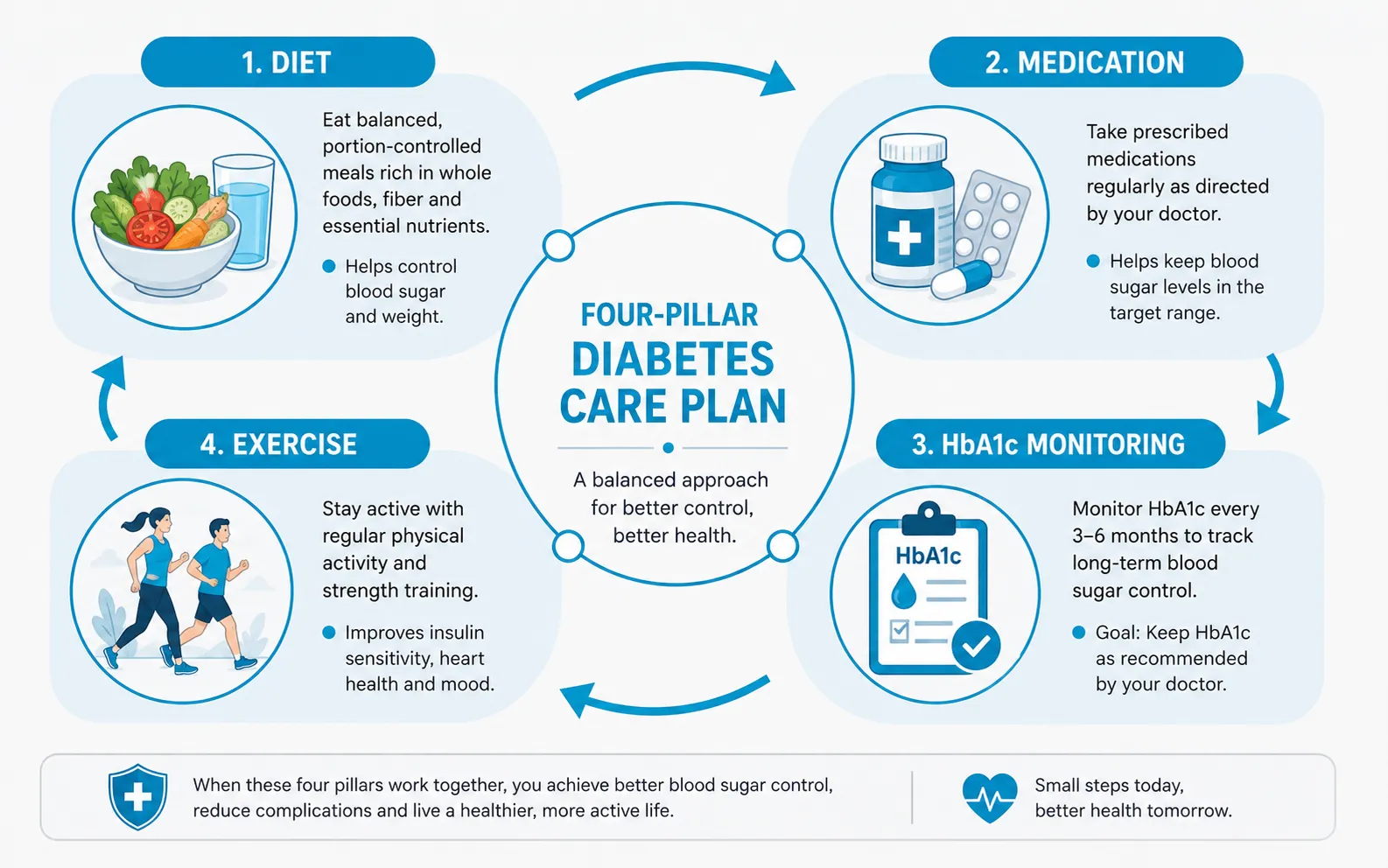
The first-line treatment for Type 2 diabetes is not insulin. It is a structured combination of:
Medical Nutrition Therapy (MNT): A personalised meal plan that controls carbohydrate quality and quantity, manages portion sizes, and supports weight loss where needed. Profrea's nutrition team works alongside the diabetologist to create plans suited to Indian dietary habits.
Physical Activity Prescription: Even 150 minutes of moderate-intensity walking per week improves insulin sensitivity significantly. Our care plans include specific activity targets based on each patient's fitness level and comorbidities.
Oral Antidiabetic Medications: Metformin remains the cornerstone first-line drug. Depending on HbA1c, weight, kidney function, and cardiovascular risk, newer agents such as SGLT-2 inhibitors (e.g., empagliflozin) or GLP-1 receptor agonists may be added — both of which also offer proven cardiovascular and renal protection.
Stress and Sleep Management: Chronic stress raises cortisol, which directly elevates blood glucose. Our integrated approach includes referrals to Profrea's psychology team — such as Dr. Sarika Thakral, Consultant Clinical Psychologist with 15+ years of experience — when psychological factors are contributing to poor glycaemic control.
Insulin is introduced when oral medications and lifestyle changes are insufficient to bring HbA1c to target, or when the patient presents with very high blood sugar at diagnosis. It is a tool, not a failure — and modern insulin analogues are far more convenient and comfortable than older formulations.
"Reversal" or "remission" of Type 2 diabetes — defined as achieving an HbA1c below 6.5% without diabetes medications for at least three months — is achievable for a subset of patients, particularly those who are:
Diagnosed within the last 5–6 years
Overweight or obese (significant weight loss of 10–15 kg can restore near-normal beta-cell function)
Willing to commit to sustained dietary and lifestyle change
This does not mean diabetes disappears permanently — the underlying genetic predisposition remains, and blood sugar must continue to be monitored. But remission is a realistic, evidence-based goal that Dr. Ladli Chatterjee actively works toward with eligible patients at Profrea's Gurgaon clinics. Patients who are not candidates for remission can still achieve excellent long-term outcomes with tight HbA1c control, reducing the risk of complications by up to 40%.
A one-time prescription is not a care plan. Profrea's approach to diabetes management in Gurugram is built around structured, ongoing doctor oversight — not just reactive visits when something goes wrong.
A typical care plan includes:
Initial comprehensive assessment: Full history, physical examination, baseline investigations (HbA1c, FPG, lipid profile, kidney function, urine microalbumin, thyroid), and cardiovascular risk scoring.
Personalised treatment protocol: Medication plan, dietary targets, activity goals, and self-monitoring guidance (when and how to check blood sugar at home).
Quarterly HbA1c reviews: The cornerstone of ongoing management. Medication adjustments are made based on results, not guesswork.
Annual complication screening: Diabetic retinopathy (eye check), neuropathy assessment (foot examination), nephropathy screening (urine microalbumin), and ECG for cardiovascular risk.
Video consultation follow-ups: Profrea's video consultation facility means patients in busy corporate Gurgaon can check in with their doctor without taking half a day off work — ideal for medication reviews and results discussions between in-clinic visits.
Nutrition co-management: Coordinated with Profrea's dietetics team for meal planning that fits Indian food culture and individual preferences.
Profrea operates 7 clinic locations across Gurugram, including VKaRe Diabetic Clinic in Sector 45, Profrea Multispeciality Clinic in South City-I, and a clinic in Sector 52 — all served by Dr. Ladli Chatterjee. Patients can also access care through the Profrea mobile app and membership portal for seamless continuity.
Visit frequency depends on how well-controlled your diabetes is and whether complications are present. As a general guide:
Newly diagnosed or poorly controlled (HbA1c >8%): Every 4–6 weeks until targets are achieved.
Stable, well-controlled (HbA1c <7%): Every 3 months for HbA1c review; annual comprehensive check-up.
Pre-diabetes: Every 6 months to monitor progression and reinforce lifestyle changes.
Between visits, home blood glucose monitoring (using a glucometer) and keeping a simple food and activity diary can provide your doctor with valuable data to fine-tune your plan. Profrea's app allows patients to log readings and share them with their care team ahead of consultations.
For patients who need a general physician alongside their diabetes management, Dr. Sanjay Misra is available at Profrea's Gurugram clinics for co-management of related conditions such as hypertension, infections, and general health concerns.
Women with polycystic ovary syndrome (PCOS) have a significantly elevated risk of developing Type 2 diabetes due to underlying insulin resistance. Gestational diabetes — diabetes that develops during pregnancy — also increases the lifetime risk of Type 2 diabetes for both mother and child. If you have been diagnosed with PCOS or gestational diabetes, proactive blood sugar monitoring is essential.
Profrea's gynaecology team, including Dr. Soma Kumari (Obstetrician, Gynaecologist & Infertility Specialist with 7+ years of experience), works in coordination with the diabetology team to manage these overlapping conditions — particularly for patients planning a pregnancy or currently pregnant.
Living in a fast-paced city like Gurgaon presents real challenges for diabetes management — long commutes, irregular meal times, corporate stress, and limited time for exercise. Here are evidence-based strategies that work within an urban Indian lifestyle:
Eat low-glycaemic-index carbohydrates: Replace white rice and maida-based foods with millets (bajra, jowar), oats, and whole wheat. Pair carbohydrates with protein and fibre at every meal to blunt the glucose spike.
Walk after meals: Even a 10–15 minute walk after lunch or dinner can reduce post-meal blood sugar by 20–30 mg/dL.
Prioritise sleep: Sleeping fewer than 6 hours per night is independently associated with higher HbA1c. Aim for 7–8 hours of consistent sleep.
Manage stress actively: Cortisol raises blood glucose. Yoga, mindfulness, and structured breathing exercises are practical tools — and Profrea's psychology services are available for patients whose stress is significantly impacting their health.
Stay hydrated: Dehydration concentrates blood glucose. Aim for 2–2.5 litres of water daily.
Never skip medications: Oral antidiabetic drugs work best when taken consistently. Missing doses leads to glucose fluctuations that accelerate complications.
The most effective non-insulin approach combines a low-glycaemic diet, regular physical activity (at least 150 minutes per week), oral medications (starting with metformin), and consistent HbA1c monitoring every 3 months. For patients diagnosed early with moderate HbA1c elevation, this combination can achieve excellent control — and in some cases, remission. A structured doctor-managed care plan is far more effective than self-management alone.
For well-controlled diabetes (HbA1c below 7%), a visit every 3 months for HbA1c review and an annual comprehensive check-up is standard. Poorly controlled patients or those with complications may need monthly visits initially. Profrea's video consultation facility makes it easier to maintain this frequency without disrupting your work schedule.
The core monitoring tests are HbA1c (every 3 months), fasting and post-meal blood glucose, lipid profile, kidney function tests (serum creatinine, eGFR), urine microalbumin, and annual eye and foot examinations. Thyroid function is also checked periodically, as hypothyroidism is common in diabetic patients and affects glycaemic control.
Remission is achievable for some patients with Type 2 diabetes — particularly those diagnosed recently, who are overweight, and who commit to significant weight loss (10–15 kg) through dietary change and exercise. This is a realistic goal that Profrea's diabetology team actively pursues with eligible patients. However, ongoing monitoring remains essential even after remission, as the risk of recurrence persists.
Profrea offers structured, doctor-managed diabetes care plans across 7 clinic locations in Gurugram, including VKaRe Diabetic Clinic (Sector 45), South City-I, and Sector 52. Care is led by Dr. Ladli Chatterjee, who holds a Fellowship in Diabetes from the Royal Liverpool Academy, UK. Patients can book in-clinic or video consultations through the Profrea app or website.
Profrea's fellowship-trained diabetologists in Gurugram are ready to build a personalised, doctor-managed care plan that fits your life — in-clinic or via video consultation.