

A practical guide for anyone navigating a new diagnosis, uncontrolled blood sugar, or long-term diabetes management in Gurugram — written with clinical input from Profrea's fellowship-trained diabetologist.
By Dr. Ladli Chatterjee, General Physician & Diabetologist · Published June 2026
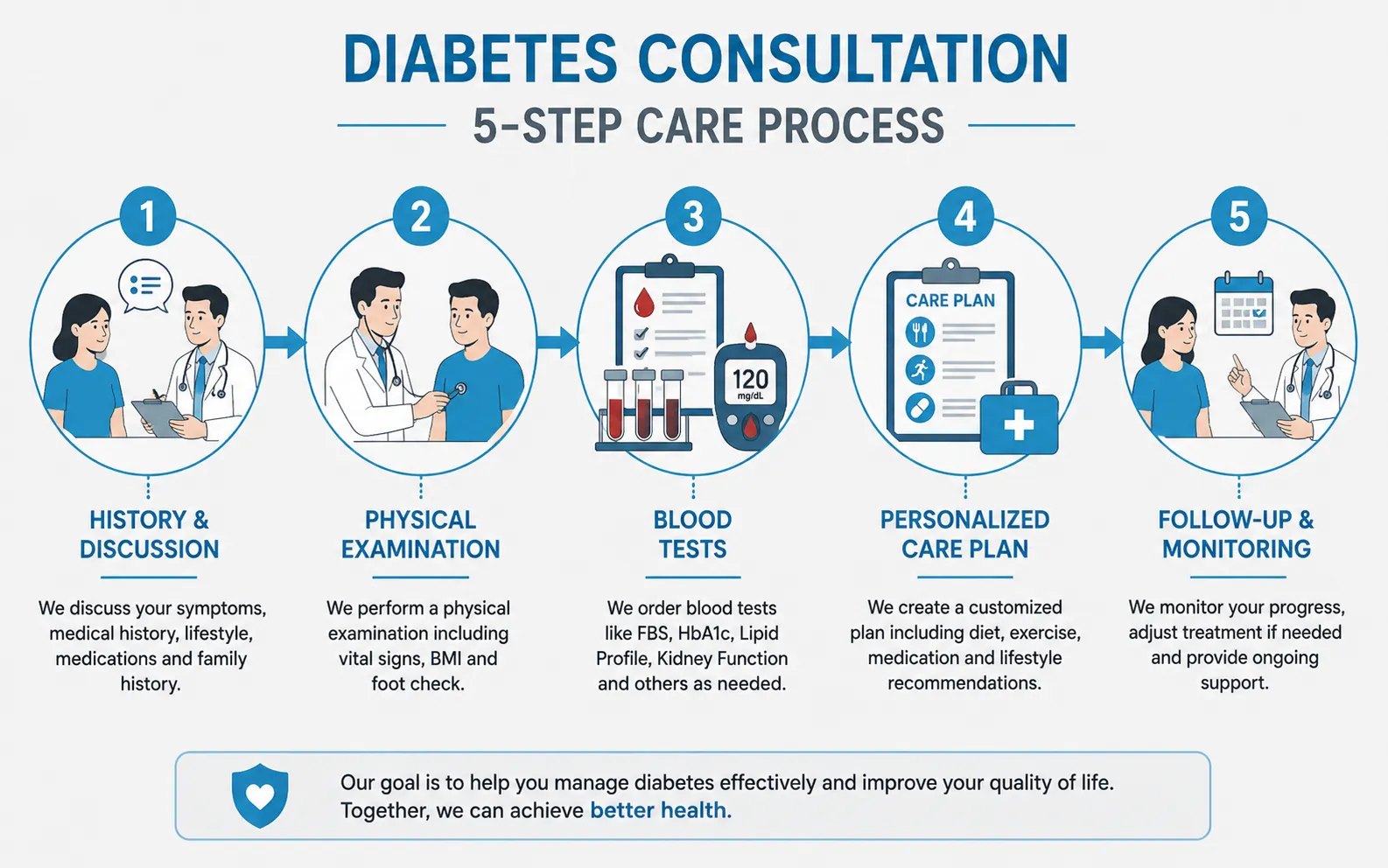
India is home to more than 101 million people living with diabetes, according to a 2023 ICMR national study — and Gurugram, with its high-pressure corporate lifestyle, sedentary work culture, and processed-food environment, reflects that burden acutely. Yet many residents delay seeing a specialist until complications have already begun. This article explains exactly when you should book an appointment with a diabetes doctor, what a first consultation looks like, and how a structured care plan can make a measurable difference to your long-term health.
Whether you have just received a borderline HbA1c result, are managing Type 2 diabetes on your own, or are simply worried about your family history, the information below will help you take the right next step with confidence.
This is one of the most common questions people ask after a high blood sugar reading. The short answer: it depends on the complexity of your condition.
General Physician (GP) / Internal Medicine Doctor: For newly detected or well-controlled Type 2 diabetes without complications, a qualified general physician with diabetes training is entirely appropriate. A GP can order the right tests, prescribe first-line medications, and coordinate lifestyle changes. At Profrea, Dr. Ladli Chatterjee — an MBBS and MD in General Medicine holder with a Fellowship in Diabetes from the Royal Liverpool Academy, UK — combines both roles, offering the depth of a specialist within a general medicine setting.
Diabetologist / Endocrinologist: If your diabetes is poorly controlled despite medication, if you have Type 1 diabetes, or if you are developing complications such as kidney disease, neuropathy, or retinopathy, a dedicated diabetologist or endocrinologist is the right choice. A fellowship-trained diabetologist brings advanced knowledge of insulin regimens, continuous glucose monitoring, and complex drug interactions.
Can a general physician treat Type 2 diabetes? Absolutely — and for the majority of patients, a well-trained GP is the most accessible and cost-effective first point of care. The key is ensuring your doctor has specific training in diabetes management, not just general medicine. Profrea's diabetes clinic in Gurugram is structured precisely around this model: fellowship-level expertise delivered through a multi-specialty, patient-friendly clinic network.
Many people wait for obvious symptoms before seeking help, but diabetes is often silent in its early stages. See a diabetes doctor promptly if you notice any of the following:
Frequent urination and unusual thirst — classic early signs of elevated blood glucose
Unexplained fatigue or brain fog — cells starved of glucose produce persistent tiredness
Blurred vision — high sugar affects the lens of the eye
Slow-healing wounds or recurring infections — impaired immunity is a hallmark of uncontrolled diabetes
Tingling or numbness in hands and feet — early peripheral neuropathy
Fasting blood glucose above 100 mg/dL or HbA1c above 5.7% — pre-diabetes territory requiring immediate lifestyle intervention
Strong family history of diabetes — first-degree relatives with Type 2 diabetes significantly raise your personal risk
Even if you feel perfectly well, the World Health Organization recommends that adults over 35 with any risk factor — obesity, hypertension, sedentary lifestyle, or family history — undergo routine blood glucose screening at least once every three years.
Knowing what to expect removes anxiety and helps you prepare. Here is a step-by-step walkthrough of a first diabetes consultation at Profrea's clinics in Gurugram.
Your doctor will ask about symptom duration, dietary habits, physical activity levels, previous blood reports, current medications, and family history of diabetes, heart disease, or kidney problems. Be as specific as possible — even seemingly unrelated details (sleep quality, stress levels, alcohol intake) matter for diabetes management.
Expect a measurement of your weight, BMI, blood pressure, and waist circumference. Your doctor may also examine your feet for early signs of neuropathy or poor circulation — a check that is often skipped in rushed consultations but is clinically essential.
A comprehensive first visit typically includes the following tests (some may be ordered in advance so results are ready on the day):
Fasting and post-prandial blood glucose
HbA1c (glycated haemoglobin — the gold-standard 3-month average)
Lipid profile (cholesterol, triglycerides, HDL, LDL)
Kidney function tests (serum creatinine, urea, eGFR)
Liver function tests
Urine microalbumin (early kidney damage marker)
Thyroid function (TSH) — thyroid disorders frequently coexist with diabetes
Complete blood count
Profrea's Profrea Health Screen packages are designed to bundle many of these investigations at a predictable cost, making it easier to arrive at your consultation with a complete picture already in hand.
Based on your results and history, your doctor will outline a care plan covering diet modifications, physical activity targets, medication (if required), and a monitoring schedule. At Profrea, this plan is documented digitally and accessible through the Profrea mobile app, so you can track your progress between visits.
If complications are detected — for example, early retinopathy or nephropathy — your diabetes doctor will coordinate referrals within Profrea's multi-specialty network. This integrated approach means you do not need to start from scratch with a new provider. Profrea's Gurugram clinics cover specialties including Obstetrics & Gynecology (important for women with gestational diabetes), Clinical Psychology (for diabetes-related distress and burnout), and nutrition counselling.
Follow-up frequency depends on how well your diabetes is controlled and whether complications are present. As a general guide:
Newly diagnosed or poorly controlled: Every 4–6 weeks until targets are met
Stable, well-controlled Type 2 diabetes: Every 3 months for HbA1c review
Well-controlled with no complications: Every 6 months, with annual comprehensive screening
Insulin-dependent patients: More frequent visits, often monthly, especially during dose titration
Profrea's doctor-managed care plans include scheduled follow-up reminders via the app, so patients do not miss critical review windows. Video consultation slots are also available for routine check-ins, reducing the need to travel to the clinic for every appointment — a significant advantage for busy professionals in Gurugram's corporate hubs.
The landscape of Type 2 diabetes treatment has changed significantly over the past decade. Management is no longer simply about controlling blood sugar — it is about protecting the heart, kidneys, and nervous system simultaneously.
Current evidence-based treatment pillars include:
Lifestyle medicine first: Structured dietary changes (low glycaemic index, portion control, reduced ultra-processed foods) and at least 150 minutes of moderate exercise per week remain the most powerful tools for early-stage Type 2 diabetes.
Metformin and newer oral agents: SGLT-2 inhibitors and GLP-1 receptor agonists have demonstrated cardiovascular and renal protective benefits beyond glucose lowering, and are now recommended for patients with heart disease or kidney risk.
Insulin therapy: Initiated when oral agents are insufficient, with careful titration to avoid hypoglycaemia.
Continuous glucose monitoring (CGM): Increasingly accessible and recommended for patients on insulin or those with frequent hypoglycaemic episodes.
Psychological support: Diabetes distress — a recognised condition distinct from clinical depression — affects up to 45% of people with diabetes and directly impairs self-management. Profrea's integrated psychology services, led by Dr. Sarika Thakral (M.Phil Clinical Psychology, 15+ years' experience), address this often-overlooked dimension of care.
Profrea's diabetic care programme in Gurugram integrates all of these elements under one roof — or, increasingly, through a combination of in-clinic and video consultations that fit around a patient's schedule.
Gurugram's rapid urbanisation has created a near-perfect environment for metabolic disease. Long commutes, desk-bound jobs, late-night eating, high stress, and easy access to calorie-dense food combine to accelerate insulin resistance. Add to this a genetic predisposition — South Asians develop Type 2 diabetes at lower BMI thresholds and younger ages than Western populations — and the case for early, proactive screening becomes compelling.
Profrea operates 7 clinic locations across Gurugram, including sites in Sector 45, South City-I, and Sector 52, making it straightforward to access a fellowship-trained diabetologist in Gurugram without long waiting times or the need to travel to a large hospital. Both walk-in and pre-booked Smart In-clinic Consultation slots are available.
A little preparation makes your first visit far more productive:
Bring all previous blood reports, even if they are years old
List all current medications, supplements, and herbal remedies
Fast for 8–10 hours if fasting glucose is to be tested on the day
Note down your typical daily meals and any recent dietary changes
Write down your questions in advance — common ones include target HbA1c, whether you need medication, and what foods to avoid
If you have a home glucometer, bring your recent readings log
You can also book a Profrea Health Screen in advance so that your baseline investigations are ready before the consultation, allowing your doctor to spend the appointment time on interpretation and planning rather than waiting for results.
For most people with Type 2 diabetes, a general physician with specific diabetes training — or a dedicated diabetologist — is the right starting point. If your condition is complex, involves insulin, or has complications, a fellowship-trained diabetologist or endocrinologist is preferable. At Profrea, Dr. Ladli Chatterjee holds both an MD in General Medicine and a Fellowship in Diabetes from the Royal Liverpool Academy, UK, bridging both roles effectively.
Your doctor will take a detailed medical and family history, perform a physical examination (including BMI, blood pressure, and foot check), order baseline blood and urine tests, and then create a personalised management plan covering diet, exercise, medication (if needed), and follow-up schedule.
Yes — a well-trained general physician can manage the majority of Type 2 diabetes cases, particularly in the early and stable stages. The key is that the doctor has specific training in diabetes care, not just general medicine. Profrea's internal medicine doctors in Gurugram have dedicated diabetes training and follow evidence-based protocols.
Newly diagnosed or poorly controlled patients typically need a review every 4–6 weeks. Once stable, a quarterly HbA1c check and a comprehensive annual review are standard. Profrea's care plans include automated follow-up reminders and video consultation options to make this easier.
A standard diabetes check-up includes fasting and post-meal blood glucose, HbA1c, lipid profile, kidney function tests (creatinine, eGFR), urine microalbumin, liver function tests, thyroid function (TSH), and a complete blood count. Annual checks also include an eye examination and a detailed foot assessment.
Yes. Profrea offers video consultations for routine diabetes follow-ups, medication reviews, and diet counselling. In-clinic visits remain recommended for physical examinations and when new investigations are required. You can book either option through the Profrea app or website.
Profrea's fellowship-trained diabetes doctors in Gurugram are available for in-clinic and video consultations across 7 locations — book a slot that fits your schedule.