A clinically grounded guide to surgical and non-surgical body sculpting — helping you understand your options, set realistic expectations, and make an informed decision.
By Profrea · Published July 2026
You have been exercising regularly, eating well, and still that stubborn pocket of fat around your abdomen or inner thighs refuses to budge. You are not alone. Millions of people across India — and a growing number in Gurugram specifically — are turning to body contouring treatments to address precisely this problem. But with dozens of options available, from cryolipolysis to surgical liposuction, knowing where to start can feel overwhelming.
This guide breaks down what body contouring actually is, which procedures are best suited to different goals, what results are realistic, and how to find qualified specialists in Gurugram who can guide you safely through the process.
Body contouring is an umbrella term for a range of cosmetic procedures designed to reshape the body's silhouette by targeting excess fat, loose skin, or both. It is important to understand from the outset that body contouring is not a weight-loss solution. Rather, it is a body reshaping tool — intended for people who are at or near their target weight but have localised areas that do not respond to diet and exercise.
Common reasons people seek body contouring include:
Stubborn fat deposits on the abdomen, flanks, thighs, arms, or back
Loose or sagging skin following significant weight loss
Post-pregnancy changes to the abdomen and waist
Loss of skin elasticity due to ageing
Desire for a more sculpted, proportionate body shape
According to the International Society of Aesthetic Plastic Surgery (ISAPS), body contouring procedures — including liposuction and abdominoplasty — consistently rank among the top five cosmetic surgical procedures performed globally each year, reflecting how widespread this concern is.
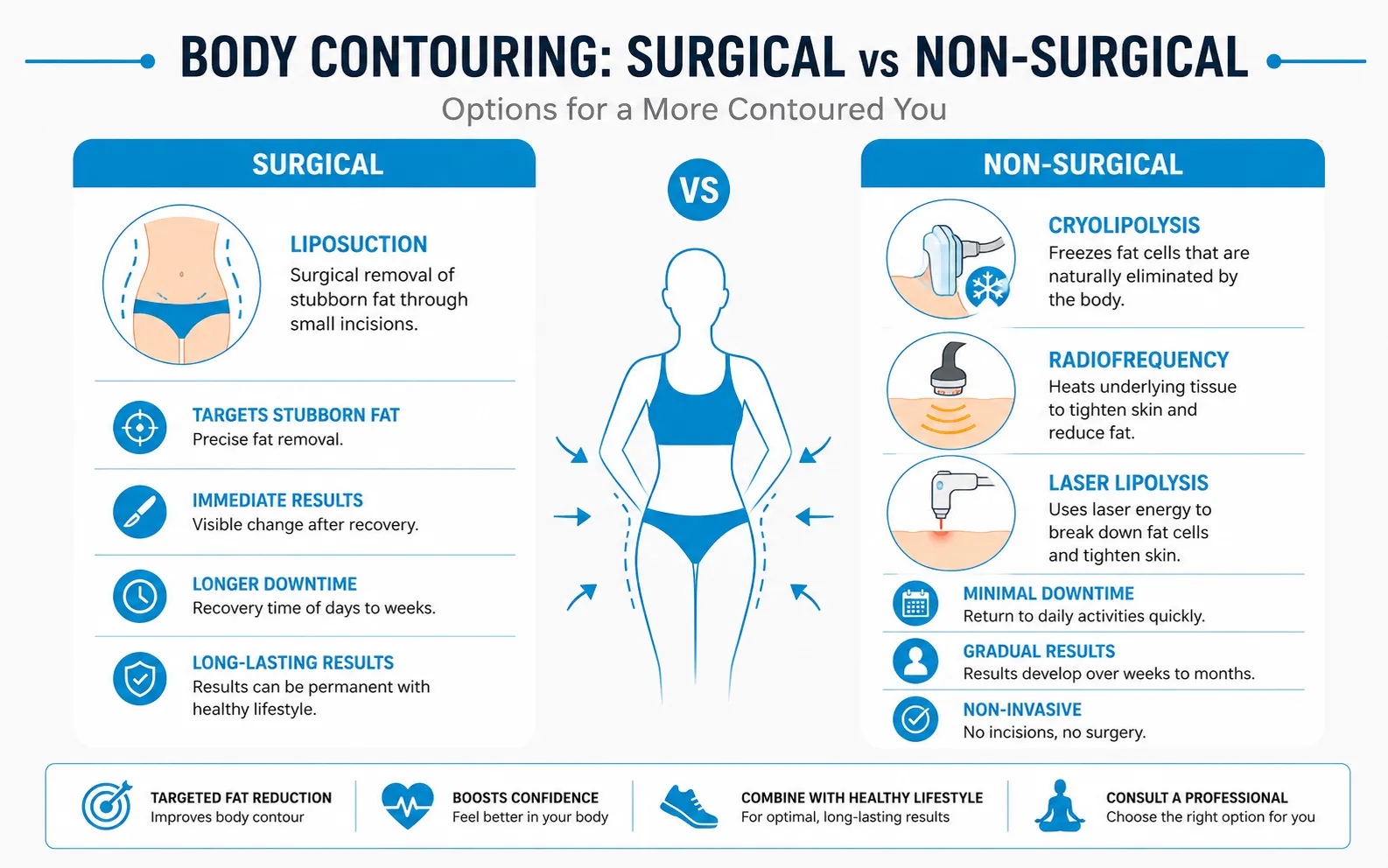
The first major decision in any body contouring journey is whether a surgical or non-surgical approach is appropriate. Both have distinct advantages, limitations, and recovery profiles.
Surgical procedures offer more dramatic and permanent results, particularly when dealing with larger volumes of fat or significant skin laxity. Common surgical options include:
Liposuction: Removes fat deposits through small incisions using a cannula. Suitable for multiple areas including the abdomen, thighs, arms, and back.
Abdominoplasty (Tummy Tuck): Removes excess abdominal skin and tightens the underlying muscles. Often recommended after pregnancy or major weight loss.
Body Lift: Addresses loose skin around the lower body — including the abdomen, buttocks, and thighs — typically after bariatric surgery.
Arm Lift (Brachioplasty) and Thigh Lift: Target sagging skin on the upper arms and inner thighs respectively.
Surgical procedures require anaesthesia, carry standard surgical risks, and involve a recovery period ranging from one to six weeks depending on the extent of the procedure. They are best performed by a qualified plastic surgeon with experience in body reshaping.
Non-surgical fat reduction treatments have advanced significantly over the past decade. They are ideal for individuals with mild to moderate fat deposits who prefer minimal downtime. Key technologies include:
Cryolipolysis (Fat Freezing): Uses controlled cooling to crystallise and destroy fat cells, which are then naturally eliminated by the body over several weeks. Clinically validated for reducing fat in treated areas.
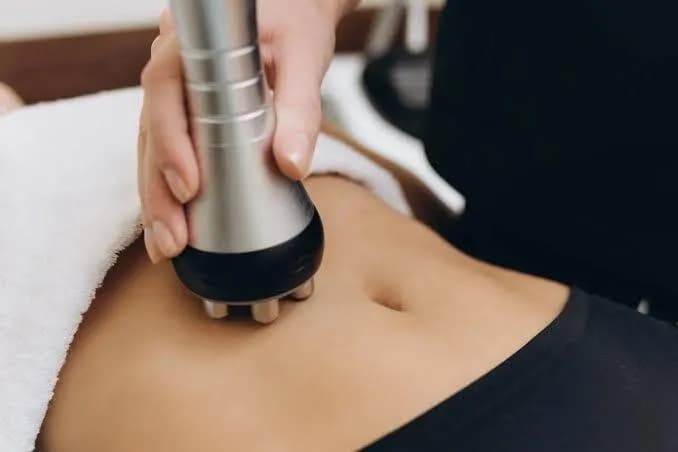
Radiofrequency (RF) Body Sculpting: Delivers heat energy to stimulate collagen production and tighten skin while also targeting fat cells. Often used for skin laxity alongside fat reduction.
High-Intensity Focused Ultrasound (HIFU): Targets fat cells with focused ultrasound energy, causing cell disruption without affecting surrounding tissue.
Laser Lipolysis: Uses laser energy to liquefy fat cells, which are then metabolised by the body. Some devices also offer skin tightening benefits.
Electromagnetic Muscle Stimulation: Induces powerful muscle contractions to build muscle and reduce fat simultaneously — popular for abdominal and gluteal sculpting.
Non-surgical treatments typically require multiple sessions and produce more gradual results compared to surgery. However, they carry significantly lower risk and require little to no recovery time, making them an attractive option for many patients in Gurugram's busy urban lifestyle.
Body contouring procedures can address virtually any area where stubborn fat accumulates or skin loses its firmness. The most commonly treated zones include:
Abdomen and waist — the most requested area, especially post-pregnancy
Flanks and love handles — often resistant to diet and exercise
Inner and outer thighs — particularly common among women
Upper arms — sagging skin and fat deposits
Back and bra rolls
Buttocks — both lifting and volume enhancement
Submental area (double chin) — increasingly treated with non-surgical options
Knees and calves — less common but achievable with targeted techniques
One of the most important conversations any qualified specialist will have with you before treatment is about expectations. Body contouring is highly effective when used appropriately — but it is not a substitute for a healthy lifestyle.
What body contouring can do:
Reduce localised fat deposits that are resistant to diet and exercise
Tighten loose or sagging skin in specific areas
Improve body proportions and silhouette
Enhance the results of weight loss or post-pregnancy recovery
Boost confidence and body image
What body contouring cannot do:
Produce significant overall weight loss
Prevent future weight gain if lifestyle habits do not change
Replace the need for a balanced diet and regular physical activity
Treat obesity or metabolic conditions
A body of peer-reviewed research on PubMed consistently shows that patients who maintain a stable weight and active lifestyle after body contouring procedures enjoy significantly longer-lasting results than those who do not.
Before any body contouring treatment begins, a thorough consultation with a qualified specialist is essential. During this consultation, your doctor will:
Assess your current health status, BMI, and medical history
Identify the areas of concern and evaluate the type of tissue involved (fat vs. skin laxity)
Discuss your aesthetic goals and what is realistically achievable
Recommend the most appropriate treatment modality — surgical or non-surgical
Explain the procedure, recovery timeline, potential risks, and aftercare requirements
At Profrea, our network of highly qualified specialists across Gurugram includes plastic surgeons, dermatologists, and aesthetic medicine practitioners who collaborate to provide personalised body reshaping plans. With 7 clinic locations across Gurugram and both in-clinic and video consultation options, accessing expert advice has never been more convenient. You can connect with our specialists including Dr. Deepa Agarwal and Dr. Shweta Sharma to discuss your body contouring goals.
Gurugram has emerged as one of the leading hubs for aesthetic and cosmetic medicine in North India. The city's large working professional population, high awareness of wellness trends, and access to internationally trained specialists have driven significant growth in demand for body sculpting and fat reduction treatments.
Several factors are particularly relevant for patients seeking body contouring in Gurugram:
Sedentary work culture: Long desk hours in the corporate sector contribute to fat accumulation around the abdomen and flanks — the most commonly treated areas in the city.
Post-pregnancy demand: Gurugram has a high concentration of young families, and post-pregnancy body reshaping — particularly abdominoplasty and non-surgical abdominal tightening — is among the most requested procedures.
Access to technology: Leading clinics in Gurugram now offer advanced non-surgical platforms, reducing the need to travel to Delhi for cutting-edge treatments.
Streamlined scheduling: Profrea's integrated clinic management platform and health screening services allow patients to complete pre-treatment assessments and follow-up care efficiently, without long waiting times.
Recovery varies considerably depending on whether you have chosen a surgical or non-surgical approach.
Expect some swelling, bruising, and discomfort for the first one to two weeks. Most patients can return to light desk work within 10–14 days, though strenuous exercise should be avoided for four to six weeks. Compression garments are typically worn for several weeks to support healing and optimise results. Full results may take three to six months to become visible as swelling subsides.
Most non-surgical body contouring sessions involve minimal to no downtime. Some patients experience temporary redness, mild swelling, or tenderness at the treatment site, which typically resolves within a few hours to a couple of days. Results from non-surgical fat reduction treatments generally become visible over four to twelve weeks as the body naturally eliminates treated fat cells.
Regardless of the method chosen, your specialist will provide a tailored aftercare plan. Staying well-hydrated, maintaining a balanced diet, and incorporating regular physical activity are universally recommended to support and prolong results.
Body contouring procedures work best when supported by good nutritional habits. Even after fat cells are removed or destroyed, remaining fat cells can still expand if caloric intake consistently exceeds expenditure. This is why many specialists recommend integrating a nutrition consultation into the body contouring journey.
Profrea's multi-specialty network includes qualified dietitians and nutrition specialists. You can consult with professionals like Dt. Swagata Pahari or Dt. Deepak to build a sustainable eating plan that complements your body reshaping treatment and helps maintain long-term results.
It is worth acknowledging that body image concerns are often intertwined with emotional wellbeing. While body contouring can meaningfully improve self-confidence and quality of life for many patients, it is not a treatment for body dysmorphic disorder or other psychological conditions that affect body perception.
Responsible practitioners will screen for unrealistic expectations or signs of body image distress during the consultation process. If psychological support is indicated, Profrea's network also includes qualified psychology and psychiatry specialists who can provide complementary care alongside aesthetic treatment.
No. Body contouring focuses on reshaping and sculpting specific areas of the body, not on achieving significant overall weight reduction. It is best suited for individuals who are at or near their ideal weight but have localised fat deposits or loose skin that does not respond to diet and exercise.
This depends on the technology used and the individual's goals. Most non-surgical fat reduction treatments require between two and six sessions spaced several weeks apart. Your specialist will recommend a personalised treatment plan after assessing your specific concerns.
Fat cells that are surgically removed or destroyed through non-surgical treatments do not regenerate. However, remaining fat cells can still enlarge with weight gain. Maintaining a stable weight through a healthy diet and regular exercise is essential for long-lasting results.
Good candidates are generally adults who are in good overall health, at or near their target weight, non-smokers (or willing to stop smoking before surgery), and have realistic expectations about outcomes. A consultation with a qualified specialist is the best way to determine suitability.
Yes. Combination approaches — for example, liposuction with skin tightening, or multiple non-surgical modalities — are common and can produce more comprehensive results. Your specialist will advise on what combinations are safe and appropriate for your individual case.
Look for a board-certified plastic surgeon, dermatologist, or aesthetic medicine specialist with verifiable credentials and experience in the specific procedure you are considering. Profrea's network across Gurugram connects patients with highly qualified specialists and offers both in-clinic and video consultations for initial assessments. You can also explore Dr. Mukesh Chawla and other specialists on the Profrea platform.
Speak with a qualified specialist at Profrea's clinics across Gurugram — in-clinic or via video consultation — to get a personalised assessment and treatment plan tailored to your goals.