
Your weight alone doesn't tell the full story. Discover how BMI and body fat percentage analysis together give you a clearer, more actionable picture of your health.
By the Profrea Clinical Team · Published July 2026
Step on a weighing scale and you get a single number. That number, however, cannot distinguish between a kilogram of muscle and a kilogram of fat, nor can it tell you where fat is stored in your body. Two people of identical height and weight can have dramatically different health profiles depending on their body composition.
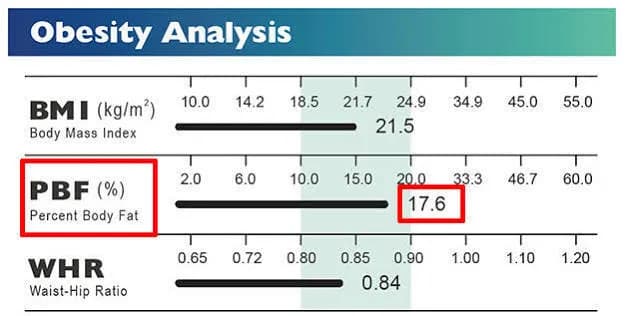
This is precisely why BMI and body fat analysis are used together in clinical and wellness settings. BMI (Body Mass Index) gives a quick, standardised estimate of whether your weight is proportionate to your height. Body fat analysis goes a step further by measuring what fraction of your total body weight is actually fat tissue — and, in more advanced assessments, where that fat is concentrated.
According to the World Health Organization, obesity — defined by excess body fat rather than weight alone — is a major risk factor for cardiovascular disease, type 2 diabetes, musculoskeletal disorders, and certain cancers. Understanding your body composition is therefore not merely a fitness concern; it is a meaningful health indicator.
BMI is calculated by dividing a person's weight in kilograms by the square of their height in metres (kg/m²). It is a simple, non-invasive screening tool that has been used in public health for decades.
Standard BMI categories used internationally are:
Below 18.5 — Underweight
18.5 – 24.9 — Normal weight
25.0 – 29.9 — Overweight
30.0 and above — Obese
It is important to note that BMI thresholds may differ for South Asian populations. Research published by the National Institutes of Health (NIH) and endorsed by Indian health authorities suggests that South Asians may face metabolic risks at lower BMI values — with overweight often defined from 23.0 kg/m² and obesity from 27.5 kg/m². This is particularly relevant for patients in Gurugram and across India.
Despite its widespread use, BMI has well-recognised limitations. It does not account for muscle mass, bone density, age, sex, or fat distribution. A highly muscular athlete may register as overweight on the BMI scale, while an older adult with low muscle mass but high fat percentage may appear within the normal range — a condition sometimes called "normal-weight obesity" or "skinny fat."
Body fat percentage is the proportion of your total body weight that consists of fat tissue. Unlike BMI, it directly measures fat rather than inferring it from height and weight. Body fat can be broadly categorised into:
Essential fat — The minimum amount of fat required for normal physiological function (approximately 2–5% in men and 10–13% in women).
Storage fat — Fat accumulated in adipose tissue, which includes both subcutaneous fat (under the skin) and visceral fat (around internal organs).
Visceral fat is of particular clinical concern because it is metabolically active and strongly associated with insulin resistance, inflammation, and cardiovascular risk — even in individuals who appear lean by BMI standards.
General body fat percentage ranges vary by sex and age. As a broad reference:
Men: Fit range approximately 14–24%; above 25% is generally considered high.
Women: Fit range approximately 21–31%; above 32% is generally considered high.
These are general guidelines; your clinician will interpret results in the context of your age, health history, and goals. If you are curious about your own numbers, speaking with a specialist at Profrea can help you understand what your measurements mean for your individual health.
Several methods are used to assess body fat percentage and overall body composition, each with different levels of accuracy, accessibility, and cost:
BIA devices pass a low-level electrical current through the body. Because fat and muscle conduct electricity differently, the device can estimate body fat percentage. Modern BIA machines used in clinical settings can also segment body composition by region (arms, legs, trunk) and estimate visceral fat levels. BIA is non-invasive, quick, and widely available — making it a practical choice for routine body composition testing.
A trained clinician uses calipers to measure the thickness of subcutaneous fat at specific body sites. Results are entered into validated equations to estimate total body fat. Accuracy depends heavily on the skill of the assessor and the equation used.
Considered a gold standard for body composition analysis, DEXA scans use low-dose X-rays to differentiate between bone, lean tissue, and fat mass. They provide regional fat distribution data and are particularly useful for tracking changes over time. DEXA is typically available in specialised clinical or research settings.
These laboratory-based methods measure body density to estimate fat mass and are highly accurate but less commonly available outside research environments.
For most patients seeking a body composition test in a clinical or wellness context, BIA combined with a thorough consultation provides a practical, reliable starting point. At Profrea's clinics across Gurugram, experienced aesthetic physicians use detailed assessment findings to build personalised body contouring and wellness plans.
The short answer: both, used together, are more informative than either alone.
BMI is a useful population-level screening tool and a quick first indicator of weight status. It is easy to calculate and requires no equipment. However, because it cannot distinguish fat from muscle or account for fat distribution, it can misclassify individuals — particularly those who are very muscular, elderly, or of South Asian ethnicity.
Body fat percentage analysis addresses many of these limitations. It directly measures fat tissue and, in advanced assessments, can identify visceral fat accumulation — a key driver of metabolic disease that is invisible on the scale and often underestimated by BMI alone.
Tracking both over time — alongside waist circumference, waist-to-hip ratio, and clinical markers — gives you and your healthcare provider a comprehensive view of your health trajectory. This is especially valuable if you are working on weight management, body contouring, or improving metabolic health.
Profrea's nutrition and wellness specialists and dietitians work alongside aesthetic physicians to interpret your body composition results in a holistic context, helping you set realistic, evidence-based goals.
Several factors affect both your BMI and your body fat percentage, and understanding them helps you interpret your results more accurately:
Body fat naturally increases with age as muscle mass declines (a process called sarcopenia). An older adult may have a "normal" BMI while carrying a higher-than-healthy proportion of body fat. This makes body fat percentage analysis particularly important for people over 40.
Women naturally carry more essential fat than men due to hormonal and reproductive physiology. Healthy body fat ranges therefore differ between sexes, and reference values should always be sex-specific.
Regular resistance training increases lean muscle mass, which can raise BMI without increasing health risk. Conversely, a sedentary lifestyle reduces muscle mass and increases fat percentage even when total weight remains stable.
South Asian individuals tend to have higher body fat percentages at equivalent BMI values compared to European populations, and accumulate visceral fat at lower BMI thresholds. This is why revised BMI cut-offs are recommended for Indian patients.
Dietary patterns, sleep quality, stress levels, and hormonal health all influence body composition. A high-sugar, high-refined-carbohydrate diet promotes visceral fat accumulation even in individuals who are not overtly overweight. Chronic stress elevates cortisol, which is linked to abdominal fat deposition.
At Profrea's clinics across Gurugram, a body composition assessment is designed to be thorough, comfortable, and immediately actionable. Here is what a typical consultation involves:
Detailed consultation: Your physician discusses your health history, lifestyle, goals, and any concerns before any measurements are taken.
BMI and anthropometric measurements: Height, weight, waist circumference, and waist-to-hip ratio are recorded.
Body fat analysis: Using advanced body composition technology, your body fat percentage, lean mass, and — where available — visceral fat level are assessed.
Result interpretation: Your physician explains what your numbers mean in the context of your age, sex, ethnicity, and health goals — not just against a generic chart.
Personalised plan: Based on your results, a customised plan is developed. This may include dietary guidance from a registered dietitian, physiotherapy recommendations, or an aesthetic body contouring treatment plan if appropriate.
Follow-up and tracking: Progress is monitored over time so that your plan can be adjusted as your body composition changes.
This structured, clinician-led approach ensures that your body fat test results translate into meaningful, personalised action — not just a number on a printout.
A body composition test is worth considering if any of the following apply to you:
You have a family history of type 2 diabetes, heart disease, or metabolic syndrome.
Your weight has been stable but you feel less fit or notice changes in body shape.
You are over 35 and have not had a comprehensive health screen recently.
You are starting a new fitness or weight-management programme and want a baseline.
You have been told your BMI is normal but you are concerned about abdominal fat.
You are considering an aesthetic body contouring procedure and want to understand your starting point.
You want to track the effectiveness of dietary or lifestyle changes over time.
Profrea also offers comprehensive health screening packages that include body composition analysis alongside other key health markers, making it easy to get a complete picture of your health in a single visit.
Understanding your body composition is also the foundation of effective aesthetic body contouring. Treatments designed to reduce localised fat deposits — such as those targeting the abdomen, flanks, thighs, or arms — are most effective when planned with a clear understanding of your fat distribution, skin quality, and overall body composition.
At Profrea, experienced aesthetic physicians use your body composition assessment findings to design personalised body contouring plans. Advanced aesthetic technologies are selected based on your specific concerns — whether the goal is targeting stubborn subcutaneous fat, improving body contours, or supporting skin tightening. The emphasis is always on natural-looking results that complement your overall health and wellness goals.
If you are based in Gurugram and would like to explore your options, you can speak with specialists such as Dr. Aditi Banik or Dr. Sujoya Datta at Profrea for a detailed consultation.
While professional assessment and clinical support are valuable, there are evidence-based lifestyle strategies that consistently support healthy body composition:
Prioritise protein: Adequate dietary protein supports muscle maintenance and satiety, helping preserve lean mass during weight loss.
Incorporate resistance training: Building and maintaining muscle mass is one of the most effective ways to improve body composition, regardless of age.
Reduce ultra-processed foods and added sugars: These are strongly associated with visceral fat accumulation.
Improve sleep quality: Poor sleep disrupts hormones that regulate appetite and fat storage, including cortisol, ghrelin, and leptin.
Manage stress: Chronic stress promotes abdominal fat deposition through elevated cortisol. Mindfulness, physical activity, and adequate rest all help.
Stay consistently active: Even non-exercise physical activity (walking, standing, daily movement) contributes meaningfully to energy expenditure and metabolic health.
A nutrition specialist at Profrea can help you translate these principles into a practical, personalised dietary plan that aligns with your body composition goals and cultural food preferences.
BMI is a useful screening tool but has significant limitations. It does not distinguish between fat and muscle, does not account for fat distribution, and may misclassify individuals who are very muscular or elderly. It is best used alongside body fat percentage and other clinical assessments for a more complete picture.
Healthy ranges vary by sex and age. As a general guide, a fit body fat percentage is approximately 14–24% for men and 21–31% for women. Your clinician will interpret your result in the context of your individual health profile rather than applying a single universal threshold.
Common methods include bioelectrical impedance analysis (BIA), skinfold caliper measurements, DEXA scans, and hydrostatic weighing. BIA is the most widely available in clinical settings and provides a practical, non-invasive assessment suitable for routine monitoring.
Yes. This is sometimes called "normal-weight obesity" or "skinny fat." It occurs when a person has low muscle mass and high fat mass, resulting in a normal BMI despite an unhealthy body fat percentage. This is why body fat analysis is important even for individuals whose BMI appears normal.
For most people, a body composition assessment every 3–6 months is sufficient to track meaningful changes. If you are actively working on weight management or a fitness programme, more frequent assessments (every 6–8 weeks) can help you monitor progress and adjust your approach.
Yes. Profrea's clinics across Gurugram offer body composition assessments as part of individual consultations and comprehensive health screening packages. Results are interpreted by experienced clinicians who provide personalised guidance based on your findings. You can also explore Profrea's premium health screening options for a more comprehensive evaluation.
If you'd like to understand your body composition with expert clinical guidance, Profrea's specialists across Gurugram are here to help you interpret your results and build a personalised plan.