By Dr. Shikha Bansal, MCh Plastic Surgery · Published July 2025
By Dr. Shikha Bansal, Plastic Surgeon (MCh, SMS Medical College Jaipur) · Published July 2026 · Profrea Multi-specialty Clinics, Gurugram
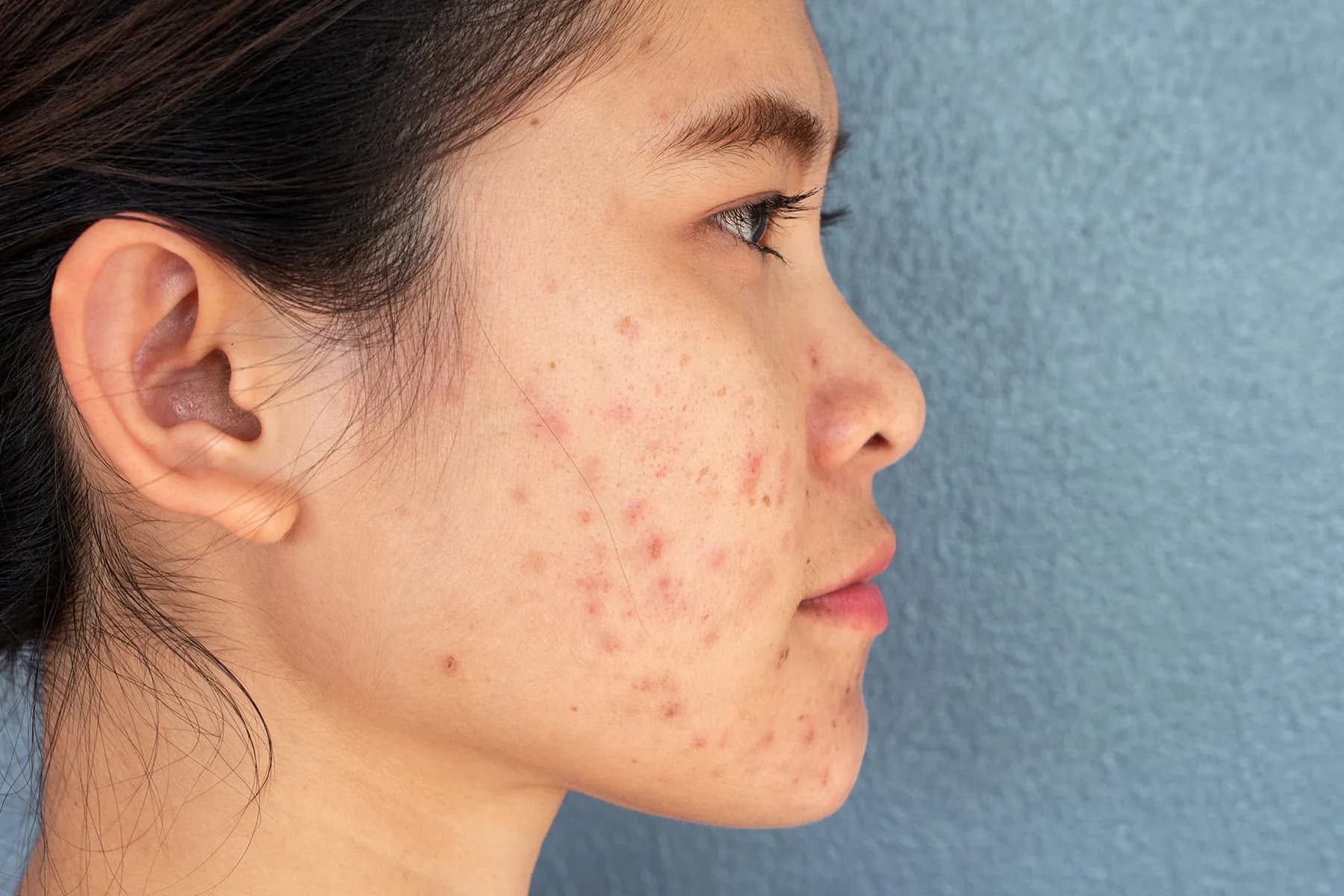
Acne scars are one of the most emotionally distressing skin concerns that patients bring to our clinics. Long after the breakouts have cleared, the textural changes, pits, and discolouration they leave behind can affect confidence in ways that go far deeper than the skin's surface. If you have been searching for reliable acne scar treatment in Gurgaon, this guide walks you through the clinical landscape — what causes different scar types, which treatments work best for each, and what a medically supervised care pathway at Profrea looks like.
According to the National Institutes of Health (NIH), acne affects up to 85% of people at some point in their lives, and a significant proportion develop post-inflammatory scarring that persists into adulthood. In a city like Gurgaon — with high pollution levels, stress-driven hormonal fluctuations, and a young, image-conscious professional population — acne and its aftermath are among the most common reasons patients seek aesthetic consultations.
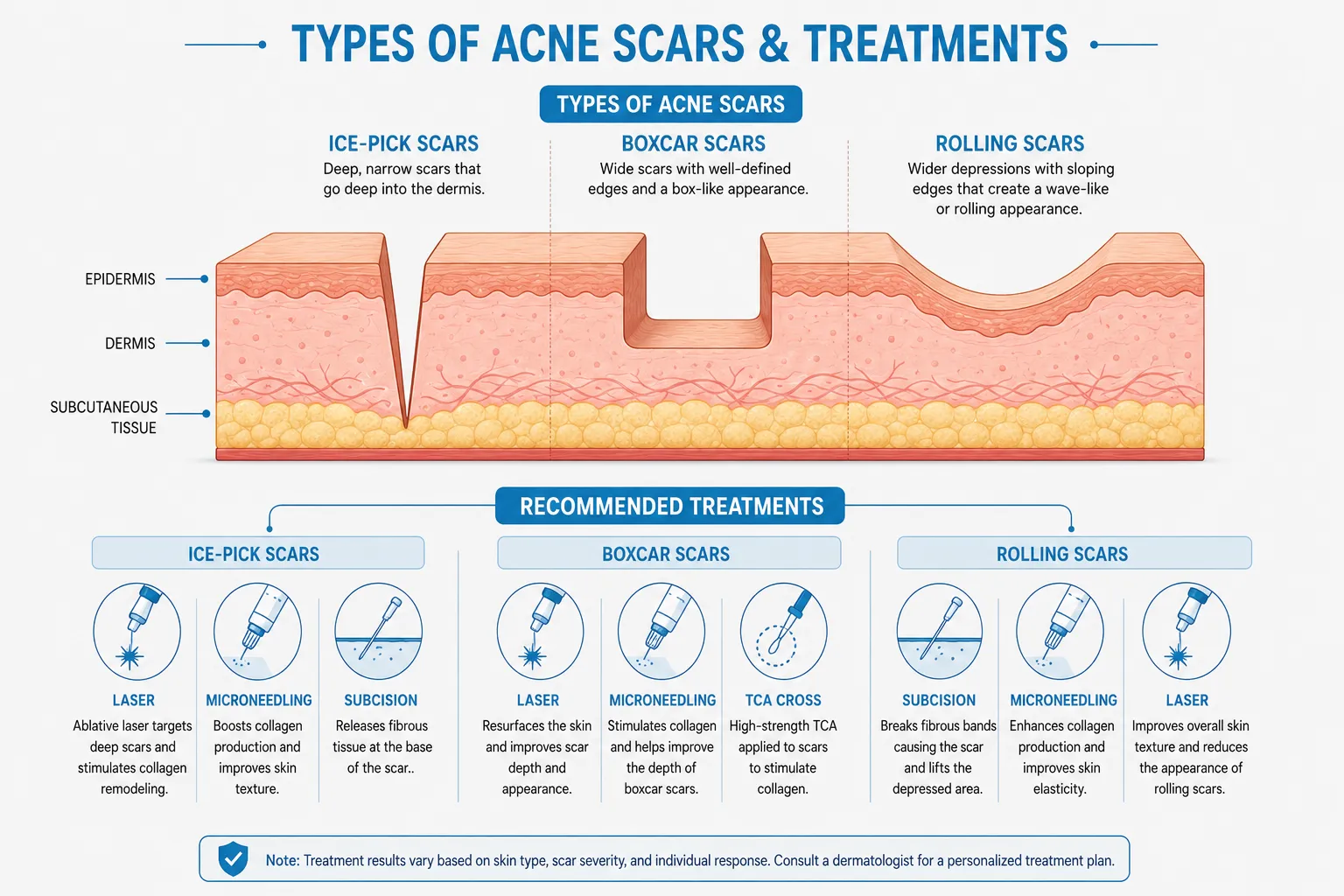
Before choosing any treatment, a trained clinician must classify the scar type. Applying the wrong modality — for example, using a superficial peel on a deep ice-pick scar — wastes time and money and can worsen the skin's appearance. The main categories are:
Atrophic scars — the most common type, caused by loss of collagen. These include ice-pick (narrow, deep), boxcar (wide, defined edges), and rolling (broad, undulating) scars.
Hypertrophic and keloid scars — raised scars caused by excess collagen production. More common on the chest, back, and jaw line.
Post-inflammatory hyperpigmentation (PIH) — flat dark marks that are technically not true scars but are often grouped with them by patients.
Each type responds differently to treatment. A thorough skin assessment — including Fitzpatrick skin type grading, which is especially important for South Asian skin tones — is the essential first step at any reputable aesthetic doctor in Gurgaon.
Superficial to medium-depth chemical peels (glycolic acid, salicylic acid, TCA) exfoliate the outer skin layers, stimulate collagen, and reduce PIH. They are best suited to mild, shallow scars and pigmentation. Multiple sessions — typically 4 to 6 spaced 3 to 4 weeks apart — are needed for visible improvement. They are generally well tolerated on Indian skin when performed by a trained clinician who selects the correct acid concentration and contact time.
Microneedling uses fine needles to create controlled micro-injuries in the dermis, triggering the skin's natural wound-healing response and new collagen synthesis. It is particularly effective for rolling and boxcar scars and carries a low risk of post-inflammatory hyperpigmentation — making it one of the preferred options for darker skin tones. Results typically become visible after 3 to 6 sessions.
A photofacial in Gurgaon uses broad-spectrum light energy to target pigmentation, redness, and superficial textural irregularities. IPL is most effective for PIH and redness associated with acne scars rather than deep structural defects. It is often combined with other modalities for a comprehensive result. Sessions are quick (20–30 minutes), require no downtime, and are well suited to busy professionals.
Fractional lasers (ablative and non-ablative) deliver focused energy columns into the dermis, stimulating significant collagen remodelling. Ablative lasers (CO₂, Er:YAG) produce more dramatic results but require downtime of 5 to 10 days. Non-ablative fractional lasers offer a gentler profile with minimal downtime and are often preferred for moderate atrophic scarring. The key difference between a photofacial and laser treatment is depth: IPL works primarily on the skin's surface pigment and vascularity, while fractional lasers penetrate deeper to remodel the dermis structurally.
Subcision is a minor surgical procedure in which a fine needle is inserted beneath a depressed scar to break the fibrous bands tethering it to deeper tissue. It is highly effective for rolling scars and is often combined with microneedling or filler for optimal lift. At Profrea, procedures of this nature are performed or supervised by Dr. Shikha Bansal, our MCh-qualified Plastic Surgeon with over 9 years of experience — a level of surgical oversight that is uncommon in purely cosmetic clinic settings.
Hyaluronic acid or poly-L-lactic acid fillers can be injected beneath depressed scars to provide immediate volumisation. Results are temporary (6 to 18 months depending on the filler type) but can be a useful bridge while longer-term collagen remodelling treatments take effect.
PRP uses growth factors derived from the patient's own blood to accelerate tissue repair and collagen production. It is frequently combined with microneedling (the so-called "vampire facial") to enhance results, particularly for atrophic scars and overall skin quality.
Deep ice-pick scars are the most challenging to treat because they extend into the deep dermis or even subcutaneous tissue. The gold-standard approach for ice-pick scars is the CROSS technique (Chemical Reconstruction of Skin Scars) — applying high-concentration TCA (70–100%) precisely into the scar base to stimulate focal collagen production and gradually raise the scar floor. This is combined over time with fractional laser or microneedling to blend the surrounding texture.
For rolling and boxcar scars, a combination of subcision, microneedling, and fractional laser typically delivers the best long-term structural improvement. There is no single session that removes all acne scars permanently — but with a planned, multi-modal protocol, most patients achieve 50–80% improvement in scar appearance, which is clinically significant and visually transformative.
This is one of the most common questions patients ask, and the honest answer is: it depends on the scar type, depth, skin tone, and treatment modality. As a general guide:
Chemical peels: 4–8 sessions, spaced 3–4 weeks apart
Microneedling: 4–6 sessions, spaced 4 weeks apart
Photofacial (IPL): 3–6 sessions, spaced 3–4 weeks apart
Fractional laser: 3–5 sessions, spaced 4–6 weeks apart
Subcision: 1–3 sessions, spaced 6–8 weeks apart
Maintenance sessions every 6 to 12 months help sustain results, particularly for pigmentation-prone skin. At Profrea's clinics across Gurugram, our doctors build a personalised treatment calendar so patients understand the timeline before committing to a plan.
Most in-clinic acne scar treatments involve some degree of discomfort, but pain is well managed with topical anaesthetic creams applied 30–45 minutes before the procedure. Microneedling and laser treatments feel like a mild prickling or heat sensation. Subcision may cause brief sharp discomfort at the needle insertion point. Photofacial sessions are generally described as feeling like a rubber band snap — tolerable for most patients without any anaesthetic. Post-procedure, mild redness and swelling lasting 24–72 hours are normal and expected.
The word "permanently" requires careful qualification. Structural scars — particularly deep atrophic ones — cannot be erased entirely, but they can be significantly reduced in depth and visibility. Pigmented marks (PIH) can be cleared more completely with the right combination of topical agents and light-based treatments. Once a scar is remodelled through collagen induction, that new collagen is permanent — but ongoing sun protection and a good skincare routine are essential to prevent new pigmentation and maintain results.
The American Academy of Dermatology notes that no single treatment eliminates all acne scars, and combination approaches tailored to individual scar morphology consistently outperform single-modality protocols.
Gurgaon has no shortage of skin clinics, but the quality of medical oversight varies enormously. At Profrea, aesthetic treatments are delivered within a multi-specialty clinical framework — meaning your skin concern is assessed in the context of your overall health, not in isolation.
Surgical expertise on-site: Dr. Shikha Bansal, our MCh Plastic Surgeon (SMS Medical College, Jaipur) with 9+ years of experience, oversees complex scar cases and minor surgical procedures such as subcision — a level of qualification rarely found in standalone aesthetic clinics.
Holistic care: If hormonal acne is driving your scarring, our team can connect you with specialists in gynaecology and endocrine health or with Dr. Ladli Chatterjee, our diabetologist, if insulin resistance is a contributing factor — as it often is in PCOS-related acne.
7 clinic locations across Gurugram with in-clinic and video consultation options, so follow-up care fits around your schedule.
Personalised treatment plans: No off-the-shelf packages. Every patient receives a scar assessment, Fitzpatrick grading, and a written treatment roadmap before any procedure begins.
Patients frequently ask whether they need a photofacial in Gurgaon or a laser treatment. Here is a simple comparison:
| Feature | Photofacial (IPL) | Fractional Laser |
|---|---|---|
| Primary target | Pigmentation, redness | Scar texture, collagen |
| Depth of action | Epidermis / superficial dermis | Mid to deep dermis |
| Downtime | Minimal (24–48 hrs redness) | 2–7 days depending on type |
| Best for | PIH, mild texture, redness | Moderate–deep atrophic scars |
| Sessions needed | 3–6 | 3–5 |
In many cases, the best outcome comes from combining both — using IPL to clear pigmentation first, then fractional laser to address the structural scar. Your clinician at Profrea will recommend the sequence that makes clinical sense for your specific presentation.
A first consultation at Profrea for acne scar treatment typically includes:
Skin history and acne history — understanding what triggered your acne, how long it lasted, and any treatments already tried.
Scar mapping — classifying each scar type and grading severity.
Fitzpatrick skin type assessment — critical for selecting safe energy-based treatments on Indian skin.
Medical review — checking for contraindications (active acne, recent isotretinoin use, keloid tendency, pregnancy).
Written treatment plan — a phased protocol with realistic timelines and expected outcomes.
You can book an in-clinic appointment at any of our 7 Gurugram locations or opt for a video consultation if you prefer to discuss your concerns from home before committing to an in-person visit. Our skin specialists in Gurgaon are available across multiple slots throughout the week.
In-clinic treatments work best when supported by a consistent home routine. Between sessions, your clinician may recommend:
Broad-spectrum SPF 30–50 sunscreen every morning — non-negotiable for anyone undergoing any form of scar treatment, as UV exposure darkens PIH and slows collagen remodelling.
Topical retinoids (tretinoin or adapalene) to accelerate cell turnover and stimulate collagen — used at night, starting at a low concentration.
Niacinamide (5–10%) to reduce pigmentation and strengthen the skin barrier.
Azelaic acid or vitamin C for additional brightening of post-inflammatory marks.
Gentle, non-comedogenic moisturiser to support barrier function, especially after energy-based treatments.
Avoid harsh scrubs, alcohol-based toners, and any active ingredient not cleared by your clinician during the treatment period.
Deep ice-pick scars respond best to the CROSS technique (high-concentration TCA applied precisely into the scar base), often combined with fractional laser or microneedling over subsequent sessions. Rolling scars benefit most from subcision combined with microneedling or PRP. There is no single best treatment — the right choice depends on your scar type, skin tone, and overall skin health, which is why a proper clinical assessment is the essential first step.
Most patients begin to notice improvement after 2 to 3 sessions, with more significant results visible after completing a full course (typically 4 to 6 sessions depending on the modality). Collagen remodelling continues for 3 to 6 months after the final session, so the full result is not apparent immediately after treatment ends.
Structural scars cannot be completely erased, but they can be significantly reduced — most patients achieve 50–80% improvement with a well-planned multi-modal protocol. Post-inflammatory pigmentation can be cleared more completely. Once new collagen is formed through treatment, it is permanent, but sun protection and maintenance are essential to preserve results.
A photofacial (IPL) uses broad-spectrum light to target surface pigmentation and redness with minimal downtime. Fractional laser penetrates deeper into the dermis to remodel scar tissue structurally. IPL is ideal for PIH and mild texture; laser is preferred for moderate to deep atrophic scars. Many patients benefit from a combination of both, sequenced appropriately.
Most treatments are well tolerated with topical anaesthetic cream applied before the procedure. Photofacial sessions feel like a mild rubber-band snap. Microneedling and laser treatments produce a prickling or heat sensation. Subcision involves brief sharp discomfort at the needle site. Post-procedure redness and mild swelling typically resolve within 24 to 72 hours.
Book a consultation with Profrea's aesthetic and plastic surgery team in Gurgaon — and get a personalised scar treatment plan built around your skin, not a generic package.