
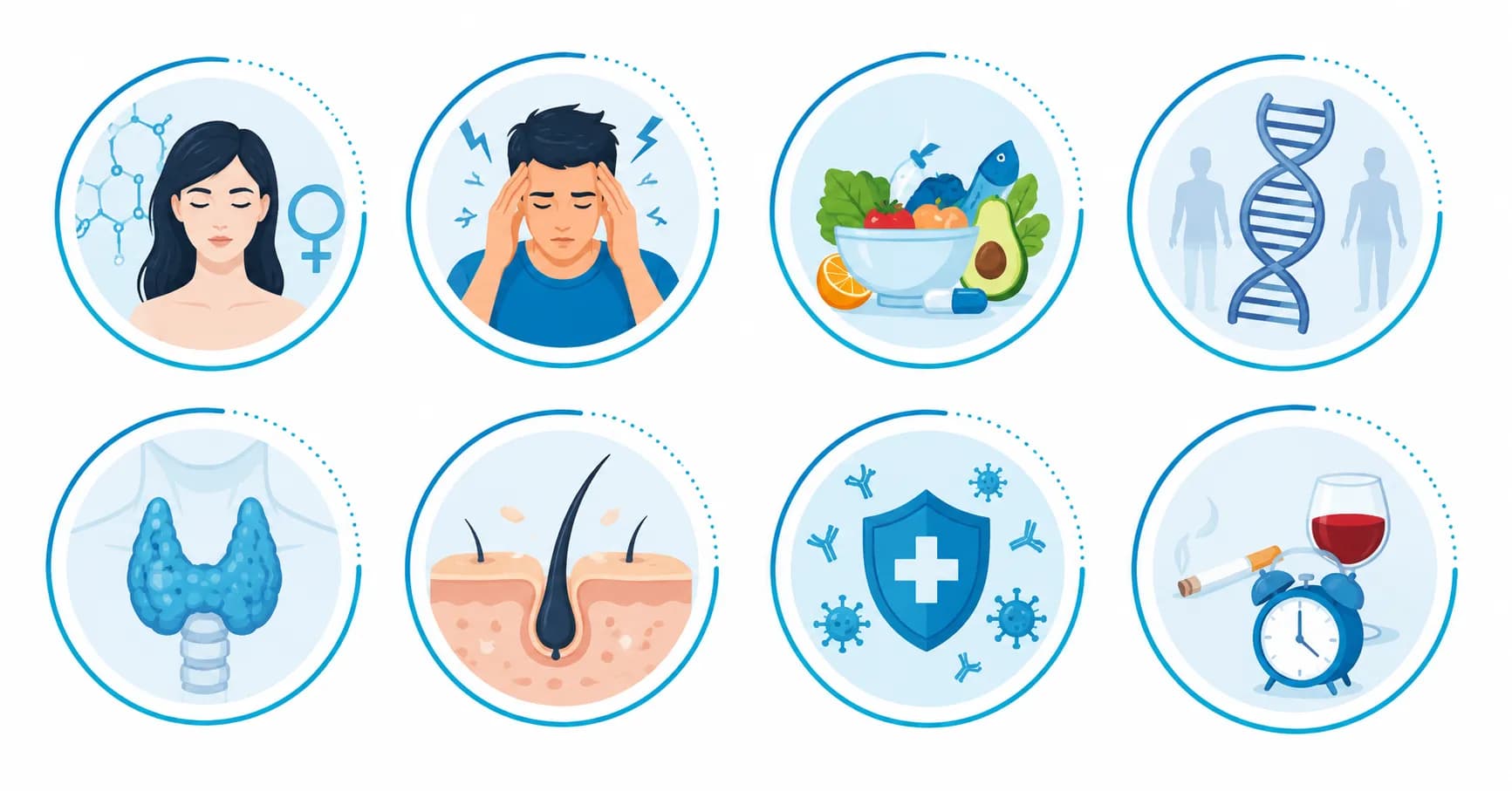
A clinician-reviewed guide to understanding hair fall — from hormonal shifts and nutritional gaps to stress and scalp conditions — and the steps that can help you regain confidence.
By the Profrea Clinical Team · Published July 2026
Noticing more hair on your pillow, in the shower drain, or on your hairbrush can be alarming. The good news is that most hair loss has an identifiable cause — and many causes are treatable once you know what you are dealing with. Dr. Ladli Chatterjee, General Physician and Diabetologist at Profrea, notes that systemic conditions such as thyroid dysfunction and uncontrolled diabetes are among the most frequently overlooked drivers of hair fall in adults.
According to the American Academy of Dermatology, losing 50 to 100 hairs per day is considered normal. When shedding consistently exceeds this, or when you notice visible thinning or bald patches, it is worth investigating the underlying cause. Below, we walk through the eight most common reasons for hair fall in both men and women — and what modern medicine can offer.
The single most common cause of hair loss worldwide, androgenetic alopecia — also called male-pattern or female-pattern baldness — is driven by a genetic sensitivity to dihydrotestosterone (DHT). In men, it typically presents as a receding hairline and thinning crown. In women, it more often causes diffuse thinning across the top of the scalp while the frontal hairline is preserved.
The pattern is hereditary but not inevitable in its severity. Early intervention with evidence-based treatments — including topical minoxidil, oral medications, and Platelet-Rich Plasma (PRP) therapy — can significantly slow progression and, in many cases, stimulate regrowth. If you suspect a genetic component, a dermatology consultation is the logical first step.
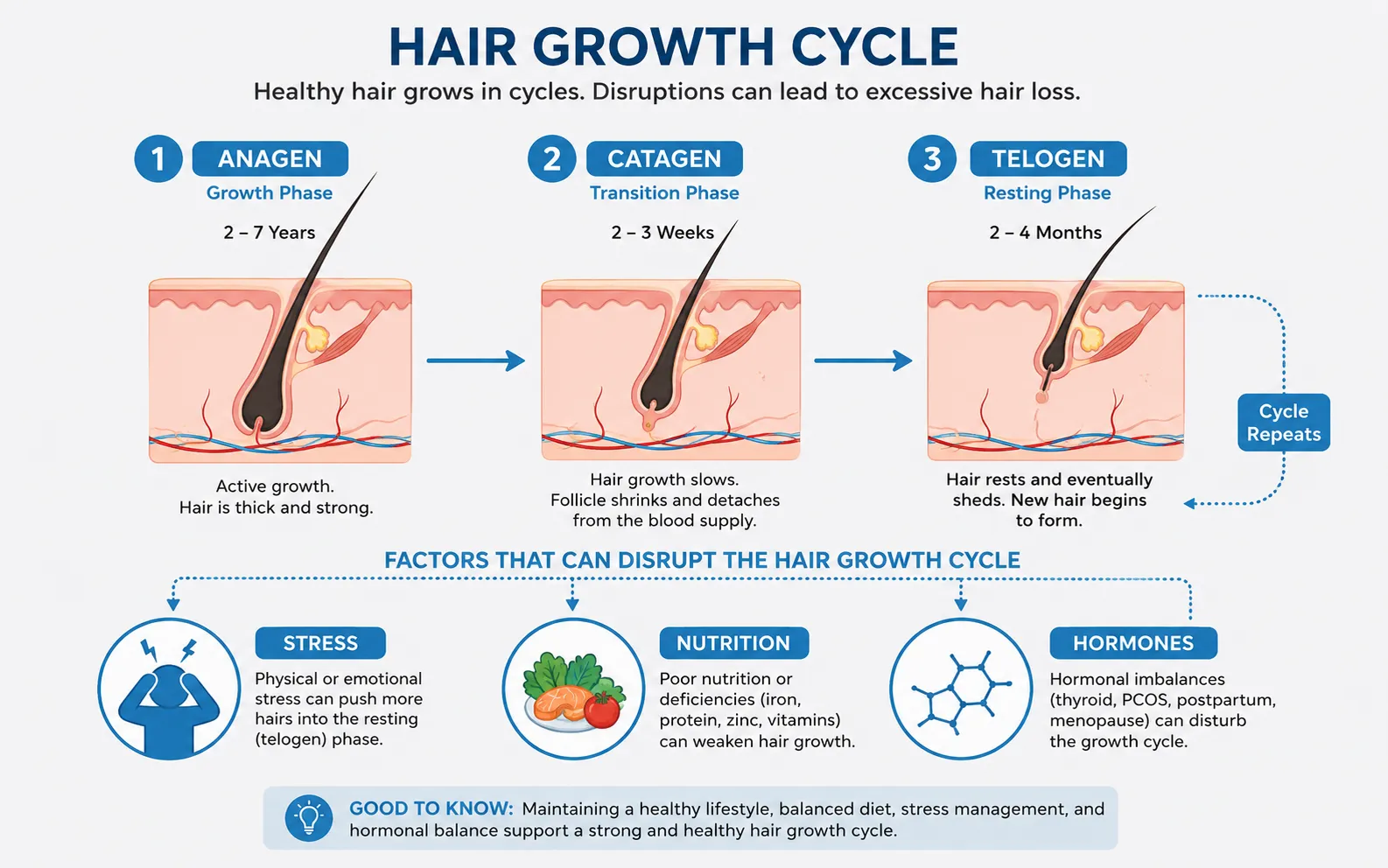
Hormones regulate the hair growth cycle. Disruptions — whether from pregnancy, childbirth, menopause, polycystic ovary syndrome (PCOS), or thyroid disorders — can push large numbers of follicles into the shedding phase simultaneously. This is why many women experience dramatic hair fall three to six months after delivering a baby, a condition called telogen effluvium.
PCOS-related hair loss is particularly common among women of reproductive age in India. Elevated androgens miniaturise hair follicles over time, producing thinning that mimics male-pattern baldness. Dr. Soma Kumari, Obstetrician, Gynecologist and Infertility Specialist at Profrea Gurugram, routinely screens patients with PCOS for hair and skin changes as part of a holistic hormonal assessment.
Hair follicles are among the most metabolically active structures in the body — they are highly sensitive to nutritional shortfalls. The most clinically significant deficiencies linked to hair fall include:
Iron deficiency anaemia — particularly prevalent among menstruating women and vegetarians.
Vitamin D deficiency — associated with alopecia areata and diffuse thinning.
Zinc deficiency — impairs follicle cell proliferation and repair.
Biotin (Vitamin B7) deficiency — though rare, it causes brittle hair and nails.
Protein deficiency — crash diets or inadequate protein intake can trigger telogen effluvium within weeks.
A simple blood panel can identify most of these deficiencies. Profrea's nutrition and dietetics team, including Dt. Swagata Pahari, can help you build a diet plan that supports both systemic health and hair regrowth.
The hair growth cycle — and where common causes of hair loss intervene.
Yes — stress can absolutely cause hair fall. Significant physical or emotional stress (surgery, illness, bereavement, burnout) can shock a large proportion of hair follicles into the resting (telogen) phase at once. The result is diffuse shedding that typically begins two to three months after the triggering event, which is why many people struggle to connect the dots.
Chronic low-grade stress — the kind that many working professionals in Gurugram experience daily — can sustain this shedding over months. Managing the psychological root cause is as important as any topical treatment. Dr. Sarika Thakral, Consultant Clinical Psychologist at Profrea with over 15 years of experience and certifications in NLP and EFT, works with patients navigating chronic stress, which can have downstream benefits for hair health as well as overall wellbeing.
Both hypothyroidism (underactive thyroid) and hyperthyroidism (overactive thyroid) can cause diffuse hair thinning. The thyroid hormone regulates the speed of virtually every metabolic process, including the hair growth cycle. When thyroid function is disrupted, follicles may prematurely enter the resting phase or fail to re-enter the growth phase efficiently.
The encouraging news: once thyroid levels are corrected with appropriate medication, hair loss from this cause is generally reversible within six to twelve months. If you have unexplained fatigue, weight changes, or temperature sensitivity alongside hair fall, ask your doctor to check your TSH levels. Dr. Ladli Chatterjee (MBBS, MD General Medicine, Fellowship in Diabetes — Royal Liverpool Academy, UK) offers comprehensive metabolic assessments at Profrea's Sector 45 and South City-I clinics in Gurgaon.
An unhealthy scalp environment directly impairs follicle function. Common scalp conditions that contribute to hair loss include:
Seborrhoeic dermatitis — chronic dandruff with inflammation that can clog follicles.
Tinea capitis — a fungal infection of the scalp causing patchy hair loss, more common in children.
Psoriasis of the scalp — thick plaques that disrupt the follicular environment.
Folliculitis — bacterial infection of hair follicles leading to scarring if untreated.
Treating the underlying scalp condition is the prerequisite for any hair regrowth strategy. A dermatologist can distinguish between these conditions on clinical examination and, where needed, a scalp biopsy.
Alopecia areata occurs when the immune system mistakenly attacks hair follicles, causing sudden, patchy hair loss — often in round or oval bald spots on the scalp, beard, or eyebrows. It affects people of all ages and genders. In some cases it progresses to total scalp hair loss (alopecia totalis) or complete body hair loss (alopecia universalis), though these are less common.
According to the National Institute of Arthritis and Musculoskeletal and Skin Diseases (NIAMS), alopecia areata affects approximately 2% of the global population at some point in their lifetime. Treatment options include corticosteroid injections, topical immunotherapy, and newer JAK inhibitor medications. Spontaneous regrowth is possible, particularly in milder cases.
Several medications list hair loss as a side effect, including certain blood pressure drugs, antidepressants, cholesterol-lowering statins, anticoagulants, and — most notably — chemotherapy agents. If you started a new medication and noticed increased shedding two to three months later, speak to your prescribing doctor about alternatives or adjunct strategies.
Lifestyle and styling habits also matter more than many people realise:
Traction alopecia — tight ponytails, braids, and extensions exert chronic tension on follicles, eventually causing permanent loss along the hairline.
Heat and chemical damage — repeated bleaching, perming, and high-heat styling weaken the hair shaft and can damage follicles over time.
Smoking — reduces blood flow to the scalp and has been associated with accelerated androgenetic alopecia.
Poor sleep — disrupts growth hormone secretion, which plays a role in the anagen (growth) phase of the hair cycle.
The answer depends on the cause and how early you act. Telogen effluvium triggered by stress, nutritional deficiency, or hormonal shifts is almost always reversible once the root cause is addressed. Androgenetic alopecia can be slowed and partially reversed with consistent treatment, but follicles that have been dormant for years may not respond. Scarring alopecias — where follicles are permanently destroyed — are the exception where regrowth is not possible, making early diagnosis critical.
The general clinical principle: the sooner you investigate and treat, the better the outcome. Waiting and hoping rarely helps when it comes to hair loss.
Seek a medical opinion if you notice any of the following:
Sudden or patchy hair loss rather than gradual thinning
Hair loss accompanied by scalp itching, redness, scaling, or pain
Shedding that has persisted for more than three months
Visible bald patches or significant widening of the hair parting
Hair loss alongside other symptoms such as fatigue, weight change, or irregular periods
Hair loss that is affecting your confidence or mental wellbeing
A structured evaluation — including a detailed history, scalp examination, and targeted blood tests — can identify the cause in the majority of cases. Profrea's multi-specialty setup across 7 clinics in Gurugram means that if your hair loss has a hormonal, metabolic, psychological, or nutritional component, the relevant specialist is available under one network. You can also book a Profrea Health Screen as a starting point for a comprehensive baseline assessment.
Once a diagnosis is established, treatment is tailored to the cause. The most evidence-backed options currently available include:
Topical minoxidil — the most widely used first-line treatment, available over the counter in 2% and 5% formulations.
Oral finasteride / dutasteride — prescription DHT-blockers for androgenetic alopecia in men; used off-label in some women.
Platelet-Rich Plasma (PRP) therapy — a procedure in which growth factors from your own blood are injected into the scalp to stimulate dormant follicles. Multiple clinical studies support its efficacy for androgenetic alopecia and alopecia areata.
Nutritional supplementation — targeted correction of identified deficiencies (iron, vitamin D, zinc, biotin).
Hormone management — for PCOS, thyroid disorders, or post-menopausal hair loss, treating the hormonal imbalance is foundational.
Psychological support — for stress-driven telogen effluvium, structured therapy can break the cycle of hair loss worsening anxiety worsening hair loss.
Profrea's clinical team in Gurugram includes specialists in general medicine, gynaecology, psychology, and nutrition — all of whom can contribute to a holistic hair loss management plan. To explore your options, you can connect with Dr. Deepa Agarwal or browse Profrea's full panel of clinicians for the right fit.
While you arrange a consultation, these evidence-informed habits can support scalp and follicle health:
Eat adequate protein (0.8–1 g per kg body weight per day) and include iron-rich foods such as lentils, spinach, and lean meat.
Avoid crash diets — caloric restriction below 1,200 kcal/day is a well-documented trigger for telogen effluvium.
Wash your hair regularly with a mild, sulphate-free shampoo to keep the scalp clean and follicles unblocked.
Minimise heat styling and avoid tight hairstyles that pull on the roots.
Prioritise 7–8 hours of sleep and incorporate a daily stress-reduction practice — even 10 minutes of mindfulness has measurable physiological effects.
Protect your scalp from prolonged sun exposure, which can damage follicles over time.
Female-pattern hair loss (androgenetic alopecia) is the most common cause overall, but hormonal changes related to pregnancy, PCOS, and thyroid dysfunction are also extremely prevalent among women in India. A blood test and clinical examination can usually identify which factor is at play.
Yes. Significant or chronic stress can trigger telogen effluvium — a condition where a large number of follicles simultaneously enter the resting and shedding phase. The shedding typically begins two to three months after the stressful event and can last for several months. Managing the stress source is a key part of recovery.
Iron deficiency is the most commonly identified nutritional cause of hair fall, particularly in women. Vitamin D, zinc, and protein deficiencies are also well-documented contributors. A simple blood panel — including serum ferritin, vitamin D, and a complete blood count — can screen for these.
Many causes of hair loss are reversible, especially when identified early. Telogen effluvium, nutritional deficiencies, hormonal imbalances, and medication-induced hair loss typically resolve once the underlying cause is treated. Androgenetic alopecia can be slowed and partially reversed with consistent treatment. Scarring alopecias are the main exception where permanent loss can occur.
See a doctor if your hair loss is sudden, patchy, accompanied by scalp symptoms, has persisted for more than three months, or is affecting your quality of life. Early evaluation leads to better outcomes. Profrea's clinics across Gurugram offer both in-clinic and video consultations for your convenience — you can also explore the Profrea Health Screen Premium package for a thorough baseline workup.
The American Academy of Dermatology considers losing 50 to 100 hairs per day to be within the normal range, as these are replaced by new growth. Consistent shedding above this level, or shedding without equivalent regrowth, warrants investigation.
Profrea's multi-specialty team across 7 Gurugram clinics can help identify the root cause of your hair fall and build a personalised treatment plan — in-clinic or via video consultation.